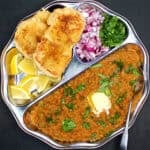
Pav Bhaji
This authentic, Mumbai street food style pav bhaji recipe features a tasty mash of cauliflower, green bell peppers, potatoes, carrots and green peas spiced with pav bhaji masala. It's zesty, mouthwatering and everyone you serve it to will love it!
Servings: 6 servings (2 pavs each)
Calories: 506kcal
Cost: $10.40 per recipe/$1.75 per serving
Equipment
- Wok or wide skillet
- Large mixing bowl
- 19 X 13 baking dish
Ingredients
For the bhaji:
- 1 tablespoon oil
- 1 large onion (finely chopped)
- 1 heaping tablespoon ginger garlic paste (if you don't have the ginger garlic paste, make it by crushing together a 1-inch knob of ginger and six garlic cloves)
- 4 medium tomatoes (finely chopped)
- 1 cup frozen green peas (If using fresh green peas, cook them first until soft)
- 2 large potatoes (boiled, peeled, and coarsely mashed or grated)
- ½ large head cauliflower (about 3 cups grated. You can use cauliflower rice as well)
- 1 large carrot (grated)
- 1 green bell pepper (seeded and finely chopped)
- 2-3 heaping tablespoons pav bhaji masala
- 1 teaspoon paprika (or Kashmiri chili powder, optional, mainly for color)
- Salt to taste
- 2 tablespoons vegan butter
For serving:
- 12 pav
- 1 red onion (finely chopped)
- ¼ cup cilantro (finely chopped)
- 3 tablespoons vegan butter (¼ teaspoon per serving. You can always add more if you want to)
- Wedges of lemon
Instructions
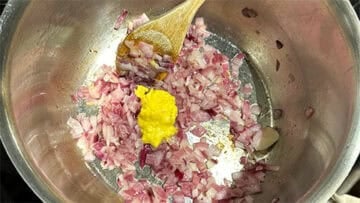
- Heat the oil in a wide skillet or pot over medium high heat. Add the onions and sauté until soft and translucent but not browned. Add the ginger-garlic paste and continue to sauté another minute.
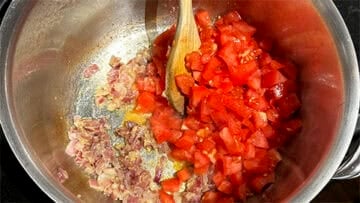
- Add the tomatoes and cook over high heat until they begin to darken.
- Add in the grated cauliflower, peas, potatoes, grated carrots and bell peppers.
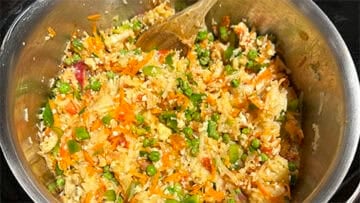
- Add two cups water and mix. Cover and cook for 10 minutes or until the veggies are very soft. Make sure the cauliflower and carrots have cooked completely.
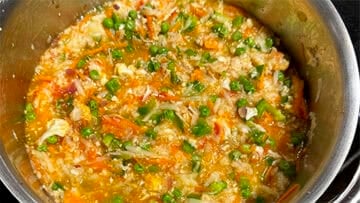
- Stir in the pav bhaji masala. You can also add some paprika at this point for more color (street vendors often use food color for that bright red color).
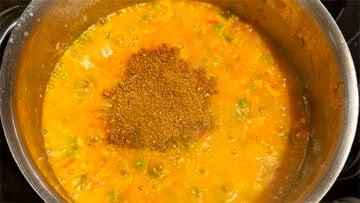
- Turn down the heat. Using a potato masher, mash the veggies until most of them are broken down and you can't recognize the individual vegetables, with the exception of some peas, which can be notoriously hard to mash. Do this carefully because the bhaji is thick and will bubble and splatter as you mash it.
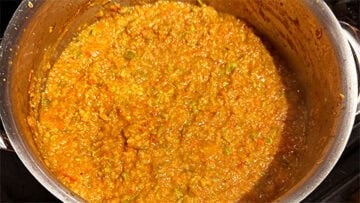
- Taste the pav bhaji and add more pav bhaji masala if needed. Add salt to taste.
- Add the two tablespoons of vegan butter and continue to "fry" the bhaji until it is very thick and has a glossy sheen on top. This should take 2-3 minutes. Turn off the heat.
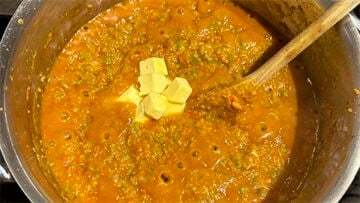
How to serve and eat pav bhaji
- Toast pav: Heat a griddle or skillet until very hot. Put a pat of vegan butter on it and sprinkle a bit of pav bhaji masala. Slit a pav roll down the middle with a knife, but leave it connected at the spine, like an open book. Place it, open-side-down on the hot skillet. Toast the pav until golden-brown.
- Serve pav bhaji: Place two toasted pav rolls in a plate and ladle some bhaji into the plate. Add a square of vegan butter to the bhaji. The bhaji should be hot enough that the butter begins to melt right away. Sprinkle onions and cilantro over the bhaji and serve more onions and cilantro on the side along with lemon wedges.
- Eat: Before you eat, swirl the butter into the bhaji. Tear off a piece of the pav and scoop up the bhaji, onions and cilantro in one bite! Spoons and forks are a no-no. Even Desi, who can barely eat roti without a knife and fork, uses his fingers to eat pav bhaji. There just is no other way to enjoy it.
- Finally, no Bombay street food is complete without a cup of chai, so pour yourself a glass of vegan cutting chai to wash down the pav bhaji.
Notes
Ingredient notes:
Potatoes: Use any potatoes you have on hand, including russet potatoes, Yukon gold potatoes and red potatoes.
Carrots: You can skip the carrots, but be sure to use all the other vegetables for an authentic taste.
Nutrition
Serving: 1 serving (bhaji with two pav rolls) | Calories: 506kcal | Carbohydrates: 76g | Protein: 14g | Fat: 18g | Saturated Fat: 4g | Potassium: 1202mg | Fiber: 11g | Sugar: 9g | Vitamin A: 3158IU | Vitamin C: 98mg | Calcium: 209mg | Iron: 5mg