

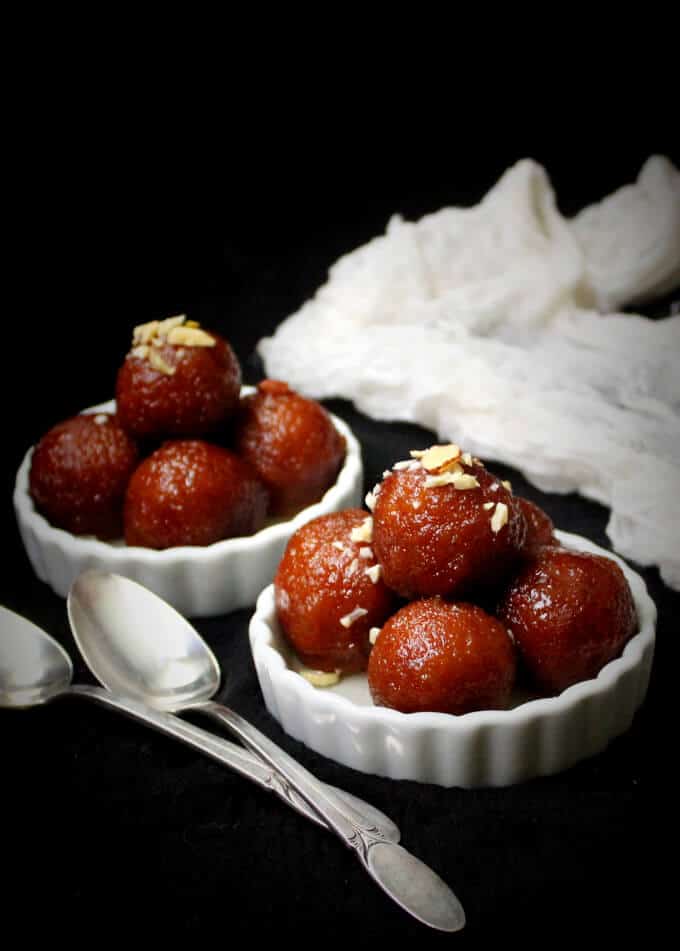
Vegan Gulab Jamun is an Indian dessert to die for. These gulab jamuns come together in a jiffy, using bread and cashew cream, but they are so delicious, no one can tell they are divinely dairy-free.
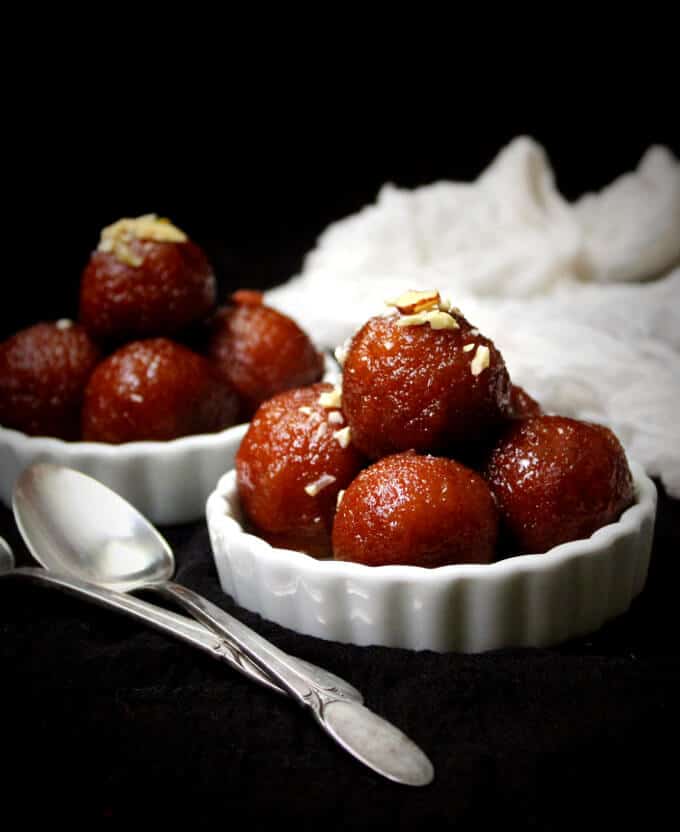
A gulab jamun is the ultimate Indian dessert. You've likely run into these red-gold orbs of deliciousness scented with cardamom and dunked in a flavorful sugar syrup at an Indian restaurant. Or you've likely tried making them at home. Either way, you know that to eat one is to fall in love with it forever.
Traditionally, the gulab jamun, like most Indian sweets, is made with cream, or a reduction of milk called khoya. But the version I have for you today is vegan, of course, and therefore uses neither: instead, it uses a common ingredient that you likely already have in your kitchen, white bread, along with cashew cream.
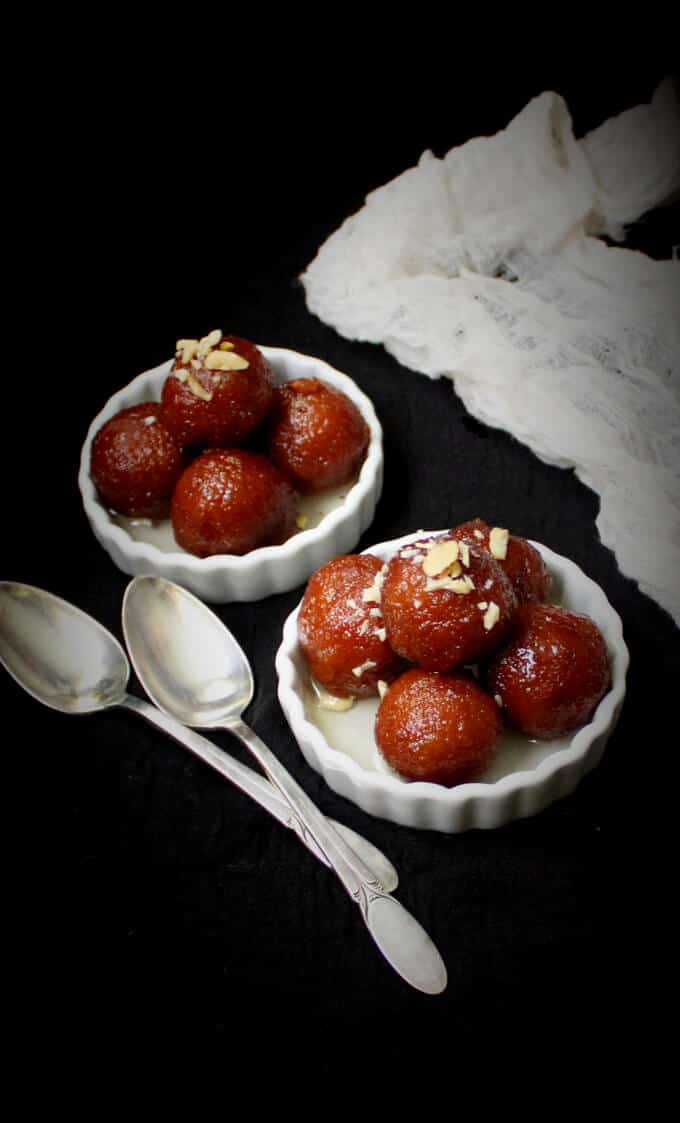
The milk is completely unnecessary: the bread jamuns are just as delicious and no one will be able to tell the difference. But moving away from dairy can make a world of a difference: to your own health, and to the health of the millions of cows caught up in India's milk production system.
I am always a little amused when people I meet assume, more often than not, that my veganism is a byproduct of being Indian born. I was not raised in a vegetarian household, and the truth is, only about 30 percent of India's population is vegetarian (not vegan). Indian vegetarians have always included generous amounts of milk products in their diet. Ghee, yogurt, buttermilk and milk are eaten every day in most homes, and their consumption -- and the production of milk -- is on the rise in India.
But at the same time, there is an almost naive lack of understanding among most Indians about where that dairy comes from. The cow is revered as holy by Hindus, but no one really seems to question the cruel abuse of cows in factory farms and tabelas that supply India's greed for milk. For those who still believe that cows do not die to produce milk, here's some food for thought: what do you think happens to the male calves, while you're busy glugging the milk produced by his mom-- for him? He either gets turned out onto the streets or is starved to death or gets sent to a slaughterhouse, along with tens of thousands of others like him.
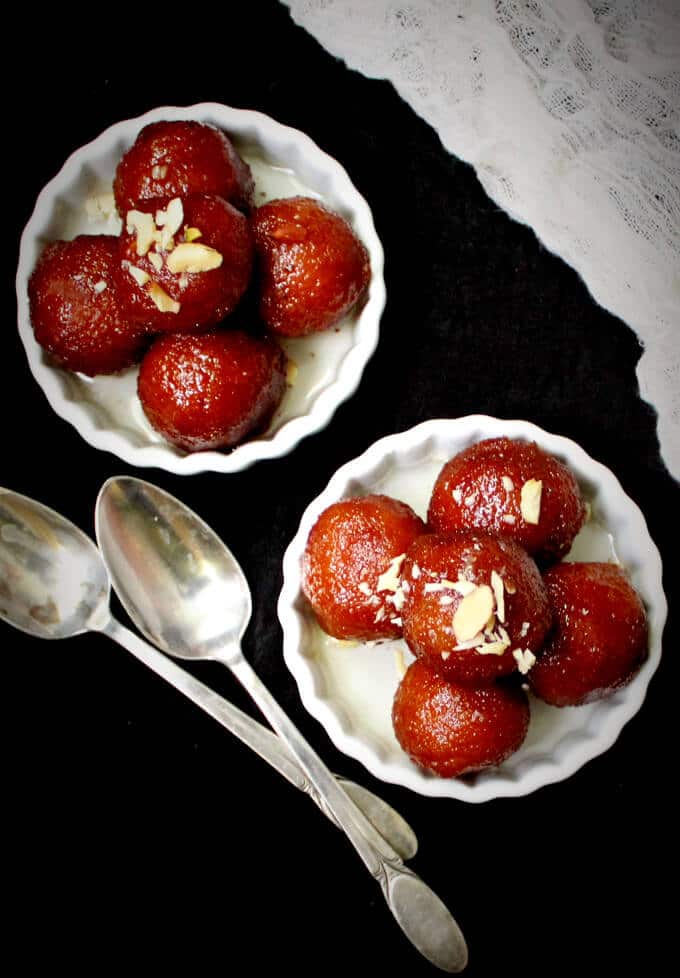
And what happens to the mom, kept in a constant state of pregnancy through artificial insemination until she's four or five, once her usefulness has waned and she can't produce milk anymore? Until recently, she -- despite still having more than a decade of living left in her -- would have been sent to slaughter (India is one of the world's largest beef exporters). But under a new law passed very recently, cows in India can't be slaughtered anymore. While that would be great if the government were to guarantee care of the cows after they have finished producing milk, what will very likely happen is that these cows will be turned out on the streets, to join the already large population of stray bovines in India. Once there, they will end up eating plastic bags for lunch or starving to death anyway.
I am not even getting into all the other reasons why any animal loving Indian should shun milk: the hormones used to make the cows produce more milk, the painful machines the animals' udders are hooked up to in order to extract the milk, the filthy conditions the cows often are forced to live in, and the lack of medical or any care through their lifetimes. Here's an excellent piece from The Hindu newspaper. India's dairy production system looks a lot today like factory farms here in the United States. Gone are the days when your friendly neighborhood milk vendor would milk the one or two cows he kept in his backyard and treated like family. Most milk sold today in India comes of terrible cruelty. It's not enough to end the slaughter of cows-- it is time to stop consuming milk because it's just as cruel and just as deadly as any slaughter is.
The other, very good reason to avoid milk is, of course, your own health. Milk is packed with artery-clogging cholesterol and sugar, and although you will often hear people argue about the importance of calcium from dairy, there is really no evidence that the consumption of calcium from milk products helps strengthen your bones. You aren't a calf, are you? India and the United States, both large consumers of dairy products, have among the world's highest rates of osteoporosis and diabetes. In India, where dairy consumption is growing each year, researchers have found a new phenomenon: a rise in osteoporosis rates among young women.
On the other hand, calcium is abundantly available in vegan foods and in vegetables. If you look through the nutrition labels of most of the recipes I share here on Holy Cow!, you will know that you can get good quantities of calcium from most homemade vegan food. And that calcium is better absorbed by your body than the calcium in cow's milk is. Many vegan foods you can buy off the shelf are also fortified with calcium.
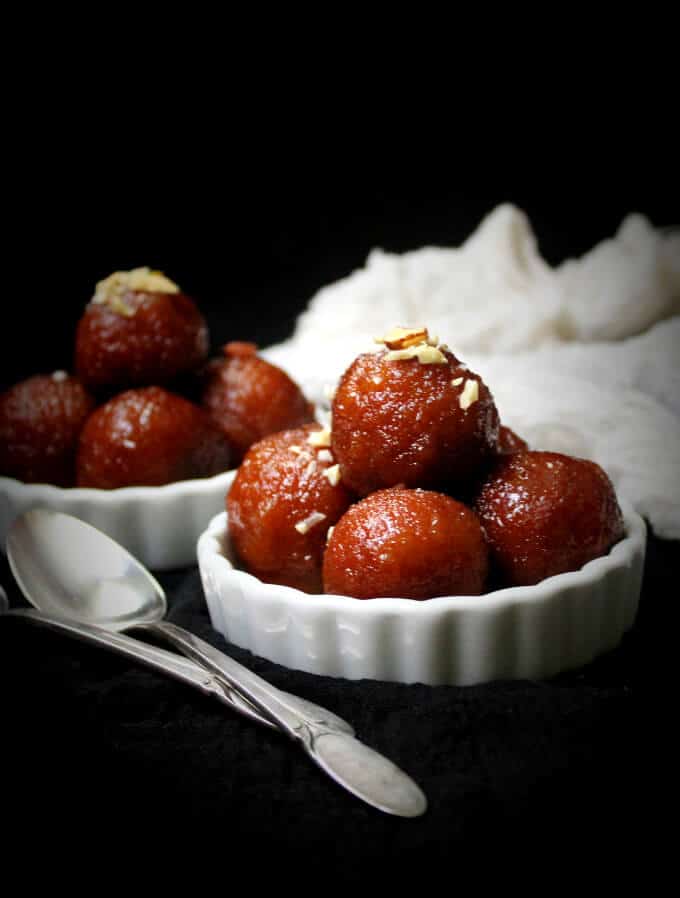
I have been veganizing Indian sweets over the years, and I am a little surprised myself that it took me a while to get to this, my most favorite of all Indian desserts, but as you will no doubt agree if you try these, they were worth the wait.
This Vegan Gulab Jamun is all that: it is spongy and soft and it soaks up all of that cardamom-y, sugar-syrup goodness into its very core. It is also really easy to make: your hands-on work is no more than 15 minutes, tops. The jamuns themselves need just two ingredients: bread and cashews. And the sugar syrup needs three: sugar, cardamom, and a squeeze of lemon juice. You do need oil for frying, and water, of course, but I'm not counting that one. Imagine so much deliciousness with just six ingredients. But you don't have to imagine -- try 'em!
More Indian Vegan Sweets:
Recipe card

Vegan Gulab Jamun
Ingredients
For the gulab jamuns:
- 2 ½ cups white bread crumbs (about six to eight slices of bread. Trim off the crusts and use the white portion only. It is important that the breadcrumbs are ground pretty fine, so you get smooth, even jamuns.)
- ½ cup cashews (blended with ½ cup water into a very smooth cream)
- Vegetable oil for deep frying jamuns
- 2 tablespoon chopped nuts (like cashews, almonds or pistachios, for garnish, optional)
For the syrup:
- 1 ½ cups water
- 1 ½ cups sugar
- 8 green cardamom pods (crushed with a mortar and pestle so the seeds are ground. You can use 1 teaspoon of ground cardamom)
- 1 tablespoon lemon juice
Instructions
Make the sugar syrup:
- Place the sugar and water in a saucepan and bring to a boil. Turn the heat to a simmer, add the cardamom and lemon juice, and let it cook for another five minutes. Turn off heat.
Make the gulab jamuns:
- Place the breadcrumbs in a bowl and mix in the cashew cream, a little at a time until you have a smooth, pliable dough that's not too stiff or dry.
- Divide into 14 equal sized pieces and roll each into a ball. You want a very smooth ball with no visible cracks on the surface. You can use some oil to grease your palms, which will help you shape the jamuns more easily.
- Heat oil in a wok or a fryer. You don't want to oil to be too hot, around 300 degrees is ideal. If the oil is too hot, the jamuns will brown very fast on the outside and not cook all the way through.
- Now place the jamuns, a few at a time so as to not clutter, into the fryer or wok. The oil should bubble only slightly. Don't let the jamuns settle at the bottom. Use your spider or a slotted ladle to keep moving them around until they become a deep, reddish color.
- Remove them to a plate lined with a paper towel. When the jamun is still warm but can be handled, use a very thin pin or needle to poke holes all around. This will help it better absorb the syrup.
- Place the jamuns inside the syrup while the syrup is still warm but not very hot. They should be completely immersed. Let them stand for 3 hours before serving, so they have enough time to soak up the syrup.
- Serve jamuns with a drizzle of the syrup and a sprinkling of nuts (optional).



Anonymous says
Isn’t white bread usually made with milk , eggs? Will a vegan bread work?
Vaishali Honawar says
Most store bought white breads don’t have milk and eggs. Just read the labels and make sure you are using a vegan bread.
Sudharshni K says
Hello. I live in the USA, could you please suggest a vegan white bread option that’s works best for this recipe. Which bread did you use for this recipe. Thank you!
Shweta says
Can I use whole wheat bread instead of white bread?
Vaishali Honawar says
Hi Shweta, I am not sure it'd work as well.
Inderpal Chandel says
Can I fry the Gulab Jamun one day before and add to syrup next day?
Vaishali Honawar says
Preferably the jamuns should be warm when added to the syrup.
Varsha says
I made these gulab jamuns for diwali and they were absolutely delicious. I found the recipe easy to follow and everyone thought they were as good as the dairy version. It was great to be able to enjoy one of my favorite sweets without feeling any guilt. Thank you.
Mythili says
Comments notwithstanding, this is a clever recipe and the final product was delicious.
I do think some additional photographs and guidance would be helpful--required a decent amount of tinkering + previous know how to get to an optimal outcome, and even then I wasn't able to get the classic dark gulab jamun color. I sifted the pulverized bread to ensure an even, fine consistency--very helpful, but then I wasn't left with as much 'bread maida.' I had left my bread out for a day to dry, and that made it such that I needed much more liquid than noted in the recipe to get a smooth dough (or what I thought was smooth--some of them still cracked, so I think not smooth enough). I used a thermometer in my frying oil but I think 300F was still too high, because the outside cooks quite a bit faster. I ended up with a undesireable "shell" when I tried for the same color as in the recipe photos, so the second batch I cooked to when it felt done, instead of looked done.
BUT, again, enjoyed having guilt-free gulab jamun after many years!
Anonymous says
J
Neet says
This looks great! Would it work using gluten free breadcrumbs?
Vaishali Honawar says
I haven't tried it but I would guess that it should work just fine.
Jandeep says
Can i use refined wheat flour/maida directly instead of white bread?
Vaishali says
It won't work with flour.
Swati says
Is there a video for this recipe?… would like to see the consistency of cashew milk that I’d be making at home and also the dough that would be formed… in fact a video would help in seeing things which cannot be described in words …☺️
Shweta says
Hello Vaishali, thank you so much for sharing an amazing version of our favourite dessert👍. It really looks delicious. Just a quick question. Can you freeze it for later use?
Bharti says
I like the sound of your gulab jambu recipe. I will try it for Diwali.
Can you use gluten free bread for the crumbs?
Thank you
Vaishali says
Hi Bharti, I haven't made this with gluten-free bread but I think it might work. You might need to add a bit more moisture to form the jamun balls.
Kevin says
I would love to know if you tried this and it worked because my spouse developed a gluten intolerance.
Anonymous says
Hi Vaishali, I’m from Western Australia. I like the sound of this recipe and will definitely try it out.
Manpreet says
Hi Vaishali does the bread have to be stale. Will it not work with unstale bread?
Vaishali says
No, fresh bread has too much moisture.
Flavia says
This recipe is perfect, but I just wanted to tell you that I added a bit of saffron to the syrup and I think it adds an interesting dimension to the flavors. 🙂
Flavia says
Gulab jamuns are my favorite dessert. When I became vegan 3 years ago, I was sad I would not be able to enjoy them ever again. Until I found this recipe. Thank you so much! I have made them at least 5 times, and everyone loves them!
Douglas Anderson says
Thank-you for this recipe, this is one I am definitely going to try. Here in South Africa we have a similar dessert pastry, the koeksister. The Malay version is closer to this being a fried ball of dough.
Thank-you for your inspiring recipes! Being vegan these days has never been easier.
Vaishali says
Hi Douglas, Interesting about the koeksister. This gulab jamun is as close as we get to a doughnut in Indian cuisine. 🙂
Mary says
Hi. To make the crumbs, do I put the bread in the oven until crunchy and then grind? Thanks!
Vaishali says
Don't toast the bread. Use slightly stale bread that's dryer.
Mary says
Hi! What is the role of the lemon juice? Do I need to leave the jamuns in there for three hours?
I poked holes and left them in for five mins then waited a bit after taking them out and they are not sweet. Is it bc of the lemon juice? Or because I need to leave them for longer? In the middle of making them right now!
Thanks!
Vaishali says
The lemon juice adds flavor to the sugar syrup. You need very little. Leave the jamuns in the syrup for longer until they are soft and the syrup has soaked them.
Christine says
Do the cashews need to be roasted or raw before turning them into a creamy consistency?
Vaishali says
No need to roast, use raw cashews.
Chetna says
What can i replace cashew with? Not any nuts
Can i use all purpose flour
Vaishali says
Can you use powdered melon seeds or pumpkin seeds? Not sure if flour would work, so can't advise that for sure.
Vandana says
Hi!
The recipe is amazing! I have a clarification - the jamun balls are getting flaky (not cracking or breaking, but doesn’t have a smooth consistency) on the outside after I put in sugar syrup. They end up losing the dark brown color to a light one and has a very uneven texture.
Could this be due to more ratio of bread crumbs?
Vaishali says
Hi Vandana, so happy you tried the gulab jamuns. I've not encountered this specific problem before, but my assumption is that the bread crumbs are probably not ground fine enough, which could cause the jamuns to not hold together firmly. Try giving them more time in the blender/food processor. Don't change the ratio of bread crumbs to cashew milk.
Vandana says
Thank you, Vaishali, for the inputs. Will try that soon enough! The jamuns are addictive 🙂 Thank you for making vegan life sweeter 😀
Soniaa says
Hello Vaishali,
These Jamuns I made half the quantity cose was not sure how they will be… for my surprise they are excellent… will make this week full quantity 😉
Vaishali says
Awesome, so happy you loved them Soniaa.
Neetu says
Thank you for touching upon the abuse of cows in dairy industry. Not many chefs talk about it. You did a great job!!!!
Vaishali says
Thanks, Neetu!
Geetha says
Vaishali, as a vegetarian turned vegan - mostly for health reasons, as you do, come across many indians who cannot give up their dairy. Diary puts women at a higher risk for breast cancer. Sugar in the milk puts people higher risk for Diabetes and in addition adding all the extra sugar make it worse. I love all your indian healthier sweets. Will have to try some time.
Asha Ganesan says
Can I use store-bought breadcrumbs?
Vaishali says
They could be too dry.
Flavia says
I was so happy that I'd found a vegan version of my favorite dessert of all! Thank you for this recipe! It is delicious!
Vaishali says
So happy you loved it!
Suguna says
I made the gulab jamuns exactly as you say. It came out very well.very tasty and delicious also. I poke the jamoons in three or four places with safety pin before putting them into the sugar syrup.so they juicey to the core.thank you Vaishali for this tasty and easy one
Vaishali says
Awesome, so happy you loved them Suguna.
Neetu says
Thank you for touching upon the abuse of cows in dairy industry. Not many chefs talk about it. You did a great job!!!!
kobe says
these are awesome
Vaishali says
So happy to hear! 🙂
PARMINDER AHEER says
Hi, I am vegan but have a nut allergy. What can I use instead of cashews?
Vaishali Honawar says
Pumpkin or melon seeds.
Anjali says
Hi Julie, can I know why you are using white bread instead of like flour or something?
I'm gonna try this recipe soon 🙂