

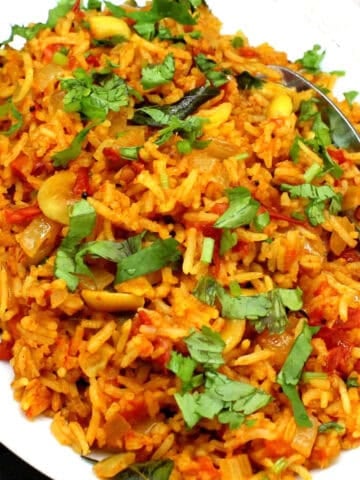
In this classic Tamil dish of tamarind rice or puliyodharai, rice is tossed with a tangy tamarind sauce studded with peanuts and lentils. You can make the tamarind sauce (pulikachal) ahead and store it in the fridge for weeks. Mix it with freshly cooked rice for a quick meal.

Table of Contents
You'll love tamarind rice on weeknights
Puliyodharai is a popular "tiffin" (snack) or "prepared rice" recipe from the south Indian state of Tamil Nadu. I was introduced to it early in my marriage by Desi's mom who cooked amazing Tamil food and particularly Iyengar food. Her puliyodharai was exceptional, and so was the eating of it: the family would form a big circle around her and she'd feed us all in turns.
Good memories make good food taste even better and to date puliyodharai remains one of my favorite Tamil dishes. Eating it is an indescribably satisfying gastronomic experience: the puliyodharai is at once tangy, spicy, sweet and salty and utterly delicious - a dish you'll keep coming back to.
Making puliyodharai is a simple, three-step process:
- Roasting and blending a few spices.
- Making a tamarind sauce, pulikachal. This is a simple sauce made by simmering tamarind juice or pulp (puli in Tamil) with a spice mix, jaggery and peanuts. The tamarind reduces to a dark, thick, syrupy consistency. You can make the pulikachal weeks ahead and store it in the fridge.
- Mixing the tamarind sauce into rice to make puliyodharai when you are ready to eat.

You aren't likely to find this dish on a restaurant menu but if you were to walk into a south Indian temple, even here in the United States, you'd very likely find excellent puliyodharai made as an offering to the gods and served in the temple cafeteria, along with other Tamil prepared rice dishes like lemon rice and curd rice. Now you can make and eat the best puliyodharai in your own home with this recipe.
Recipe card

Puliyodharai recipe
Ingredients
For powdered spice mix
- 3 tablespoons coriander seeds
- 3 teaspoons black peppercorns
- 3 tablespoons sesame seeds
- 2 tablespoons mustard seeds
- ½ teaspoon fenugreek seeds
For pulikachal (tamarind sauce)
- 3 tablespoons tamarind concentrate (Or use a large lemon-sized ball of tamarind pods)
- 1½ cups water
- ¼ cup sesame oil (gingelly oil)
- 1 teaspoon mustard seeds
- ½ teaspoon asafetida (hing)
- 1 tablespoon chana dal
- 1 tablespoon urad dal
- ½ cup peanuts
- 4-5 sprigs curry leaves
- 4-5 dried red chili peppers (whole)
- 1 teaspoon turmeric
- 1 teaspoon cayenne (or any red chilli powder)
- 2 tablespoons jaggery
- Salt to taste
For assembling the puliyodharai
- Cooked rice (see notes)
- Pulikachal tamarind sauce (or more, tweak to your preference)
Instructions
Make the powdered spice mix
- Place the peppercorns and coriander seeds in a hot skillet. Roast for 3-4 minutes over medium heat until very aromatic. The coriander seeds should begin to change color.

- Add the mustard seeds, sesame seeds and fenugreek seeds to the skillet and continue roasting for another 3-4 minutes until the mustard begins to pop. Turn off heat and move the spices to a bowl to cool down.
- Place the spices in a blender or spice grinder and blend to a fine powder.


Make the pulikachal tamarind sauce
- Place the tamarind concentrate or the tamarind pods in a bowl and mix in 1 ½ cups water. If using concentrate, stir the tamarind paste into the water with a spoon. Set aside.
- Heat the oil in the skillet. Add mustard seeds and, when they pop, add the whole chili peppers.
- Add asafetida, chana dal, urad dal, peanuts and curry leaves. Continue to fry until the peanuts are a few shades darker and crunchy.
- Pour in the tamarind water. If you used tamarind pods, pass the tamarind water through a strainer to strain out the solids. Mix the tamarind into the spices in the skillet and bring to a boil. Stir in the turmeric, cayenne and jaggery.
- Mix well, then stir in three tablespoons of the powdered spice mix. When the sauce boils again turn heat to a point where it simmers and let it reduce, about 10-15 minutes.
- When the sauce is done it should have darkened and turned very thick and glossy brown. Turn off the heat.


Assemble the puliyodharai
- Mix rice with the pulikachal. Some might add a tablespoon of sesame oil to the rice at this point but you don't have to.
Notes
- Nutrition information: To calculate nutrition information, I assumed 12 cups of cooked white rice to feed 12 people, using one recipe of pulikachal.
- Allergy notes: This recipe is gluten-free and soy-free. To make it nut-free, leave out the peanuts.
Nutrition Information
Recipe FAQs
Absolutely. Just mix the pulikachal with cooked brown rice instead of white rice.
This is a really, really important part of making amazing puliodharai - simmering the sauce to where it has reduced and is very thick with a glossy brown color. Raw tamarind needs to cook thoroughly to develop its flavor. If you lose patience and take the sauce off the stove too early - before all of the water in the tamarind sauce has evaporated, leaving just the oil and spices behind - you won't get the great flavor you are looking for.
Pair the pulikachal with crispy poppadum or with plantain chips for a light, delicious meal or snack.
Pulikachal spice mix: you can make the powdered spice mix ahead and store it for six months in a cool, dark cupboard.
Pulikachal: Take things a step further and make the pulikachal or tamarind sauce with the spice mix. Store the pulikachal in the fridge for up to three months.
Puliyodharai: Store the puliyodharai for up to four days in the fridge.




Comments
No Comments