

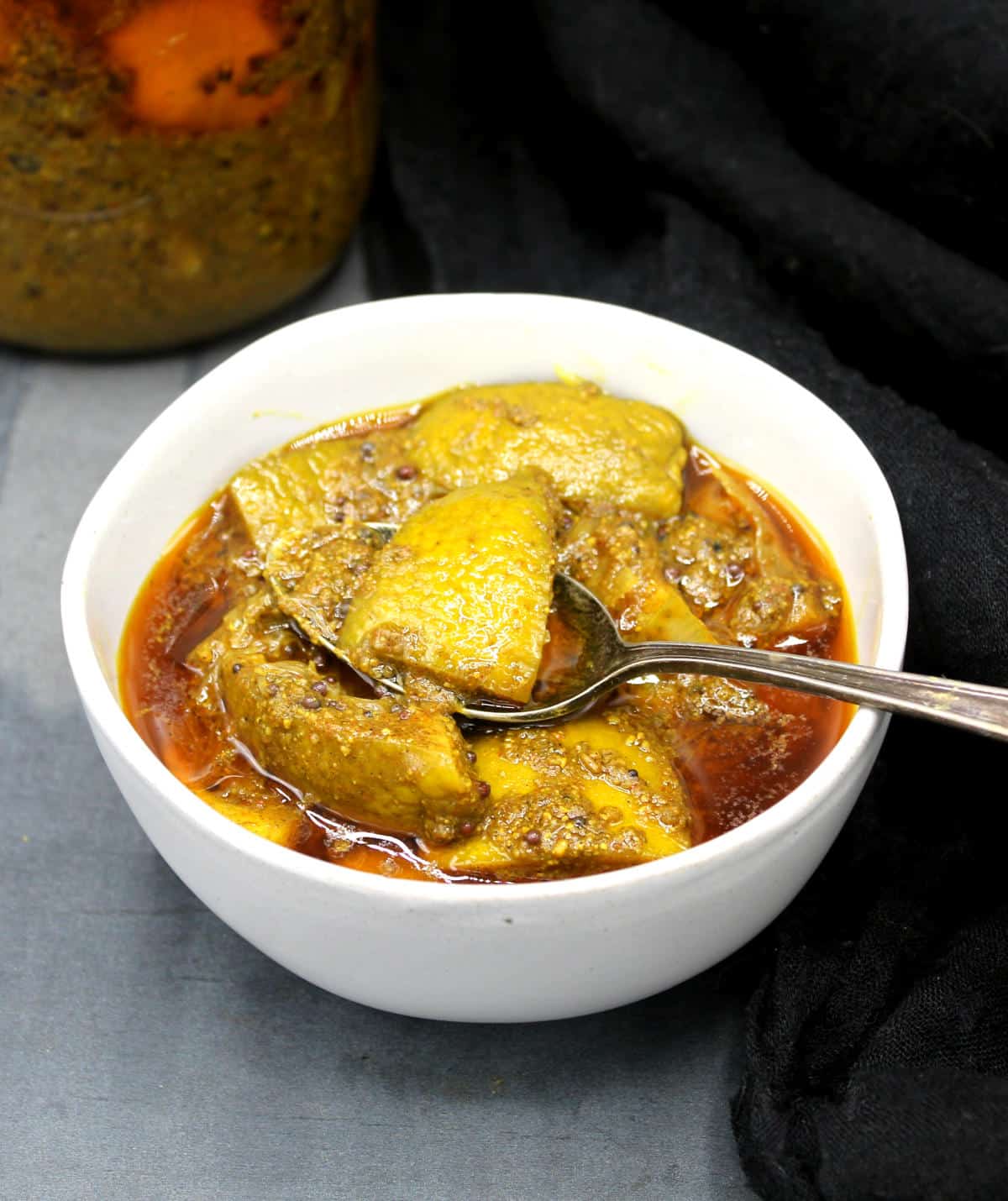
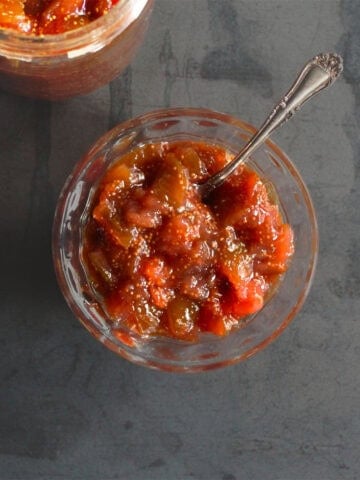
If you are a fan of pickled foods, you will love this spicy Indian lime pickle or nimbu achaar. It tastes amazing with a simple Indian meal of dal and rice. Plus, it couldn't be easier to make, especially when you have the hot summer sun playing sous chef.
Jump To
What is an Indian lime pickle?
An Indian lime pickle is a spicy condiment of limes or lemons pickled in spices, including fennel seeds, fenugreek seeds, nigella seeds, mustard seeds, red chili powder and turmeric. It is spicy, salty, tangy and indescribably delicious, and it adds lots of flavor to a simple meal of dal and rice.
If you've been to an Indian restaurant, you've probably had some served to you alongside poppadum and chutney. But those restaurant pickles, and in fact most commercially sold Indian pickles (which are easy to find at Indian grocery stores), fall short when compared to a homemade pickle. A homemade version just tastes that much better and it is better for you because it's not loaded with preservatives.
I grew up eating Indian pickles with dal and rice and lime pickle was my favorite, with delicious, tangy, soft skins in a spicy, salty sauce. But in the past I only ever bought the pickles at the store. As I looked deeper into the process of making pickles, it seemed a shame not to try making a version at home that would be fresher and that I could tweak to my family's tastes.
Unfortunately, in India, too, making homemade pickles is a dying art and I couldn't really find any good recipes online. So over the years I've created my own recipe for lime pickle or nimbu ka achaar, which is my favorite Indian pickle, tweaking this and that and arriving at a flavorful condiment we love. (Also check out this carrot pickle or gajar ka achar).
Recipe card
Indian Lime Pickle
Equipment you'll need
- Glass bowl
- Small skillet
- A sterilized, quart-sized mason jar
Ingredients
- 8 medium-large limes (make sure the skins are thin. Wash and dry the limes thoroughly. Quarter or cut them into ½-inch pieces.)
- 2 teaspoon fenugreek seeds or methi seeds
- 2 teaspoon nigella seeds (kalonji)
- 1 tablespoon fennel seeds (saunf)
- 2 (heaping) tbsp cayenne (or paprika or Kashmiri chili powder)
- 1 tablespoon turmeric
- 1 teaspoon asafetida or hing (hing)
- ½ cup salt (I use Himalayan pink salt but any finely ground salt is fine. Don't use less because you need the salt as a preservative for the pickles)
- 1 cup avocado oil or any neutral oil (use an oil with a high smoke point)
- 2 tablespoon mustard seeds
Instructions
- Heat a skillet over medium heat. Add the fenugreek, fennel and nigella seeds to the skillet and toast until very fragrant, 3-5 minutes. Remove to a bowl, let them cool, then add asafetida and powder everything together in a spice grinder or blender.
- Place the limes in a clean, dry glass or ceramic bowl. Add the ground spices in step 1 along with the paprika or cayenne, turmeric, asafetida and salt. Mix well with a clean, dry spoon.
- Heat the oil in the same skillet you used to toast the spices. Once it's hot, add the mustard seeds. Wait until they begin to sputter, then turn off the heat.
- Carefully, standing back to avoid any sputter, pour the hot oil into the bowl with the limes and spices. Mix thoroughly, then transfer to the sterilized mason jar.
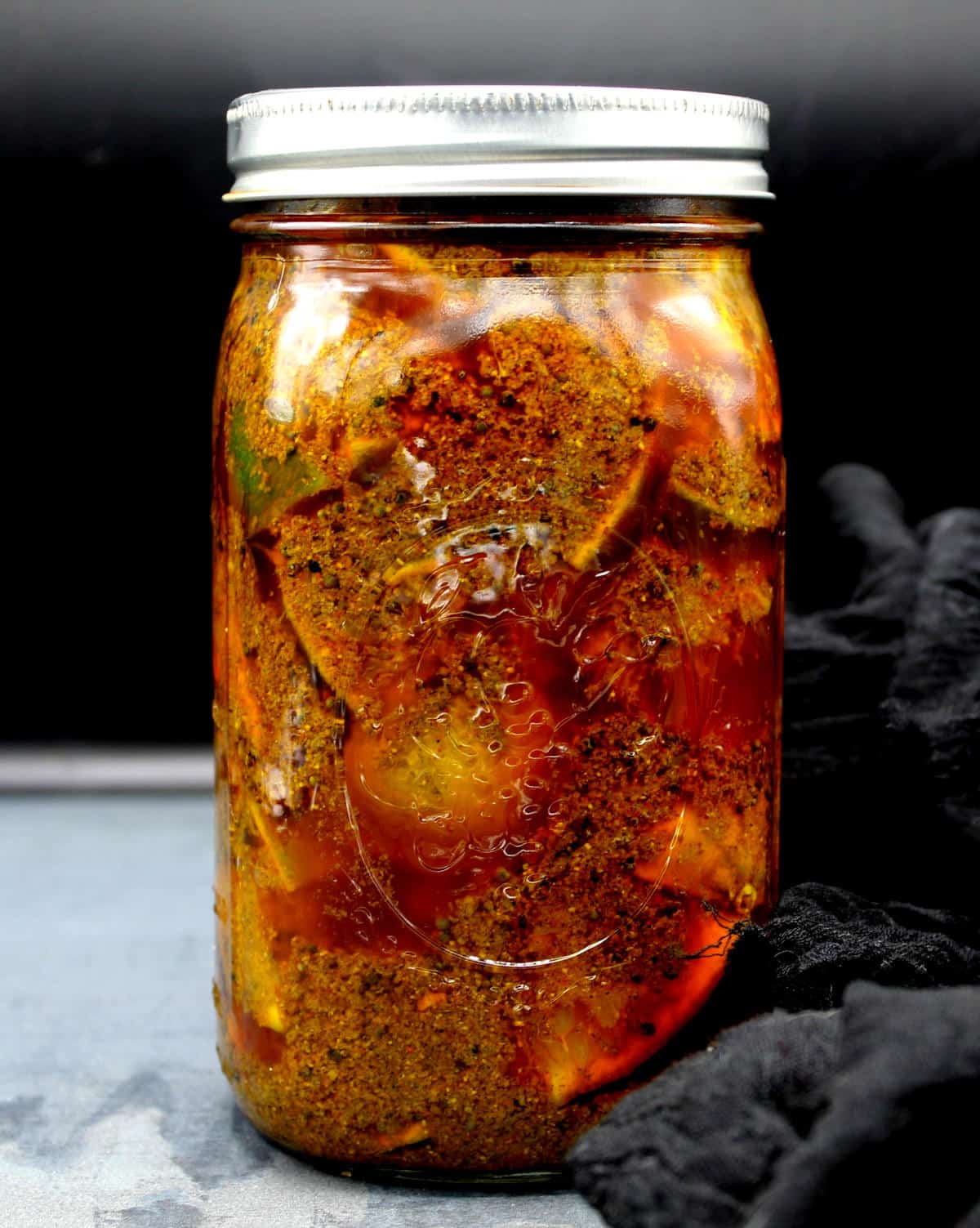
- Place the mason jar in the hot, full sun on your deck, porch or stoop for 5-7 days, for at least 6-8 hours each day. Turn the mason jar upside down and around each day to ensure the sauce and spices move around the jar.
- Once the pickle is ready, refrigerate immediately.
Notes
Nutrition Information
How to make Indian lime pickle

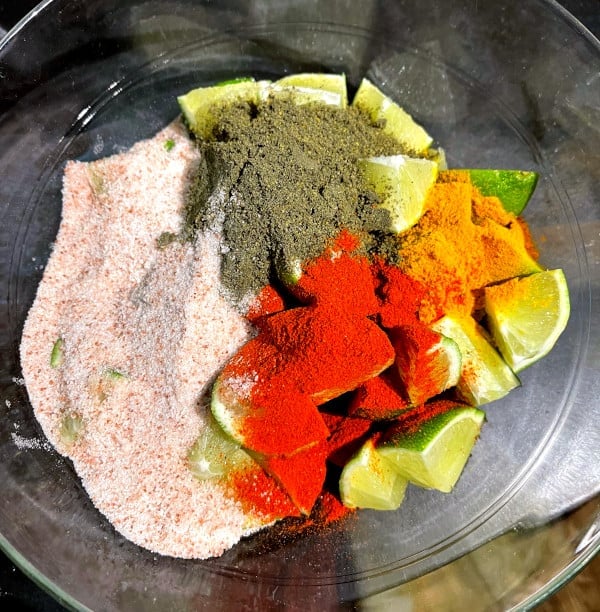
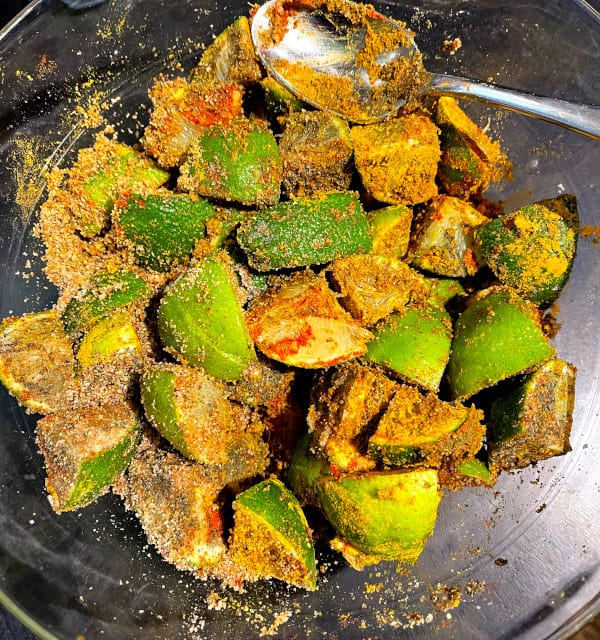
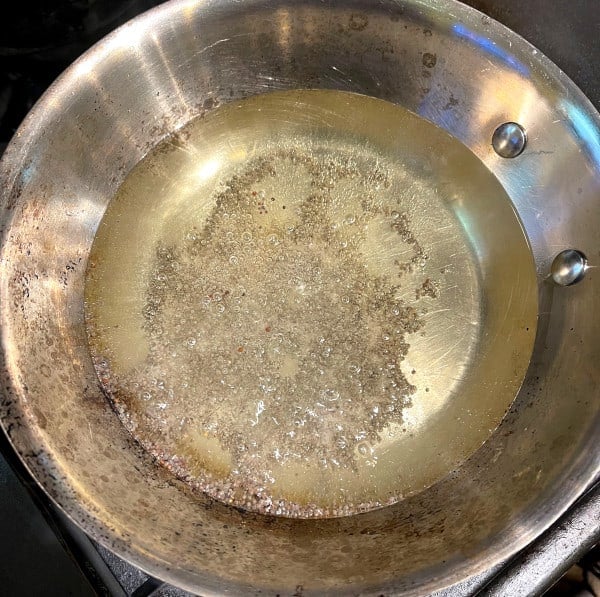
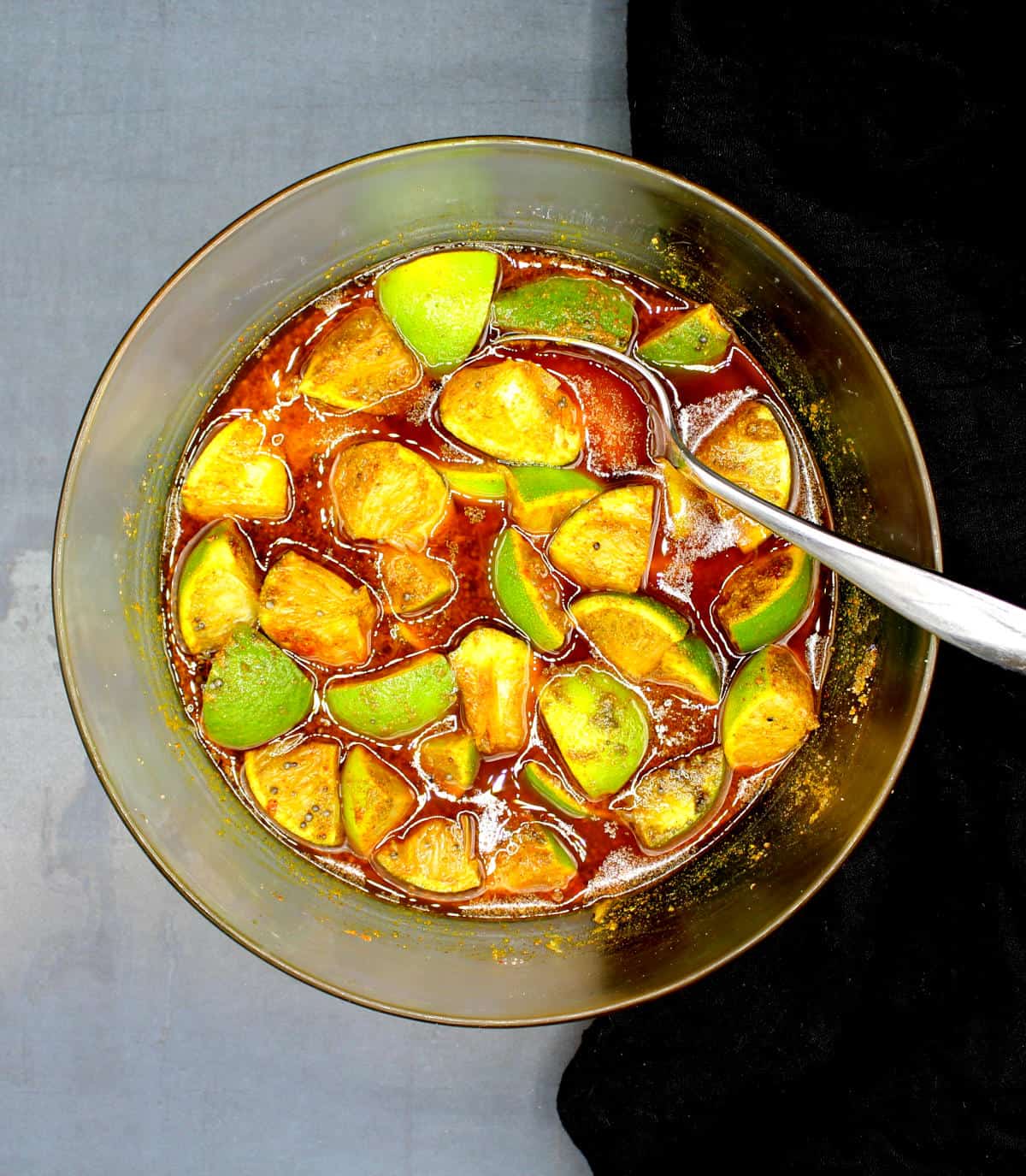
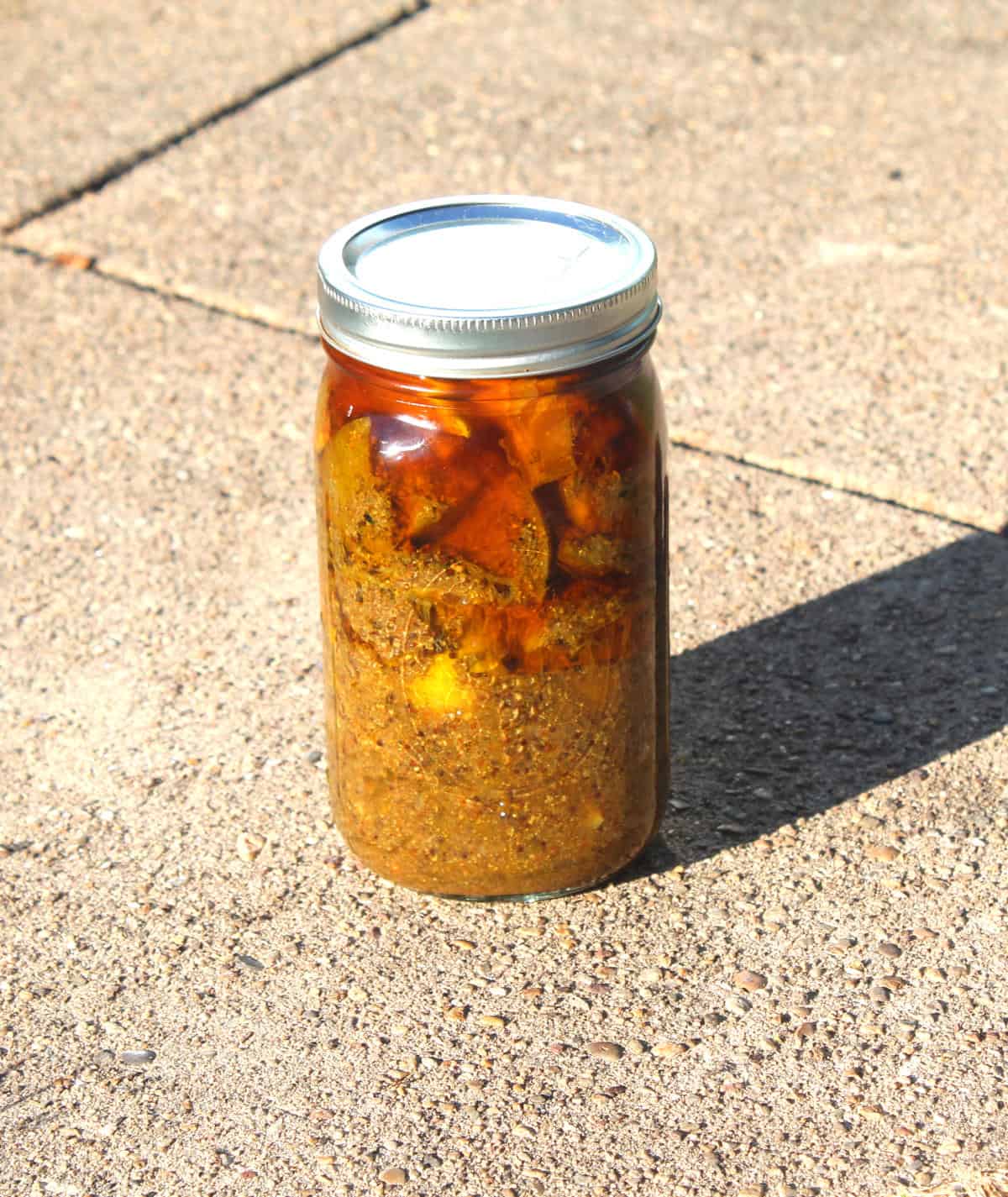
- Begin by sterilizing a quart-sized mason jar in boiling water. Let the jar dry thoroughly before using.
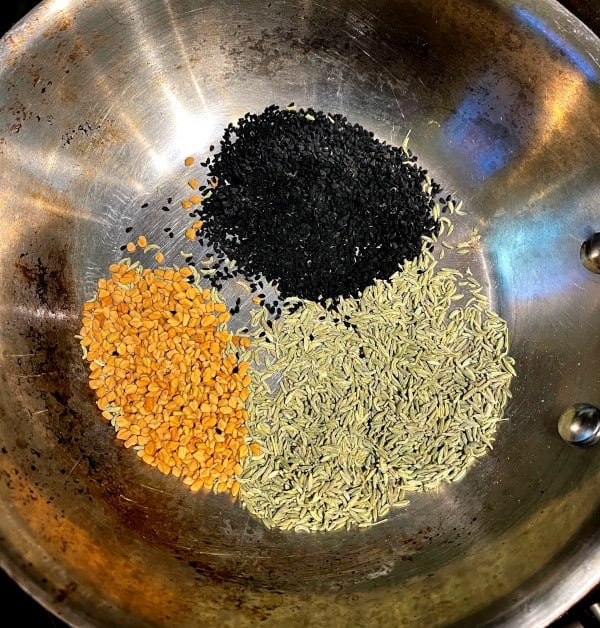
- Place the nigella, fenugreek and fennel seeds in a small skillet and roast them for 3-5 minutes over medium heat until they are very fragrant and just a shade or two darker. Powder them in a spice grinder and set aside.
- Wash the limes and dry them thoroughly with a clean kitchen towel. You want to make sure there is no water clinging to them. Then cut the limes into bite-sized pieces. If using smallish limes, quarter them. If they are larger, cut them into ½-inch pieces. Place them in a bowl.
- Add the powdered fennel-fenugreek-nigella mix to the bowl with the limes. Add cayenne or paprika or Kashmiri chili powder, turmeric and salt to the bowl. Toss with the limes.
- Heat the oil over high heat. Once hot, add the mustard seeds and let them begin to sputter.
- Turn off the heat and carefully pour the hot oil into the bowl with the limes. Use a spoon to mix everything thoroughly.
- Transfer the pickles to the mason jar. Seal with the lid. Place in full sun every day for 5-7 days for at least 6-8 hours. Bring it in at night and turn the jar around, without opening it, to ensure the ingredients move around and mix.
- After your pickles are ready, refrigerate them immediately.
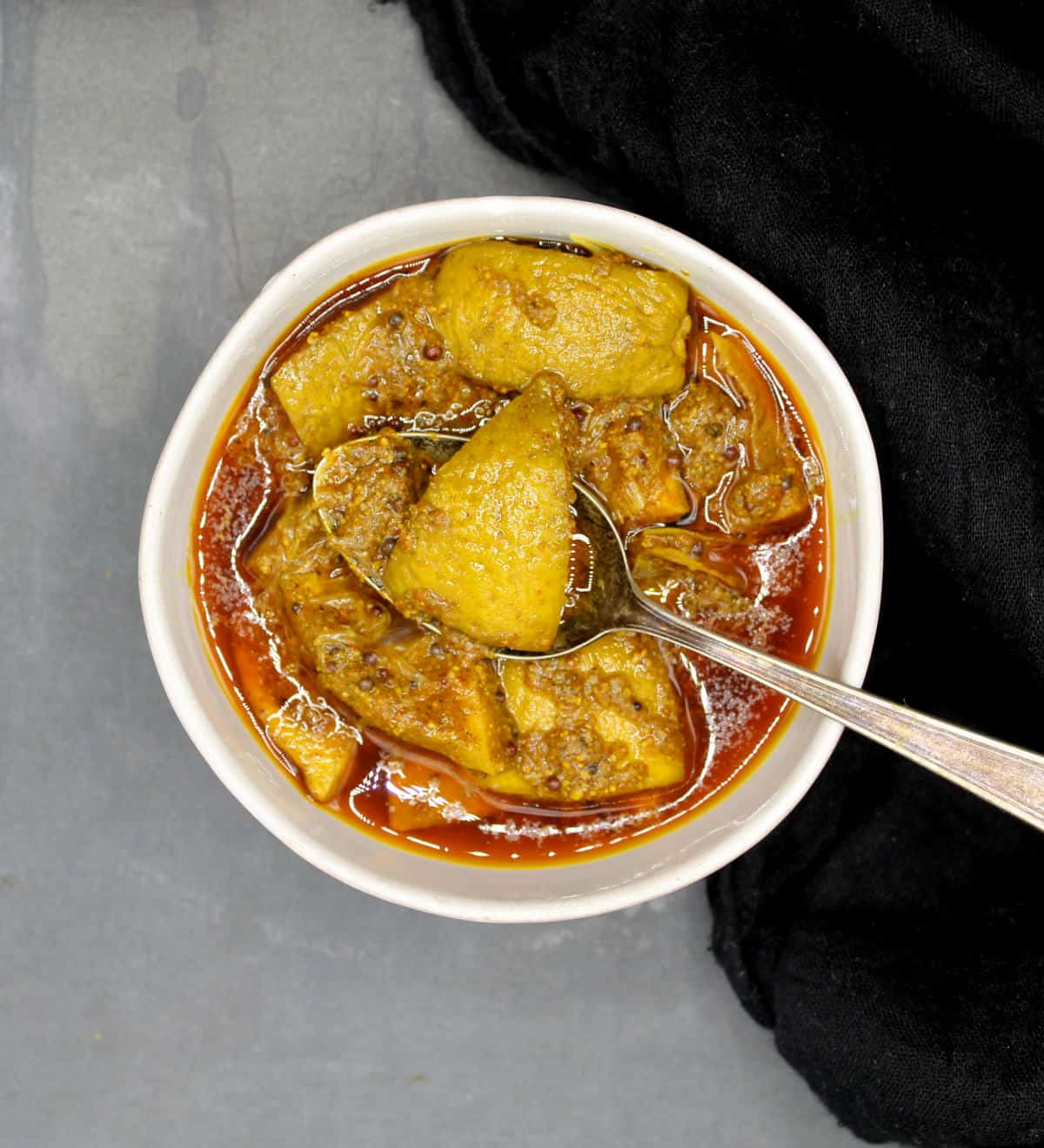
Key food safety tips
With any cured or fermented food, there is a chance of mold developing. Follow best practices, like ensuring the limes are completely dry before you make pickles and sterilizing the mason jar you use to store the pickles to reduce chance of mold. Also make sure you don't cut down on the amount of oil and salt --it might seem a lot, but remember, that jar of pickles has at least 40-50 servings. If you do see mold develop on the pickles at any point, discard it immediately.
It is also important to know that with all home-cooked and preserved foods, including pickles, there is a risk of botulism - a rare but serious and sometimes fatal illness caused by certain bacteria that are naturally present in many places. Botulism is not easily detected without lab tests, so make sure you educate yourself thoroughly before making any pickled and preserved foods, including this pickle.
Always keep the pickle refrigerated and use a clean, dry spoon to scoop it out of the jar.
Indian lime pickle FAQs
Because this pickle is naturally fermented it may contain beneficial lactic acid bacteria. However, because the type and amount of bacteria can vary from batch to batch I would call this a fermented pickle and not a proven probiotic food.
Try and pick limes with a thin rind for pickling. If the rind is thick, cut the limes into very small pieces.
Absolutely.
Mustard oil is traditionally used to make pickles in India but it is not easily available in the United States. The U.S. Food and Drug Administration warns that mustard oil has a high percentage of erucic acid, which can increase the risk of heart disease. If you plan on using mustard oil make sure you check the label and buy a product that is legally sold and labeled for culinary use in your area.
Yes. A hot summer sun is definitely best for pickling, but in cooler weather place the jar of pickles on a sunny window sill or sunroom where it will get some direct sunshine during the day.
Dal and rice are a perfect meal to serve this pickle with. I'd serve this with a simple and easy dal like tomato dal and basmati rice or jeera rice. Or serve it with this Masala Khichdi.



Nani says
Hello, thanks for this recipe. Would you be able to provide an approximate weight for “8 medium-large limes.” My limes are small.
Jaye says
Hi there, is it essential to refrigerate unopened bottles? I don’t have fridge space.
Vaishali says
Yes always refrigerate the pickle.
Bonnie Kitchen says
I absolutely love lime pickle was does my whole family (I'll make a curry just so I can have lime pickle with it!!!), but recently haven't been able to find it in stores. (Texas) So this is my first attempt. 🤞🤞🤞.
Padma says
Firstly, Thank you very much Vaishali, for the detailed lime pickle recipe(especially, Thank you for your patience in explaining every step)Though I have taken good care & ensured that no moisture, wetness & no mold, yet my lime pickle smells as old(not fresh).
What to do to refreshen my pickle? is there any remedy?
I don't want to throw away the pickles, but Iam not even relishing/ enjoying it.
Vaishali says
Hi Padma, If the pickle smells off, something is probably wrong and you shouldn't eat it. Did you ensure the limes and spices were submerged in oil at all times? I tamp down the lemons into the oil with a clean spoon everytime I open the jar to make sure everything is completely submerged in oil. Any exposure to the air can cause mold and even if you don't see it, it is likely there if the pickle tastes moldy.
Padma says
Yeah Vaishali,
I made sure that my lime pickles are always submerged in oil all the times. Infact I mixed them with a spoon everyday.
I din't see even a trace of any mold all these days. Initially for a month or so it smelled fresh, but later slowly lost its freshness & eventually started smelling little stale(this being the 2nd month after preparation).
I don't want to throw them away, as the quantity is huge.
Let me know if there is any quick Tips/ Hacks/ Tricks to refreshen it OR to do away with the old smell atleast.(like for e.g. can I mix methi powder OR mustard powder etc. , to refreshen it?)
Let me know please!
- Thanks in advance!
- Padma
Vaishali says
Hi Padma, I don't quite understand what an "old" smell is, and all I can say sitting here without looking at or tasting the pickles is to be careful not to consume anything that may be spoiled. Also be sure you store the pickles in the fridge after they have fermented.
Emmeline says
Hi there, thanks for the recipe. I made it last night. However, I’m curious to know if it’s essential so put the jars in the sun? Is this just a faster way of curing them?
Vaishali says
The sun is essential to cure Indian pickles the right way. If you try to ferment them on the countertop there is a chance they could get spoiled. If putting them in the sun is not an alternative you can skip the fermentation altogether and store them in the fridge.
Sally says
You say to put it out in the sun altho I’m planning to make it now, in November, when there’s not reliable sun. How and where do you recommend them curing in the cloudy, colder months?
Thank you
Vaishali says
Indian pickles need to ferment in the hot summer sun, so it is always best to make them in summer. You can try leaving them in a sunny window but I am not sure how long that would take. Also be careful to keep the limes completely covered in oil and monitor closely for any mold development.
Maureen says
Should the limes be completely submerged in the oil?
Vaishali says
Yes, leaving them exposed to the air could encourage mold. Make sure the oils are completely submerged.
Alamrin says
The limes are still hard. Is there a way to soften them by cooking?
Vaishali says
Like I said in the post, you need to look for and use thin-skinned limes or lemons or the skins won't be soft enough to eat. You can't cook them after they have pickled for the obvious reason that you'll destroy any probiotic benefits. Next time if you can't find thin-skinned limes cut them very small - about a 1/4 inch cubed.
Nteke says
I made this lemon pickle as per recipe and was a success . My friends are asking for more. Thanks for sharing this easy to make recipe
Vaishali says
Yay!! So happy it was a success, and you loved it.
Toni Rooney says
I am in Australia and have an abundance of limes but it is winter (ie limited sun shine). Is there another way I can complete the process?
Renee says
Is this pickle eaten as is? I'm curious how to manage the larger lime pieces? Or is it put into other dishes.
Vaishali says
Yes! The limes, especially if you are careful to pick out ones with a thin, smooth skin, will soften as they pickle and they taste great as a side with rice and dal. You can also cut the lime pieces in small sizes if you would prefer that--I find that cutting them in a small dice of a centimeter each makes them very soft after they have fermented.
Ceri Cort says
Oh it’s glorious NOTHING. Like jars from the supermarket or restaurants. Trouble is getting beautiful unwanted limes and ordering the sunshine at the sa:e time. Lovely with cheese yummmm x
Susan Miller says
I just fell over your recipe on Pinterest! It looks great! I already make a lemon pickle in the hot sun here in northern Portugal but it’s without oil. My limes are ready falling off the tree and I’m going to wash, chop and freeze them..and wait until the hot weather to make your pickle on our balcony in full sun! I’ll come back and tell you how it went! I can’t wait! 😛
Dana says
I am a long-time fermenter and have some tips that may be helpful for those of us who live in colder climates and/or are trying this recipe in the winter months. This mixture will still ferment at room temperature, but will just proceed more slowly. You can compensate for this in one of several ways: chop your limes smaller to expose more surface area, leave out of the refrigerator longer, and use less salt. The converse is true in the summer, incidentally. Traditionally, a higher salt percentage is used during warmer temperatures to slow down the fermentation process (if it proceeds too quickly, it can compromise the texture of the vegetables - sauerkraut will become unpleasantly mushy, for instance). Hope this helps!
Vaishali says
Thanks for the great tips, Dana. I would recommend against reducing the amount of salt, however, because that amount is important for preserving the limes correctly.
Cat Fergusson says
This sounds great, would love to make it, but it's December, my limes need picking and there's no sun to rely on, how long should it ferment for in cool temperatures (about 19°c/66°f in the house)
Vaishali says
Hi Cat, The strong sunlight helps the limes ferment without spoiling. You can't achieve this at room temperature. If you have to make them now leave them in the fridge for about a month. I don't know if they will become probiotic but at least it should give the flavors some time to merge.
ALICE Julian says
It is winter and the sun is not hot. What do I do when I can't put the pickles in the sun?
Vaishali says
You do need a hot sun for Indian pickles. Not sure what advice I can give, maybe you can just store them in the fridge for a few months and then use, which would give the bacteria a safe place to multiply?
Ben says
This lime pickle is outstanding. It is lime season in Coromandel, New Zealand, and after lime marmalade, lime syrup & lime sorbet I was struggling to know how to use them when I thought of lime pickle.
It was amazing how it developed over the days, (I had it in the sunlit window for 2 weeks) from quite a sharp over perfumed taste to mellow, rich & complex. It is so superior to anything we can buy in a NZ shop. Amazingly delicious, thank you. I am about to do a another (double portion) batch today ..
Daljit says
Hello Jee tried the lime pickle recipe. It turned to be so good. We are very happy with it. Daljit
Ian says
I've really enjoyed making this and many other of your recipes. We have not had the sunniest weather and after 10 days being out in the sun each day it is still quite sharp and the skins a little tough. Is there a way to speed up the process or cook the pickle a little if I want to serve some in a few days time?
Nicolaas says
An very nice, nay excellent, recipe.
I only use a tablespoon of mustard seed oil, I find the taste too dominant if used more extensively, I'll use a neutral olive oil for the rest.
Note, you can use this lime achar not just as a side dish, but also add it to dishes like eg. mince & mushrooms. Lime achar is very versatile in this respect. My young children are not keen on lime achar as such, but if used in these kind of dishes they gobble it up.
DiverDave says
Well, we have our 1st batch of pickles done. What they call limes here in the Philippines are really just green lemons. But they do have calamansi which are like key limes, only smaller and sweeter. So I used those. Very, very thin rind and the seeds are so soft I left them in. We had run out of fennel seeds and the stores do not keep up with stocking shelves so I used some star anise. Also no asafoetida so I used minced garlic. We may have used a bit too much salt as a seed I tried was salty. I'm hoping the saltiness will drop as the sourness increases. I know sauerkraut we make doesn't really get very sour but stays more salty. I blame the poor quality of cabbage. It is hot here but our apartment gets very little sun so the pickles may just end up fermenting in a warm room. I had tried a jar of Patak's lime pickles several years ago and loved them so I'm hoping these pickles turn out as good. I'll try to update in a week or two.
DiverDave says
Okay, so today is day 6 of fermentation. Here are some observations:
1) the calamansi is not at all soft; definitely some firmness that is unlike the lime pickles I had before.
2) they are not at all sour. Maybe some of the sourness of real lime pickles comes from the limes themselves so these sweeter limes are not adding any sourness?
3) my fear that they would be too salty was unnecessary. The saltiness has faded and the pungent spices have intensified.
I'll let these ferment a while longer. I think in the future I will either switch to lemons or maybe add some lime juice. I also have powdered citric acid; I'll have to search to see if that may be something to try.
Nicolaas says
Aaaah, kalamansi, I miss that fruit. I doubt wether one can obtain it outside the Philippines
Steve Ranner says
MAny thaks
DiverDave says
Keep in mind, sauerkraut is bottled, usually, at room temperature. When the lid is put on, the pressure inside the bottle is about the same as outside. So when CO2 is released you get an increasingly positive pressure inside. With the lime pickles, they and the oil are still hot when the lid is put on. As the bottle cools a negative pressure occurs inside (unless the lid leaks). So as CO2 is released all it does is gradually offset the negative pressure until at some point it either equalizes or sugar is depleted and CO2 production stops.
Catherine Dun says
Absolutely love this recipe - have made it twice this autumn/winter, that's when our limes in New Zealand seem to be in abundance so there's not always the hot sun to bathe them in, but do my best. Those rays surely burn through the cloud cover!
I have passed this recipe onto two friends, its fabulous, thanks Vaishali.
Vaishali says
Hi Catherine, so happy to hear you’ve enjoyed the pickle!
Krysia says
Hi - reading through your instructions...regarding point 5, what do you mean by 'or stoop for 5-7 days'? What do you mean please?
Vaishali says
Hi Krysia, a front stoop is just the platform and stairs leading to the front door. Basically that sentence is just telling you to place the jar of pickles in any outdoor area of your house, like a deck, porch, or front stoop. 🙂 Hope that helps.
A R (Sandy) McColl says
Really keen to try - just a question on the cayenne. Can you have a 1:1:1 mix of cayenne,paprika and Kashmiri pepper. I am looking for a solid burn that doesn't turn into a test of wills - me versus the pickle. I enjoy this type of challenge but apparently I am the only one.
Keen to try other recipes.
Cheers
Sandy
Vaishali says
Hi, you can definitely modify the amount of chili pepper--a 1:1:1 mix of cayenne, paprika and Kashmiri pepper sounds good. Some Kashmiri chili pepper powders I've noticed are quite spicy, so do check that first. 🙂
rebecca says
i LOVE lime pickle! my friend gave me a bunch of limes from her garden and i cannot wait to try this recipe... it seems to be the most authentic.
Vaishali says
Awesome, hope you try!
Albert L J Hall says
The SALT is not exactly a preservative. It provides a medium for LACTO-BACTERIA to flouish. These bacteria convert SUGARS into LACTIC ACID which IS the preservative if LACTO FERMENTED and which provides the SOUR taste of such product incluing SAUERKRAUT and KIMCHI. Speakinh g of KIMCHI I actually use KOREAN CHILLIE PAST {GOCHUJANG] for this kind of thing and in CURRIES. It does give a different 'strata to curries lime and lemon pickle. Other than that it's a pretty damn good and authentic recipe
Drew Peacock says
"Once the pickle is ready, refrigerate immediately."
how do you know it's ready? no sunny days here for next 6 months so are there any physical indications?
Vaishali says
You can eat them right after making them if you want to. But seven days or so is roughly the time it will take for the limes to soften. In cooler temps you will need to give a few days more.
Patrick says
Her are some physical changes to watch for: The lime skins will change color from green to yellow and soften in a few days. These changes also results in the limes loosing their firm appearance and getting mushed up.
C says
Very cool— excited to try it. So with this fermentation there's no risk of dangerous pressure buildup in the jar? Recipes I've seen don't seem to mention releasing gas regularly. Thanks.
Vaishali says
I'm not an expert on the topic of pressure buildup but I don't pack the jar all the way to the top. I've personally never had any problems. If you have concerns it would be a good idea to check with someone who knows more about this.
Albert L J Hall says
RE my perevious comment. LACTO-FERMENTATION inevitably produces some CO2 as sugars are converted to LACTIC ACID. But if you do not tighten down the lids excessively the CO2 will escape . If you use clip lid jars the lid will lift before any damage and with crew tops once again leave 'thumb and finger' tight. Once available sugar has been converted to lactic acid fermentation will stop. ON a personal not. I learnt my lesson when a LACTO FERMENT - in this case RED CABBAGE SAUERKRAUT went 'off' like a mini-grenade.
Lynn says
We don't have consistent sunshine here. And our temps are generally cool. Could I process this differently? How? Thanks, I'd love to make this.
Lynn
Vaishali says
Hi Lynn, while a hot sun is great for this, just a sunny spot in cooler temps will work too. You might need to leave it out for a couple days longer. I don’t consistently get sun everyday either, some days are cloudy and rainy. On days like those place it on a window sill inside the house and send it back out the next day when the sun returns. ?
Ambica says
Lynn,
I just place it over the heater vents in winter - not as good as the sunshine but it works:)
Vaishali says
Great tip, thanks for sharing!
Murray says
Looks like a great recipe!
Sue says
What can we do if we live in a condo with no balcony ? :-/