

This sourdough baguette is artisanal and so simple to make using just flour and a bubbly sourdough starter. It has a crackly crust and a fluffy crumb - perfect to dunk into a soup or stew or to eat with a dab of vegan butter!
Got sourdough starter? You might like these recipes for crusty sourdough rolls, no-knead sourdough bread and sourdough sandwich bread.

The simple act of baking your own bread, cutting a slice hot from the oven, watching a dab of butter melt over it, then eating it with a cup of tea can be a simple act that offers a bit of comfort and control at a time when you really need it
Yesterday, I baked up this, my favorite loaf of sourdough French bread, because I needed some comforting.
It's a simple recipe, requiring almost no thought, little labor, and just two ingredients: a healthy, recently fed sourdough starter and flour.
Take 10 minutes to put the dough together, and the next morning put it in a screaming-hot oven. Then take a deep breath as the aroma of baking bread fills the house, and, for a few minutes, transport yourself to a French bistro, about to dunk that perfect bread into a cup of coffee and bite through the crackly crust into a soft, fluffy crumb. Bliss.
Jump To
An easy but artisanal bread recipe
This sourdough French bread recipe has none of the complicated techniques associated with artisanal bread making, particularly with making a good baguette. I deliberately kept it that way because while I love baking bread, I don't love recipes that involve more steps than I have the patience to follow!
Despite the simplicity of the recipe, this baguette is so, so good: it has a crackly crust, a fluffy, airy, light crumb, and amazing sourdough flavor.
Because we are working with sourdough, and the wild yeast need more time to act than active dry yeast or instant yeast out of a packet, this bread, like most sourdough breads, will need an overnight proof. But that overnight rise builds lots of flavor and makes the bread structurally sound.
Sourdough French bread ingredients
- Bread flour. Bread flour is preferred, but you can use all-purpose flour if that's all you have. The bread might be a tad more dense but it will be delicious.
- Active sourdough starter. Make sure you use a mature starter that was fed eight hours ago and is bubbly and active.
Top tips
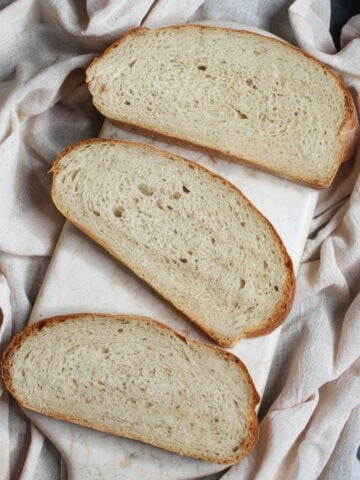
- Use a robust, recently fed starter. A very active, bubbly starter will reward you with the best texture. I typically feed mine about eight hours before making the bread, but I have also tried making this recipe with a starter that was fed more than two days ago. It did work, and it tasted amazing, but the crumb was slightly more dense - perfect if you plan to use the bread to make sandwiches (see pictures below to spot the difference).
- A sticky, slightly wet dough will create an airier crumb. A wettish dough may be a bit harder to work with, especially if you are new to making sourdough breads, but it is key to those airy holes and crackly crust.
- Don't overproof the bread. Eight hours for the first rise and two hours for the second rise should be quite enough. Over-proofed bread dough will end up in flat loaves with no structure.
- Add water to the oven for a crusty loaf and better color. I place a pan of water on the lowest rack of the oven to help the bread develop a crackly crust and a lovely, golden-brown color.
- Cut gashes into the top of the loaf. This helps the sourdough gases escape and it gives the bread an authentic look of a baguette. If you skip this step the loaf will crack open at another spot and that won't look great.


How to make sourdough French bread

Place sourdough starter in a bowl and add to it a cup of flour. Mix with a spoon or in a stand mixer set to medium-low speed until the flour has incorporated into the sourdough. Add another cup of flour and salt and knead again until a smooth but slightly sticky dough forms.

Continue kneading for six minutes until the dough is very smooth and supple but still slightly tacky (a bit should stick to your fingers when you touch it). You can add a few more tablespoons of flour if the dough is too sticky to handle. If doing this without a stand mixer, a bench scraper really helps get the dough off the surface. Shape the dough into a smooth ball, place in an oiled bowl, turning the ball of dough once to coat it with oil, then cover with cling wrap or a tight lid. Set aside to rise overnight or for eight hours.

After eight hours the dough will be very puffy and should have risen quite a bit. Turn it on to a lightly floured surface.

Using your fist, punch down the ball of dough into a disc, about eight inches in diameter. I like flipping the disc over next so if there are any rough spots on the bottom they will disappear inside the loaf.

Begin rolling the disc of dough into a cylinder. Roll once, press the seam down into the dough with your fingers or the heel of your palm.

Continue rolling until a cylinder forms. Press the seam firmly into the dough and turn the cylinder seam-side-down.

Use your palms to roll the baguette to a length of about 12 inches. Make sure you seal the tips. Place the baguette on a floured baking sheet and then coat the baguette lightly with flour. Cover with a kitchen towel and let it rise two hours.

Preheat the oven to 500 degrees Fahrenheit/260 degrees Celsius. Place a small oven-safe pan with water on the lowest rack in the oven. Once the oven has preheated, make three gashes in the loaf using a bread lame (a French tool) or a sharp knife or blade, taking care not to deflate the loaf. Bake 10 minutes, turn heat down to 400 degrees F/205 degrees C and bake 20 more minutes. Cool thoroughly on a rack.

Recipe FAQs
To make very tapered ends, like in a classic French baguette, just use your palms to roll the ends out after forming the baguette. To make a boule, shape the dough into a ball instead of a cylinder. Let the bread dough rise, slash, and bake it.
My sourdough starter has a high hydration: 1 cup flour to ¾ cup water, so I don't usually need to add more water. If your starter has lower hydration, you might need to add more water. Trickle in warm water, a tablespoon at a time, after adding two cups of flour.
Whole wheat flour won't give you the airy crumb of a classic French baguette. That's because whole wheat flour doesn't have as much gluten as all-purpose flour and bread flour (which has an even higher gluten content). That said, you can substitute a cup of the bread flour with whole wheat flour to make the dough. You might also want to check out my recipes for whole wheat sourdough baguettes or whole-wheat French bread.
No. French bread is usually not made with sourdough, and you can find a recipe for a regular French bread here.
The bread tastes best the day it is made. You can refrigerate it for up to four days, and freeze it up to three months. Thaw the bread fully and pop it into a hot oven for a few minutes before serving.
Yes! Double all ingredients and shape into two loaves.

Love this recipe? Please leave a comment and star rating below. For more delicious plant-based recipes subscribe to my newsletter or follow me on Pinterest, Instagram or Facebook!
Recipe card

Sourdough French Bread
Equipment you'll need
- Large bowl or stand mixer
- Baking sheet
- French lame or sharp knife or blade
Ingredients
- 1 cup sourdough starter (feed the starter about 8-12 hours before making the dough)
- 2 to 2½ cups bread flour (you might need more if it is humid where you are)
- 1 teaspoon salt (use more or less salt to taste)
Instructions
- Place sourdough starter in a bowl and add to it a cup of flour. Mix with a spoon or in a stand mixer set to medium-low speed until the flour has incorporated into the sourdough. Add another cup of flour and salt and knead again until a smooth but slightly sticky dough forms.
- Continue kneading for six minutes until the dough is very smooth and supple but still slightly tacky (a bit should stick to your fingers when you touch it). You can add a few more tablespoons of flour if the dough is too sticky to handle. If doing this without a stand mixer, a bench scraper really helps get the dough off the surface.
- When you've finished kneading, shape the dough into a smooth ball and place in an oiled bowl, turning it over once to coat it with oil. Cover with cling wrap or a tight lid and set aside to rise overnight or for eight hours.
- After eight hours the dough will be very puffy and should have risen quite a bit. Turn it on to a lightly floured surface. Using your fist, punch down the ball of dough into a disc, about eight inches in diameter. I like flipping the disc over next so if there are any rough spots on the bottom they will disappear inside the loaf and the top will be smooth.
- Begin rolling the disc of dough into a cylinder. Roll once, press the seam down into the dough with your fingers or the heel of your palm.
- Continue rolling until a cylindrical loaf forms. Press the seam firmly into the dough and turn the loaf seam-side-down.
- Use your palms to roll the baguette to a length of about 12 inches. Make sure you seal the tips. Place the baguette on a floured baking sheet and then coat the baguette lightly with flour. Cover with a kitchen towel and let it rise two hours.
- Preheat the oven to 500 degrees Fahrenheit/260 degrees Celsius. Place a small oven-safe pan with water on the lowest rack in the oven.
- Once the oven has preheated, make three gashes in the risen loaf using a bread lame or a sharp knife or blade, taking care not to deflate the loaf. Bake the bread 10 minutes, then turn heat down to 400 degrees F/205 degrees C and bake 20 more minutes. Cool thoroughly on a rack.



Pattiathome says
Mixed dough last night and baked midday today, absolutely delicious! I only used 2 cups (in grams) of bread flour but had to add a small amount of water to get the dough to come together. Will definitely make this again!
Andrea says
This was simple yet delicious! It has already been requested by my kiddos again. Thank you for a great recipe!
Paul h Housman says
Can you use just whole wheat flour min the sour dough starter? How would the recipe change???
Vaishali says
I have a whole wheat French bread recipe that's linked above, or use the site search!
Reina says
I needed to add a little water but otherwise worked like a charm. Delicious bread! Thanks for the recipe.
Debbie says
No water? The recipe really calls for only starter and 2 cups flour?
Vaishali says
My sourdough starter recipe has a lot of liquid so I don't need to add more water. If you use a sourdough starter with different hydration, trickle in water after adding 2 1/2 cups flour as needed to make a slightly tacky dough.