

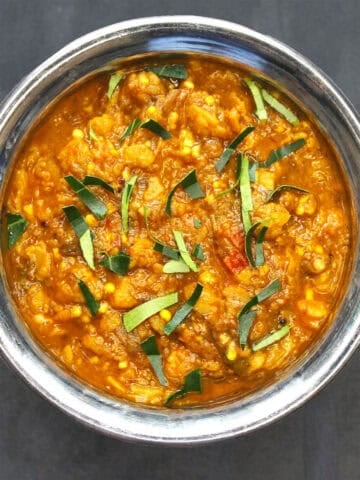
On the freezing slopes of the Himalayas, locals feast on a homely but unique dal, called chaunsa dal, made with roasted and coarsely powdered black gram lentils or urad dal. The roasting adds a rich, nutty flavor to the dal, which is then simmered with onions and a few simple spices.

Jump To
What is Chaunsa Dal?
Chaunsa Dal (sometimes called "chainsoo dal") is a simple but tasty dal from the Indian state of Uttarakhand, nestled on the southern slopes of the Himalayas. What makes it special is that the lentils are roasted, then powdered, before they are cooked. The small twist results in a nutty, deeply flavorful dal that tastes wonderful with rice or roti.
Urad dal or black gram lentils are a staple in kitchens around India, from the north, where it features in dishes like dal makhani or this spicy urad dal, and in the south, where locals add it to idli and dosa. They are especially popular in India's freezing Himalayan regions because they are considered slightly warming to the body.
The variety of urad dal used in this recipe is the kind with the skin on: chilka urad dal or sabut (whole) urad dal. You can find it at any Indian store or online, and you can read more about chilka urad dal and sabut urad dal in my guide to Indian pulses.
Chaunsa dal includes a small amount of flour to give the dal its silky texture. To keep this dal gluten-free I used rice flour. The dal is soy-free and nut-free.
Ingredient notes
- Chilka urad dal or sabut urad: Urad lentils or black gram lentils with their skins on are available either as split lentils (chilka urad dal) or as the whole bean (sabut urad). You can use either of these in the chaunsa dal recipe. Be sure to look over the lentils once to clean out any debris, then rinse and strain them in a colander before you roast them.

- Mustard oil. This is the oil of choice in India's mountainous regions, and it is delicious in chaunsa dal. Mustard oil has a rich, spicy flavor but you do need to heat it to the point of smoking before you begin adding ingredients to it. If you don't have mustard oil, you can use any neutral cooking oil, like avocado oil, sunflower oil or grape seed oil.
- Spices: You will need just one whole spice - black mustard seeds - and a few powdered spices, including asafetida, ground cumin, ground coriander, ground black pepper, turmeric and cayenne or Kashmiri chili powder. The spices add much-needed warmth to the dal and to the body during the winter months.
- Aromatics: Onions and ginger garlic paste. As with all Indian recipes, red onions are preferred. If you haven't already made my ginger garlic paste recipe, which can be stored in the refrigerator for weeks, crush six cloves of garlic and an inch-long knob of ginger in a mortar and pestle for this recipe.
- Thickener: rice flour. I used rice flour because I wanted to keep the recipe gluten-free. You can use all-purpose flour instead.
- Garnish: a bit of freshly chopped cilantro adds fresh flavor to finish of this pantry-friendly dal. Chaunsa dal does not typically include tangy or sour ingredients, but if you want to you can squeeze on some lemon juice for freshness.
Recipe card

Chaunsa Dal (Chainsoo Dal) Recipe
Equipment you'll need
- Blender
- Saute pan or Dutch oven
Ingredients
- ¾ cup sabut urad (raw)
- 1 tablespoon mustard oil (or any vegetable oil)
- 1 teaspoon mustard seeds
- ¼ teaspoon asafetida (hing)
- 1 large red onion (finely chopped)
- 1 heaping tbsp ginger garlic paste (or crush six cloves of garlic and a one-inch piece of ginger in a mortar and pestle)
- ½ teaspoon ground black pepper
- 1 tablespoon ground coriander
- 1 teaspoon ground cumin
- ½ to 1 teaspoon Kashmiri chili powder (or cayenne, tweak to your taste)
- ½ teaspoon turmeric
- 1 tablespoon rice flour (or all-purpose flour)
- Salt to taste
- 2 tablespoon cilantro (minced)
Instructions
Roast the sabut urad
- Rinse the sabut urad in a strainer and let all water drain out.
- Heat a sauté pan or Dutch oven over medium-high heat. Add the washed urad to the pan and roast it until it is aromatic, about five minutes. Remove the urad to a plate or bowl and let it cool to room temperature. Place the urad in a blender and blend into a coarse powder - it shouldn't be a flour, but you shouldn't have any large pieces or whole beans either.
Make chaunsa dal
- Heat oil in the same pan over high heat. If using mustard oil, wait until the oil starts to smoke. Add mustard seeds and when they sputter, add the asafetida and the onions along with a bit of salt. Sauté the onions until they begin to turn color.
- Lower heat to medium and add the ginger garlic paste, ground black pepper, ground cumin, ground coriander, turmeric and Kashmiri chili powder or cayenne. Mix and stir for about a minute to toast the spices lightly.
- Add the rice flour to the pan and mix it in.
- Stir in the powdered urad and sauté for a couple of minutes. Begin trickling in the water, a little at a time, mixing all the time so lumps don't form. After you've added a cup of water you should have a thick paste. Continue adding water, a cup at a time, until you've added a total of five cups of water. This might seem like a lot but the dal will absorb the water and thicken quite a bit as it cooks.
- Bring the dal to a boil, then turn heat to a simmer, cover the pan and let the lentils cook, 30-40 minutes or until they are soft and quite thick. Stir the dal frequently because the lentils have a tendency to sink to the bottom of the pan, especially before they have cooked.
- Once the dal has cooked and is quite tender and creamy, add salt to taste. Chaunsa dal is not meant to be tangy but if you want a bit of tang you can squeeze in some lemon juice at this point. Garnish with cilantro and serve the dal hot.
Notes
Nutrition Information
Step by step recipe instructions (with photos)

Rinse the sabut urad in a strainer and let all water drain out. Heat a large sauté pan or Dutch oven over medium high heat. Add the washed urad to the pan and roast it until it is aromatic, about five minutes.

Remove the lentils to a plate or bowl and let them cool for about 10 minutes.

Place the roasted lentils in a blender and blend into a coarse powder - you don't want a flour, but you shouldn't have any large pieces or whole beans either.

Heat oil in the same pan over high heat. If using mustard oil, wait until the oil starts to smoke. Add mustard seeds to the oil and when they sputter, add the asafetida and the onions along with a bit of salt.

Sauté the onions until they begin to turn color. This is how they should look before you proceed to the next step.

Lower heat to medium and add the ginger garlic paste, ground black pepper, ground cumin, ground coriander, turmeric and Kashmiri chili powder or cayenne. Mix and stir for about a minute to toast the spices lightly.

Add the flour to the pan and mix it into the onions.

Stir in the powdered urad.

Mix the urad dal into the onions and sauté for just a couple of minutes. You don't need to roast the lentils any more at this point but make sure you mix everything thoroughly.

Begin trickling in the water, a little at a time, mixing all the time with a spatula or ladle so lumps don't form. After you've added a cup of water you should have a thick paste like the one above.

Continue adding water, a cup at a time, until you've added a total of five cups of water. This might seem like a lot but the dal will absorb the water and thicken quite a bit as it cooks.

Bring the dal to a boil, then turn heat to a simmer, cover the pan and let the lentils cook, 30-40 minutes or until they are tender and quite thick. Stir the dal frequently because the lentils have a tendency to sink to the bottom of the pan, especially before they have cooked. Garnish with cilantro and squeeze in the optional lemon juice. Serve hot.
Serve and store
Chaunsa dal is delicious with rice or roti. You can also serve it with vegan naan. To keep this meal gluten-free, serve the dal with my gluten-free chickpea flour roti.
You can store the dal for up to four days in the fridge, or freeze for up to three months. Thaw and reheat the dal on the stovetop or in a microwave before serving, adding more water and salt if necessary.

This chaunsa dal is part of my occasional series on India's regional dals. You might also enjoy these recipes for Sindhi sai bhaji, Gujarati dal dhokli and Parsi dhansak.


Comments
No Comments