

Learn how to sprout mung beans the easy way with my step by step tutorial.
Sprouted mung beans are crisp, nutty and sweet. They are also extremely healthy and very versatile. You can add them to sandwiches, wraps and salads but I like them best in my sprouted mung bean burgers and Indian curries like usal and misal.
Making the sprouts is a lot of fun and you don't need any special equipment. I always have a batch going in my kitchen, especially during summer when the whole process takes under two days.
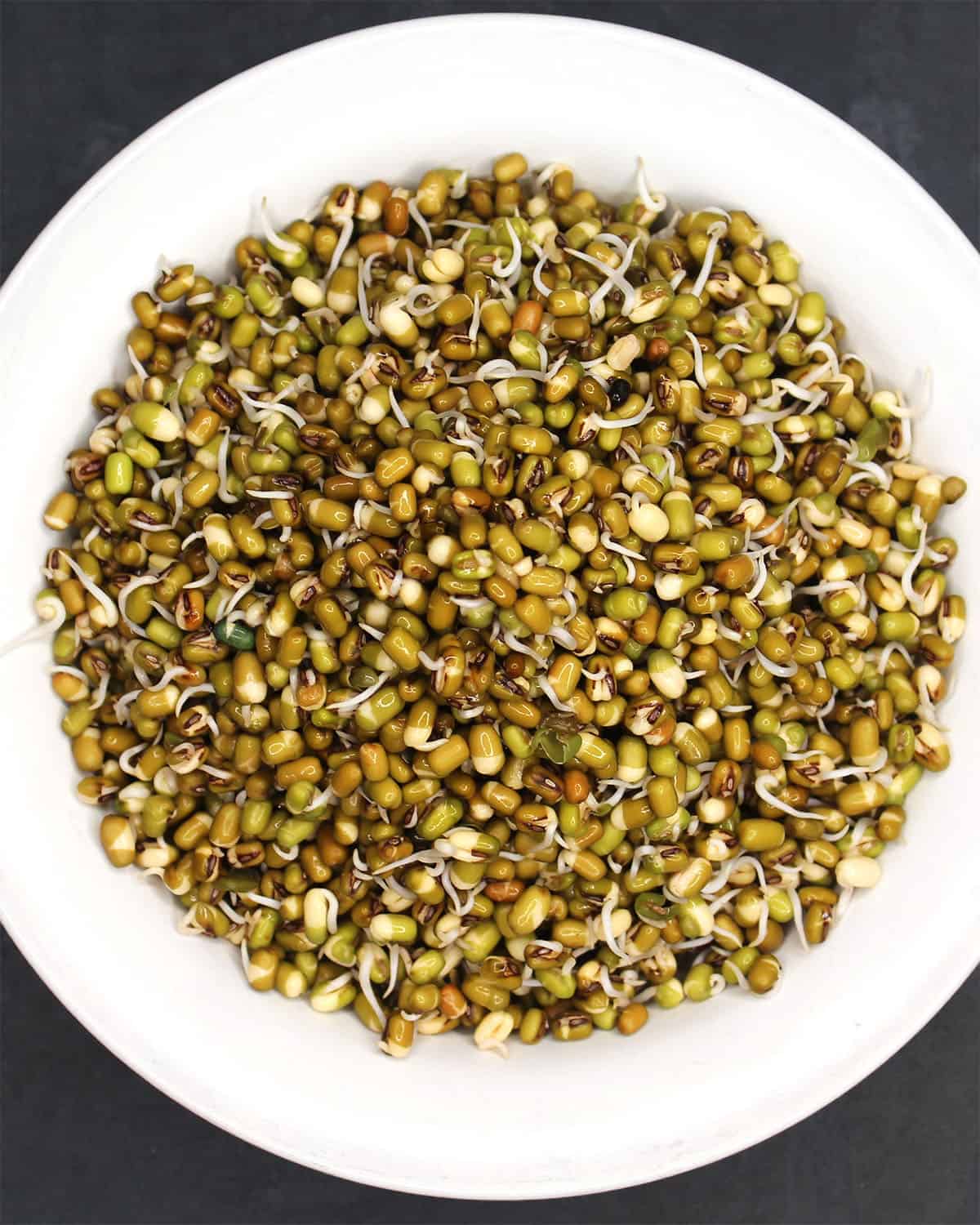
Sprouting mung beans
Mung beans are small, oval green legumes widely used in Asian cooking. These tiny beans have a delicious, slightly sweet and nutty flavor and they turn creamy when cooked, which makes them perfect in Indian dals like this simple moong dal.
Mung beans (Latin name vigna radiata) are incredibly healthy by themselves, with lots of fiber and protein. But sprouting them makes them healthier, and better. Sprouted mung beans are easier to digest and their antioxidant content increases as much as six times. Also minerals in the beans, such as iron and zinc, become more easily available to the body.
These are all great reasons to sprout mung beans, but there's more. Sprouted mung beans have a crisp texture and a fresh flavor and they are delicious both raw and cooked.
Finally, sprouting mung beans couldn't be easier, which is perhaps why they are the most sprouted legume in the world. In summer, when I usually sprout beans because the warm weather makes the process so much easier, mung beans sprout in under two days. I soak the beans first thing in the morning, strain them and let them stand in a covered colander or in a mason jar for about 16 more hours, and voila! Beautiful, foolproof sprouts. You can also do this in winter, but it might take a couple more days for sprouts to appear.
Mung beans were first cultivated in India, and not surprisingly they are widely eaten all around India. When I use mung sprouts in my Indian recipes I don't need them to get too long, just about half a centimeter or so. But if you are making Chinese style stir-fries or adding the sprouts to salads and sandwiches you might want to wait a day or two longer for the sprouts to lengthen.
Let's begin! And if you enjoy cooking with legumes, be sure to also check out my complete guide to Indian pulses to discover beans and lentils you might not yet be familiar with.
Recipe card
Sprouted mung beans
Ingredients
- 1 cup dried mung beans (sabut moong, pachai payaru)
- 3 cups water
Instructions
Rinse beans
- Place the mung beans in a colander and rinse them thoroughly under running water.
Soak beans
- Place the beans in a bowl and add the water. Cover with a lid or kitchen towel or cheesecloth and let the beans stand on the counter for eight hours or overnight.
Strain and sprout
- Strain the beans by placing them back in the colander. Cover the beans with the lid or kitchen towel or cheesecloth and let them stand for a day until small sprouts appear. Rinse the beans twice a day while waiting for them to sprout.
Store sprouts
- Once the sprouts have reached the desired length refrigerate the sprouts and use them within 2-3 days.
Nutrition Information
How to sprout mung beans (step by step tutorial)
Rinse and soak beans
- Place the beans in a colander and rinse them thoroughly to clean. Pick out any discolored beans.
- Place the rinsed mung beans in a bowl and add three cups water or enough water to cover the beans by about two inches.
- Cover the beans and let them stand for eight hours or overnight.
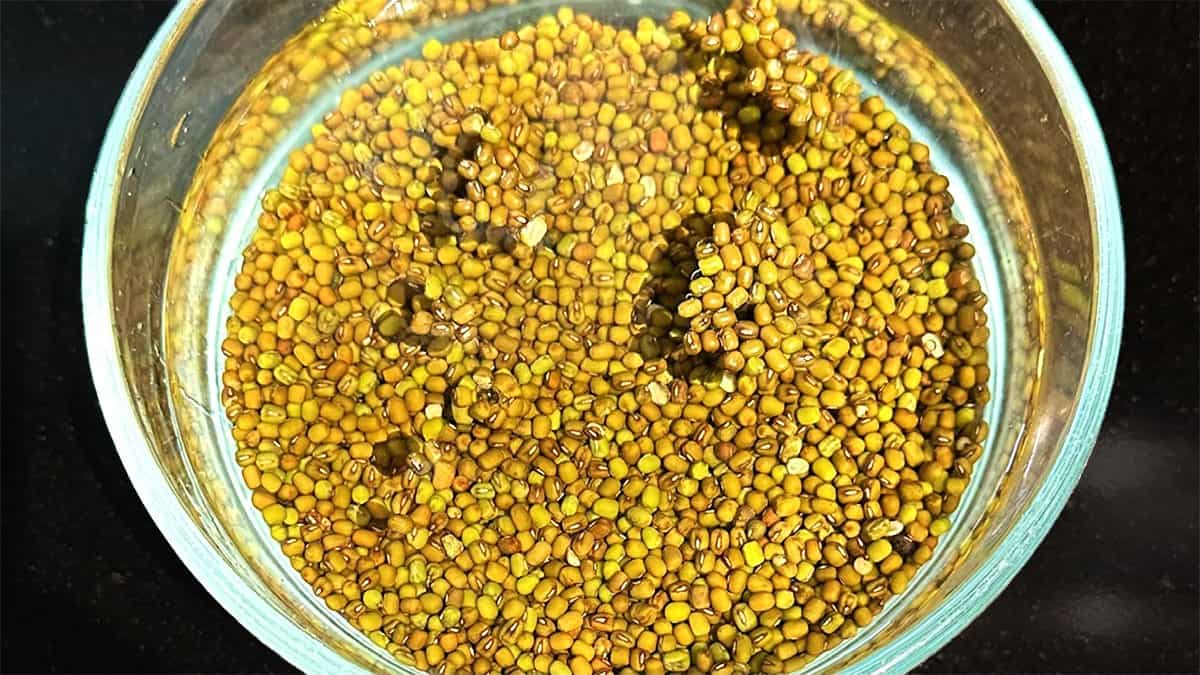
Strain
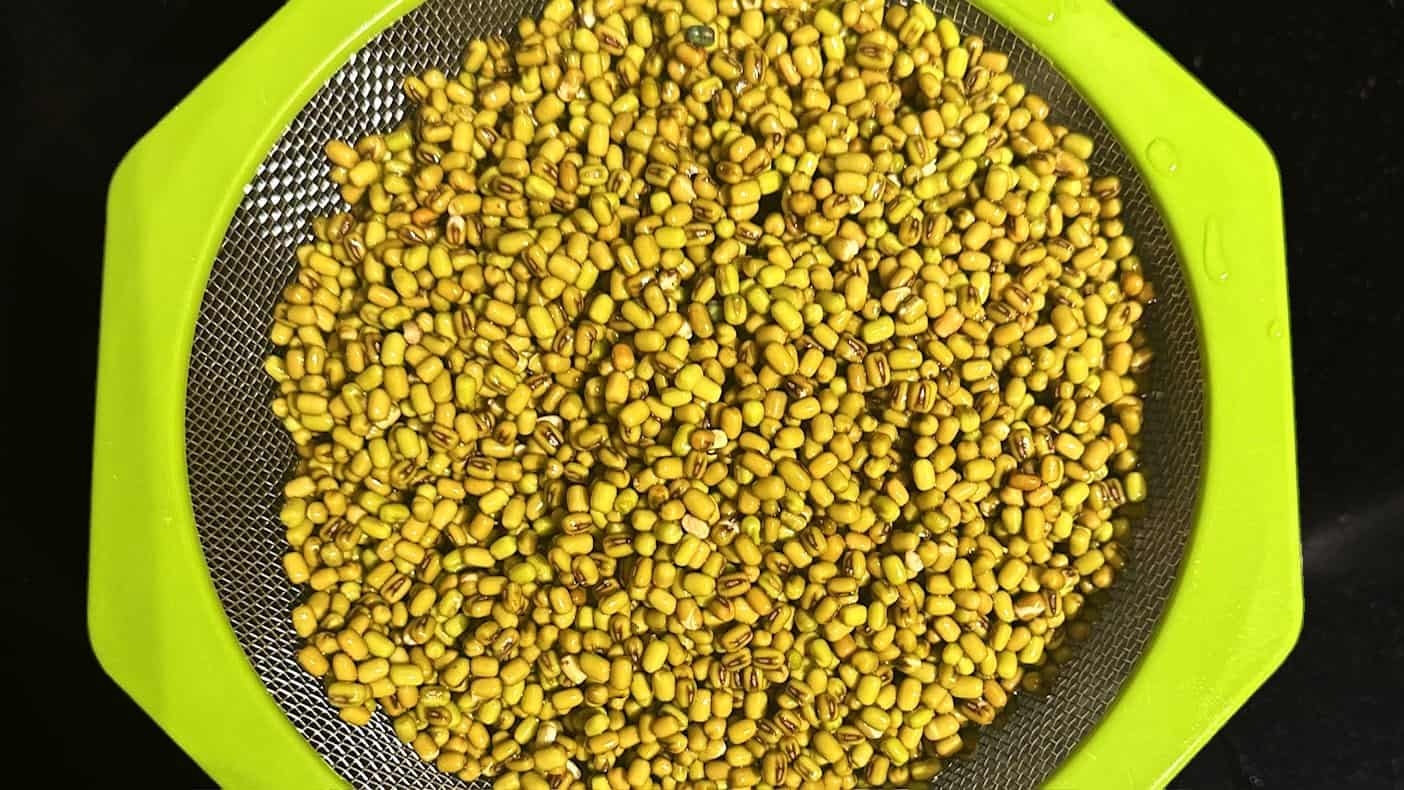
- After eight hours the beans will have absorbed a lot of the water and rehydrated, become more than twice their original size.
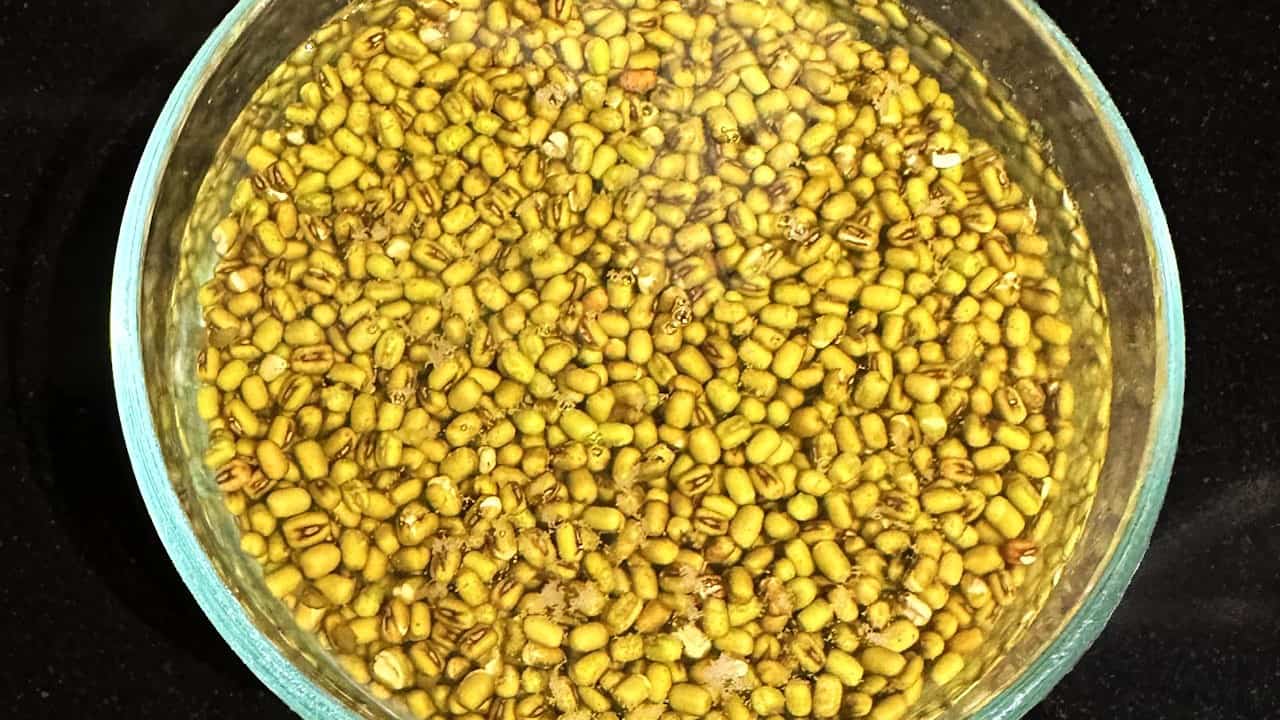
- Strain the beans in the colander. Place the colander over a bowl or on the counter, covered with a kitchen towel or cheesecloth, away from direct light. Rinse the beans twice a day, morning and evening, until they sprout.
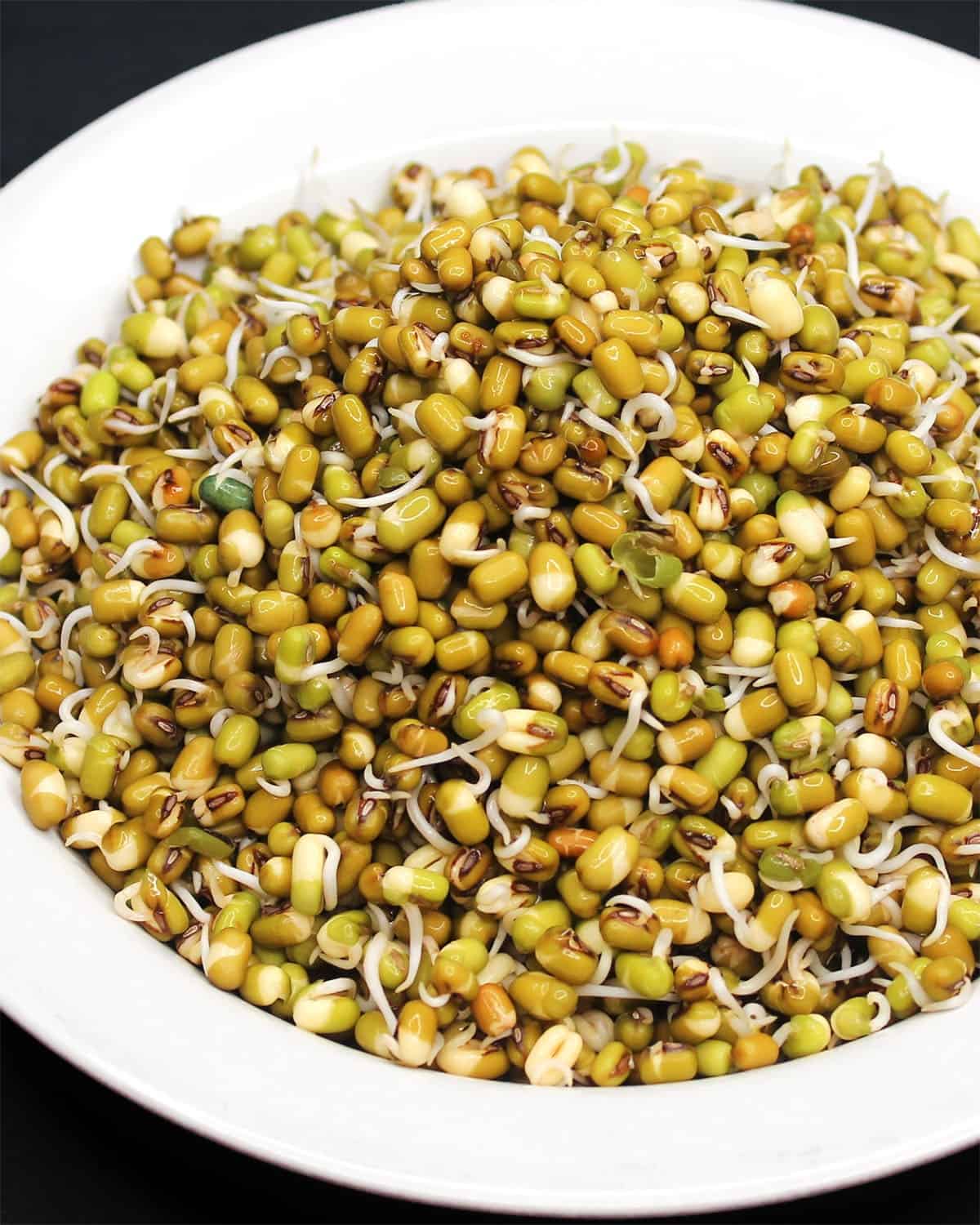
- Once the sprouts have appeared the beans are ready to use!
Recipe FAQs
For longer sprouts, simply continue to let the beans stand in a dark spot after sprouts have appeared, rinsing twice a day, until they are the desired length.
You don't need to buy special mung beans for sprouting - use any mung beans you buy at an Indian grocery store or online.
You can store them for up to three days in the fridge. For longer storage store in a freezer-safe bag or container for up to three months.
Absolutely. You can use this method to sprout most beans that can safely be sprouted, but keep in mind that it may take longer for some beans to sprout. Continue rinsing the beans twice a day until they sprout.
Absolutely. Follow the same steps to soak and sprout the beans in a mason jar. After straining soaked beans cover the mouth of the mason jar with cheesecloth secured with the mason jar band or an elastic band. Rinse and strain the beans twice a day until sprouts appear.
Some of my favorite recipes to make with mung bean sprouts are this Instant Pot khichdi with mung bean sprouts and this simple sprouted moong chilla, an Indian style savory pancake. You can also add the sprouts to my mung bean burger or high protein roti.
You can also use the sprouts in any recipe that calls for mung beans, like this moonglet.
Mung beans will take longer to sprout in cooler weather, or it is likely that you are using beans that are not fresh. If the beans have been sitting in your pantry for no more than a couple of years they should still sprout, but if they don't you just need to buy more beans.






Comments
No Comments