

This bisi bele bath recipe is a traditional south Indian dish of rice, lentils and vegetables. It's loaded with heart-healthy protein and it is soy-free and gluten-free.

What is bisi bele bath?
Bisi bele bath, also called bisi bele huli anna or sambar sadam, translates to "spicy lentil rice" and it's a dish that originated in the Mysore region of the south Indian state of Karnataka. Most recipes, in addition to the lentils and rice, include vegetables like potatoes, beans, green peas, eggplants and carrots. Combining these three food groups with a unique spice mix and tamarind produces a tangy, spicy dish that's much like a masala khichdi but differently delicious - loaded with nutrition and vivid, mouthwatering flavor.
My dad is from coastal northwest Karnataka, but bisi bele bath was not a dish we made at home. It was a treat we got to eat at south Indian Udupi restaurants in Bombay. Regional cuisines in India, even within the same state, can vary sharply based on location and historical influences. The cuisine of coastal Karnataka uses an abundance of fish, which was typically on the menu in my childhood home. But landlocked Mysore was once ruled by a vegetarian family and the cuisine is more vegetarian-friendly. Mysore is also closer to the Tamil Nadu border and it carries strong influences of Tamil cuisine. In fact, Tamil cuisine has a dish very much like bisi bele bath, called kadamba sadam.
Desi, who spent some time in Mysore and Bangalore many moons ago because one of his brothers lived there, loves bisi bele bath. So this is a recipe I've perfected for him over time. The success of this dish hinges on an aromatic spice mix called bisi bele bath masala. You can buy this powdered blend at an Indian store or online, but I strongly recommend making it at home for the best flavor and nutrition. It's very easy to make and many of the whole spices used are common to other Indian spice mixes, like garam masala and sambar powder.
Recipe card
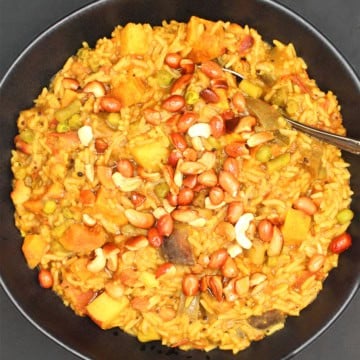
Bisi Bele Bath
Equipment you'll need
- Large pot or Dutch oven
- Pressure cooker or saucepan (for cooking dal)
Ingredients
- ½ cup toor dal (arhar dal/split pigeon peas)
- 3 cups cooked basmati rice
- 1 tablespoon oil
- 1 teaspoon black mustard seeds
- ½ teaspoon asafetida (hing)
- 3-4 sprigs fresh curry leaves
- 1 tablespoon tamarind extract
- 1 cup water
- ½ teaspoon turmeric
- 2 tablespoons jaggery (or sugar)
- 2 large tomatoes (chopped)
- 2 small sweet potatoes (peeled and chopped into ½-inch cubes)
- 2 medium waxy potatoes (peeled and chopped into ½-inch cubes)
- 2 small eggplants (chopped into ½-inch cubes)
- 1 cup green beans (chopped into ½-inch pieces)
- ½ cup frozen green peas
- 3 heaping tablespoons bisi bele bath masala
- Salt to taste
- ¼ cup cilantro (finely chopped, for garnish. Optional)
For final tadka (tempering)
- 2 teaspoons oil
- 2 tablespoons raw peanuts
- 2 tablespoons raw cashews
Instructions
- Heat the oil in a large pot over medium-high heat. Add the mustard seeds, wait until they pop, then add the asafetida and curry leaves.

- Sauté the curry leaves for a few seconds, then add the tamarind extract and 1 cup water. Stir in the turmeric.
- When the water comes to a boil, stir in the jaggery or sugar. Let the tamarind water cook 3-4 minutes on a simmer.
- Stir in the tomatoes and let them cook down a little, about two minutes.
- Add the sweet potatoes, potatoes, eggplants and green beans to the pot along with some salt. Mix well and bring the liquid in the pot back to a boil. Cover the pot and let the veggies cook 8-10 minutes or until they are very tender.
- Stir in the frozen green peas and mix, followed by the bisi bele bath powder.
- Add the rice and lentils to the pot. Mix them thoroughly with the vegetables and spices. Add another cup of water to the pot - you want the bisi bele bath to be slightly runny, like a khichdi or a risotto. Add salt to taste and mix.
- Once the bisi bele bath has heated through and bubbles appear in the liquid, cover it and cook on low heat for five minutes. Turn off the heat and give the bisi bele bath a good stir.


Make the tadka
- Heat the oil for the tadka in a small saucepan. Add the cashews and peanuts and cook them, stirring frequently, until they are a light gold color.
- Pour the nuts over the bisi bele bath. Garnish with cilantro, if using, before you serve.

Notes
Nutrition Information

Recipe FAQs
Toor dal is wonderful in bisi bele bath because it cooks up with the creamiest texture of all lentils. If you can't use it, substitute with skinned mung bean lentils or moong dal. You can read more about all lentils and beans used in Indian cooking here.
Yes. Just make sure you cook it until very tender. You can also try making bisi bele bath with other grains, including millets and quinoa.
Absolutely. Although not traditional, you can make this a one-pot dish and skip cooking the rice and lentils separately by using an Instant Pot. Rinse the lentils and uncooked rice thoroughly (you will need ½ cup lentils and 1 cup raw rice). Sauté on high in the Instant Pot liner for steps 1 through 6. Add the rice and lentils to the liner and add four cups water. Cook on high pressure for 10 minutes. Wait for the pressure to release naturally or force-release after 10 minutes. Stir the bisi bele bath. Add more water if it is too dry and return to sauté function until most of the water has been absorbed and the bisi bele bath has a slightly loose texture, like risotto. Check for salt and proceed with the tempering.
This is a dish that's traditionally meant to be spicy but you can adjust the amount of heat to your taste by adding more or less red peppers to the bisi bele bath masala. I add six to seven peppers to the blended spice mix that makes enough for four uses but you can add up to 20 red peppers for a spicier version.
You can add most veggies commonly used in Indian cuisine to bisi bele bath, including carrots, winter squash, cauliflower, bell peppers and radish.
The rice continues to release starch long after it has cooked so even if your bisi bele bath appeared runny when you first made it, it will very likely thicken quite a bit upon standing. Just reheat the bisi bele bath for a few minutes until warmed through to correct the consistency before you serve it or, if too thick, add a little bit of water before reheating.
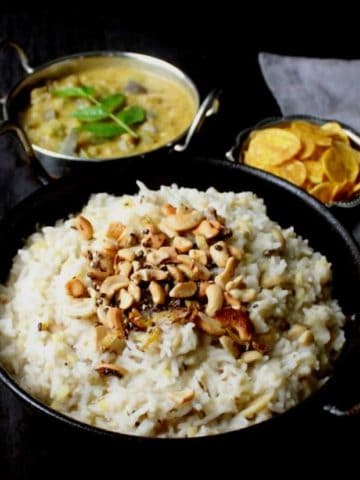
Serve with poppadum or with cucumber raita.






Madhura says
I made this! I was a little intimidated by the idea but it was really easy and so so good. I also made bisi bele bath masala per your instructions and now i have enough to make more quickly.