

A sourdough starter is so easy to make-all you need is water and flour and a week for them to work together and create a thriving colony of healthy, probiotic wild yeast. The starter will reward you for years to come with tasty sourdough breads, waffles, pancakes and more, with no need for added yeast. Stir up a batch today--it's truly the gift that keeps on giving.
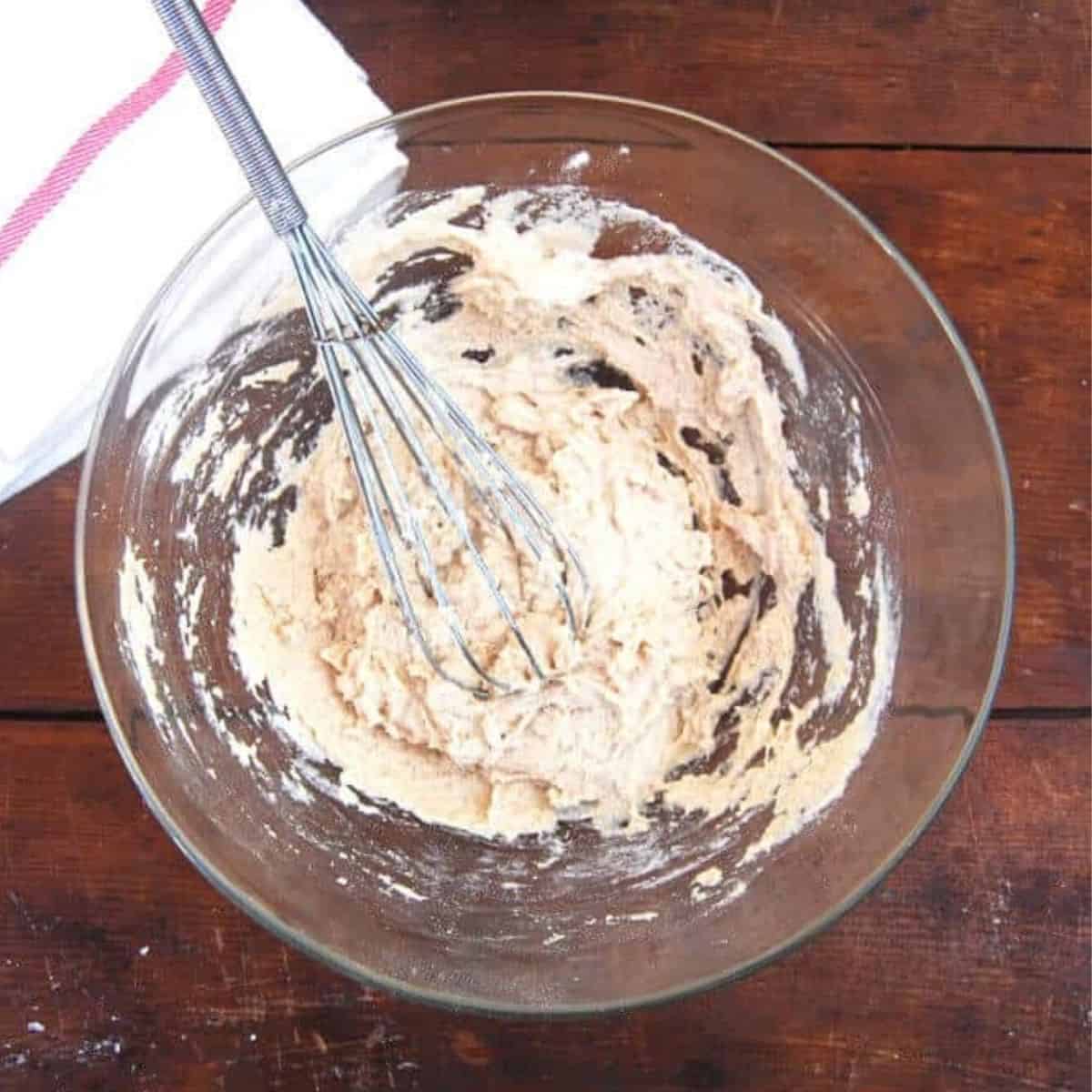
Table of Contents
What is a sourdough starter?
A sourdough starter is a natural culture made with flour or water that can be used to leaven baked goods like breads instead of commercial yeast. To make a sourdough starter you mix the water and flour and let stand for a week, feeding it a little more flour and water every day. The flour already contains good bacteria and over time, as the starter ferments, it also captures wild yeast bacteria from the environment, creating a lively colony of beneficial microorganisms.
When you add sourdough starter to baked goods instead of bread, you don't just get a natural leavening agent; you also get its powerful health benefits. There are billions of yeast bacteria in a sourdough starter and they are great for your gut. When a sourdough starter is added to a batter or dough, these bacteria break down the starches in the flour, making the baked good easier to digest and also giving it a distinctive, delicious tang. Some studies show that sourdough can be eaten by people with celiac disease who cannot normally tolerate gluten while others show that breads made with sourdough are better for diabetics because they don't cause blood sugar to rise as high as regular bread would. (If you do have these health problems, though, check with a doctor before making changes to your diet.)
I've been nurturing a sourdough starter for almost a decade now. After I first made it, my jar of commercial yeast sat in the freezer while I experimented with not just breads but sourdough pancakes, sourdough waffles, pretzels, English muffins, sourdough biscuits, sticky buns and so much more. The sourdough made eating these treats not just more fun and delicious, but also more guilt-free.
In this post I'm sharing my best tips - learned over years of experience - on how to make and maintain a foolproof sourdough starter. This is an extraordinarily easy recipe that anyone can make. But it is not a process that can be rushed. When you start a sourdough starter from scratch, you will need seven days before you can use it.
Be sure to name your starter. 🙂 Mine was named George by a reader, and over the years I've smiled many times as you've come back to tell me the names you've given your starters: Georgina, Crunchy, the Hulk and Tina (after quaranTine :)) among others.
Recipe card
Sourdough Starter Recipe
Ingredients
- 1 cup whole wheat flour
- ¾ cup bottled or non-chlorinated water
- 3 cups (approx) Unbleached all purpose flour (for feeding. Or bread flour or whole wheat flour)
Instructions
- Measure out the whole wheat flour into a large bowl or a crock. The container you use should be large enough to hold the sourdough starter as it rises and bubbles. Also make sure you use a glass or ceramic or sturdy, food-safe plastic container.
- Measure out the bottled or non-chlorinated, room-temperature water. Chlorine can inhibit the formation and growth of yeast, so it's rather important that your water be as non-chlorinated as you can get it.
- Now add the water to the flour and whisk together to mix well. You should not have any traces of flour.
- Cover the sourdough starter loosely with a kitchen towel.
- If the weather where you live is cold, place it in a warm spot, like on top of a radiator or in an oven with the light on. It was rather warm here when I started George so I could leave him out on the kitchen table, but this time - with temperatures kissing the 40s - I have my new starter in the oven with the light on. Keep in mind that it may take longer for the yeast to develop in the starter in cooler weather.
- Leave your starter alone for 24 hours. When you look at it, you might see some bubbles, or there may be none, especially if you are in cooler temperatures. Either way, mix the starter well with a whisk or fork, measure out half a cup of the starter, and discard* it. (You can use the discard in flatbreads or unleavened breads, and from day 4 you can use it in sourdough waffles and pancakes)
- After discarding a portion of the starter, add half a cup of unbleached, all purpose flour and ⅜ of a cup of non-chlorinated water. Use warm water (not hot) if you are working in cool temperatures, as I am. Mix well and again, leave in a warm place. You will start noticing that your starter lightens in color with the addition of all purpose flour.
- By the third day you should see some activity in your starter and also a fruity aroma. Once again, discard half a cup of starter and add half a cup of all-purpose flour and 90 milliliters of water (⅜ of a cup).
- Continue the process for the next three days (try and do this at the same time of day- for instance, I began my starter Sunday morning, so I have to try and feed it around the same time every day, although an hour here or there won't be amiss). Your starter should have started to thrive by now, rising after you feed it, and eventually settling down. King Arthur Flour, where I got my initial recipe, recommends discarding and feeding your starter twice after day 3, but I found that doing it just once was okay, especially since it was quite warm when I made my starter. This time, with cooler weather, I might feed the new starter twice depending on how it goes.
- By the seventh day, your starter, if it's healthy and bubbling, should be ready to use. When I made George, I used the "discard" portion of the starter to make waffles, and they turned out great. If your sourdough starter is still slow in developing, increase feedings to twice a day and continue to keep it warm. It will eventually strengthen.
- Once your sourdough starter has matured, you will need to feed it once every week. I mix the starter well, take out the amount of sourdough starter I need to bake with, and replace it immediately in the proportion of 1 cup of flour to ¾ cup of water. For example, if I take out ½ cup of sourdough, I replace it with ½ a cup of flour and ⅜ths of a cup of water. After feeding the starter, I leave it on the counter for a day, and then refrigerate it.
Nutrition Information
To print recipe card without images, uncheck "instruction images" after clicking the "print recipe" button.
Ingredients
- Flour. Use whole wheat flour to begin the starter. Whole wheat flour gives your sourdough starter a stronger start because it's full of micronutrients and friendly bacteria. You can also use all purpose flour, bread flour or rye flour. (If you want to make a starter without gluten, see my recipe for a gluten-free sourdough starter).
- Water. Use distilled or filtered water to both make and maintain the starter. Tap water usually has chlorine in it, and chlorine can kill the wild yeast.
How to make sourdough starter (day by day, with pictures)
Day 1
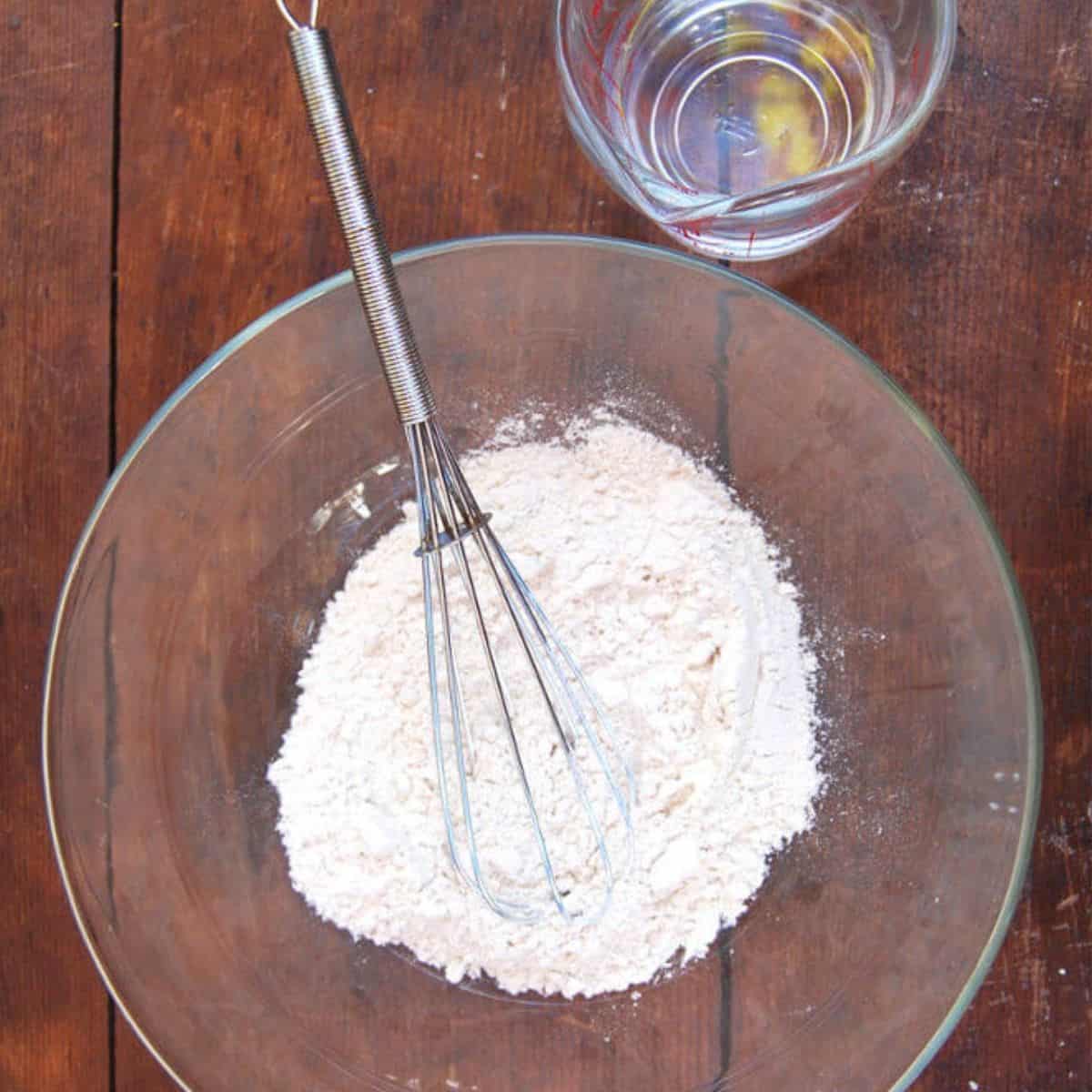
Measure out 1 cup of whole wheat flour into a large bowl or a crock. The container you use should be large enough to hold the sourdough starter as it rises and bubbles. Measure out ¾ cup of bottled or non-chlorinated, room-temperature water. Chlorine can inhibit the formation and growth of yeast.
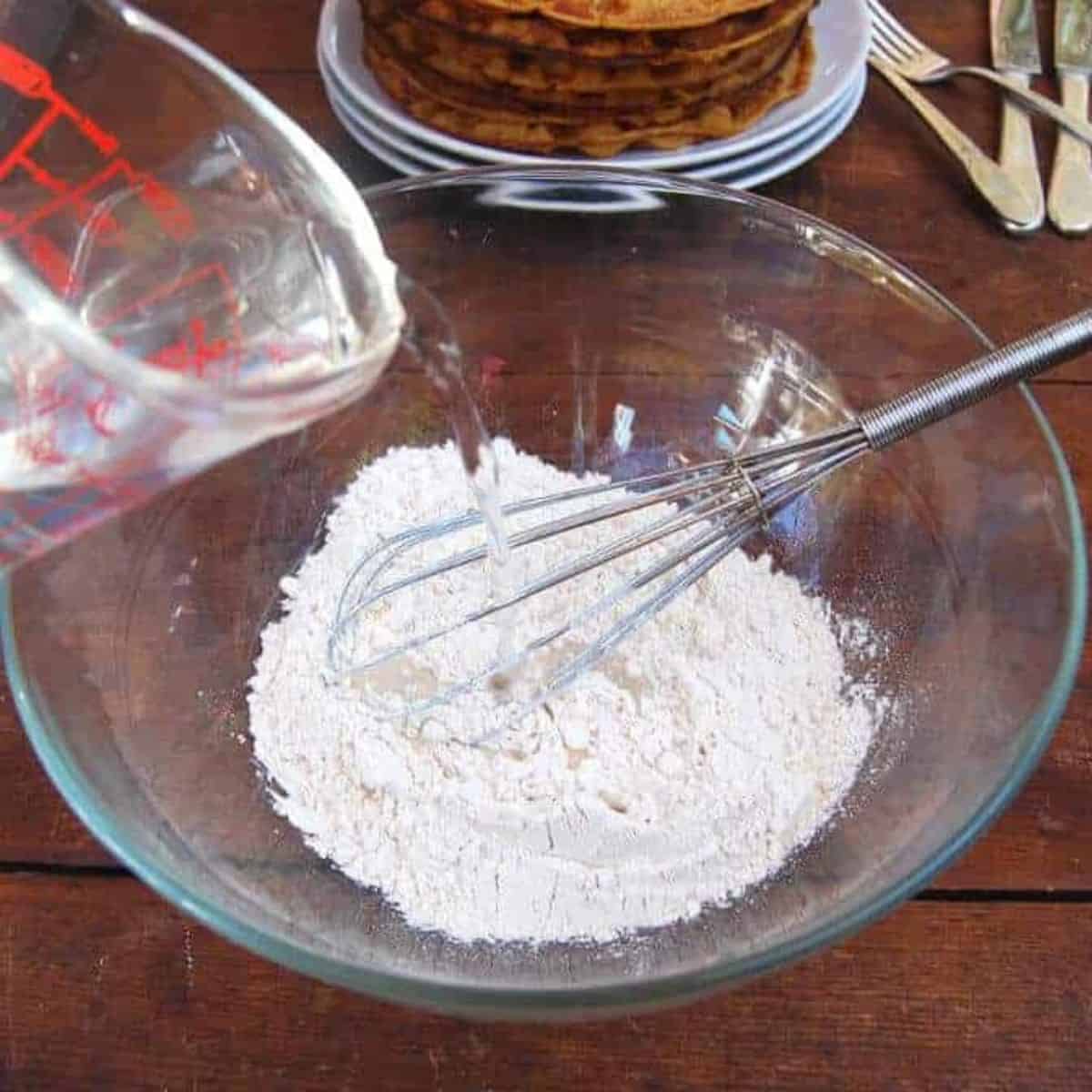
Add the water to the flour and whisk together to mix well. You should not have any traces of flour.
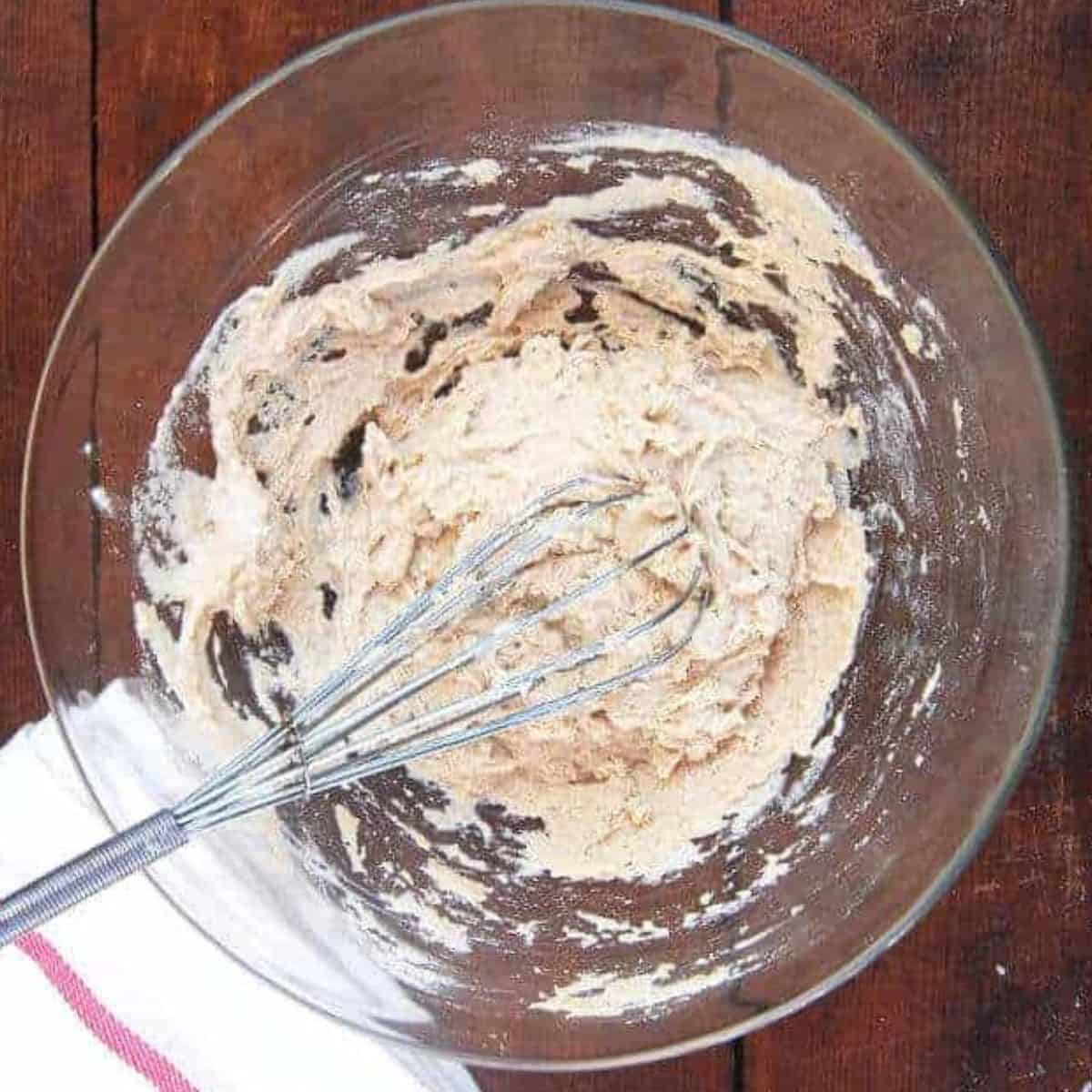
The sourdough starter should look like this after mixing.
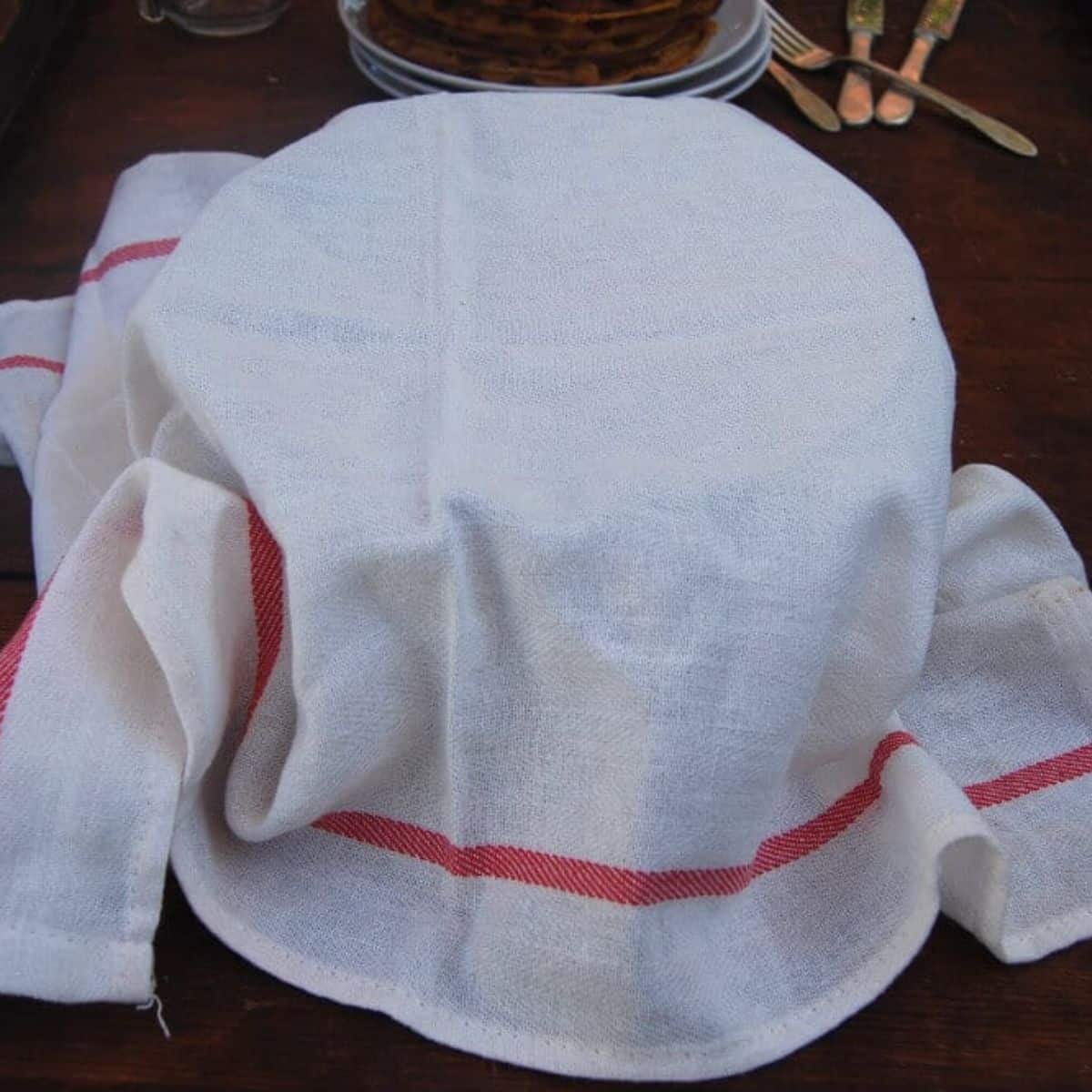
Cover the starter loosely with a kitchen towel. Set aside in a warm spot. A temperature of 75 to 80 degrees Fahrenheit (24 to 27 degrees Celsius) is optimal.
Day 2
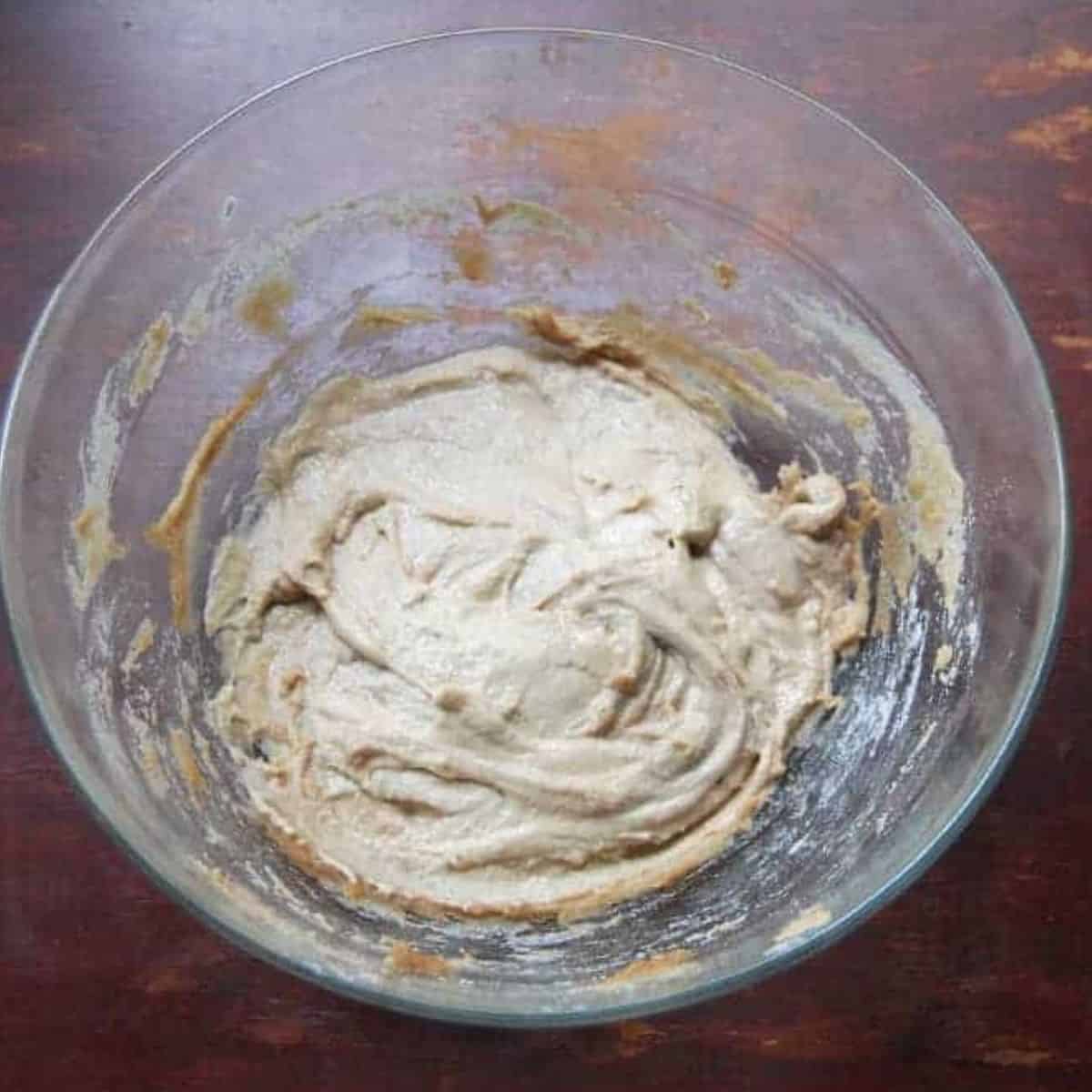
On the second day, you might see some bubbles in the sourdough starter, or there may be none, especially if you are in cooler temperatures.
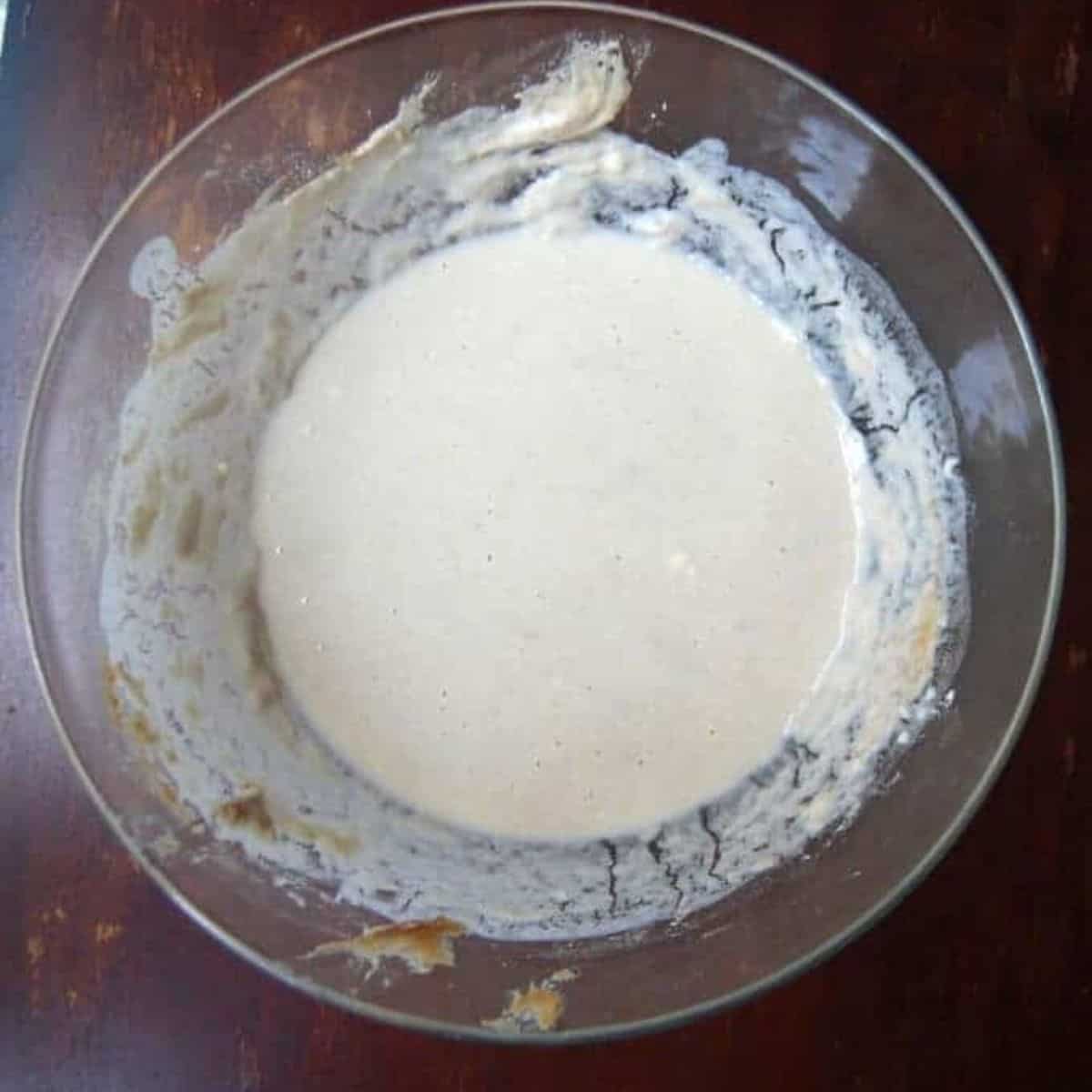
Either way, mix the starter well with a whisk or fork, measure out half a cup of the starter, and "discard" it. Add ½ cup unbleached, all purpose flour and ⅜ cup or 6 tablespoon or 90 mils of warm, non-chlorinated water. Mix well and again, leave in a warm place. You will start noticing that your starter lightens in color with the addition of all purpose flour.
Day 3
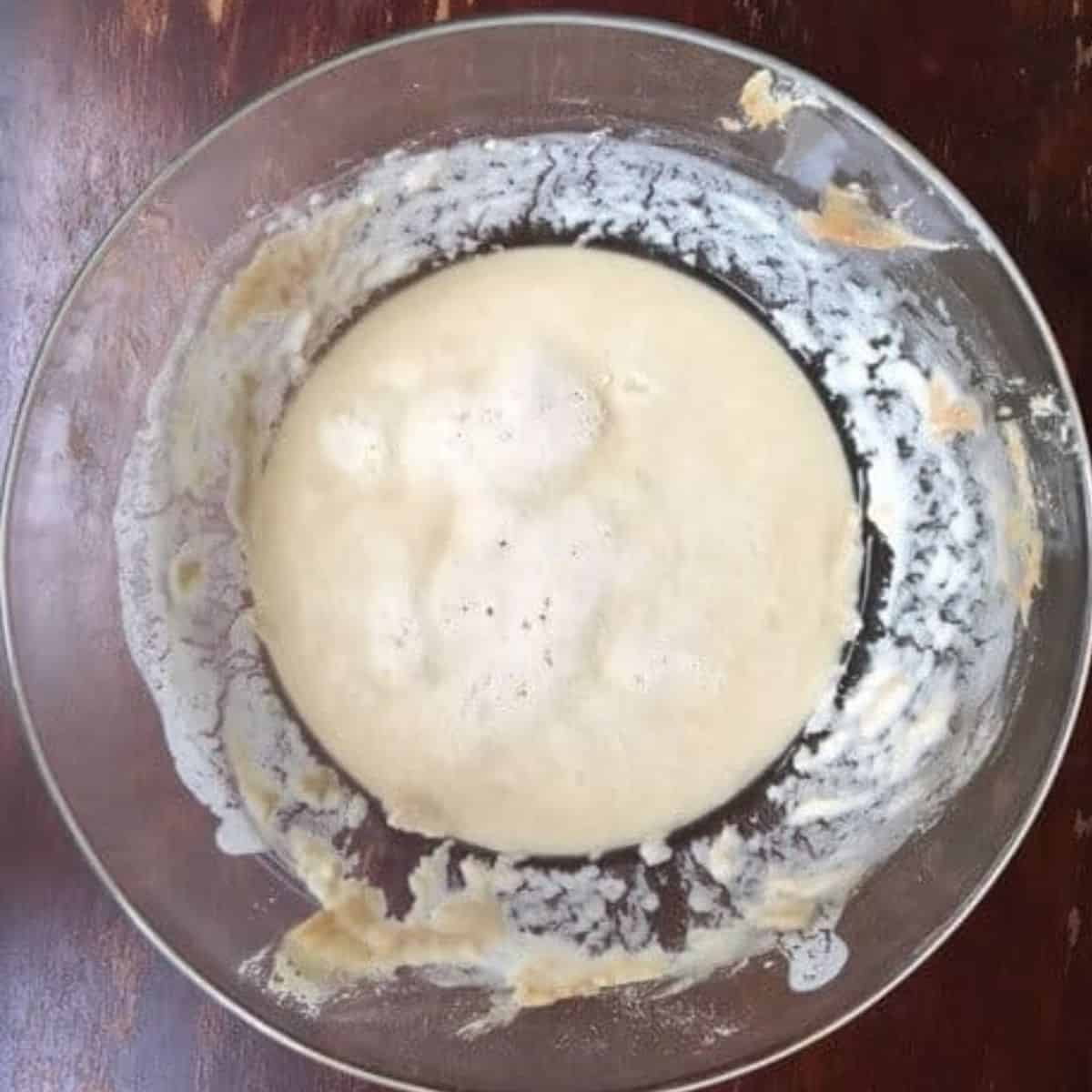
By the third day you should see some bubbling activity in your starter and also a fruity aroma. There may also be some darker liquid on top.
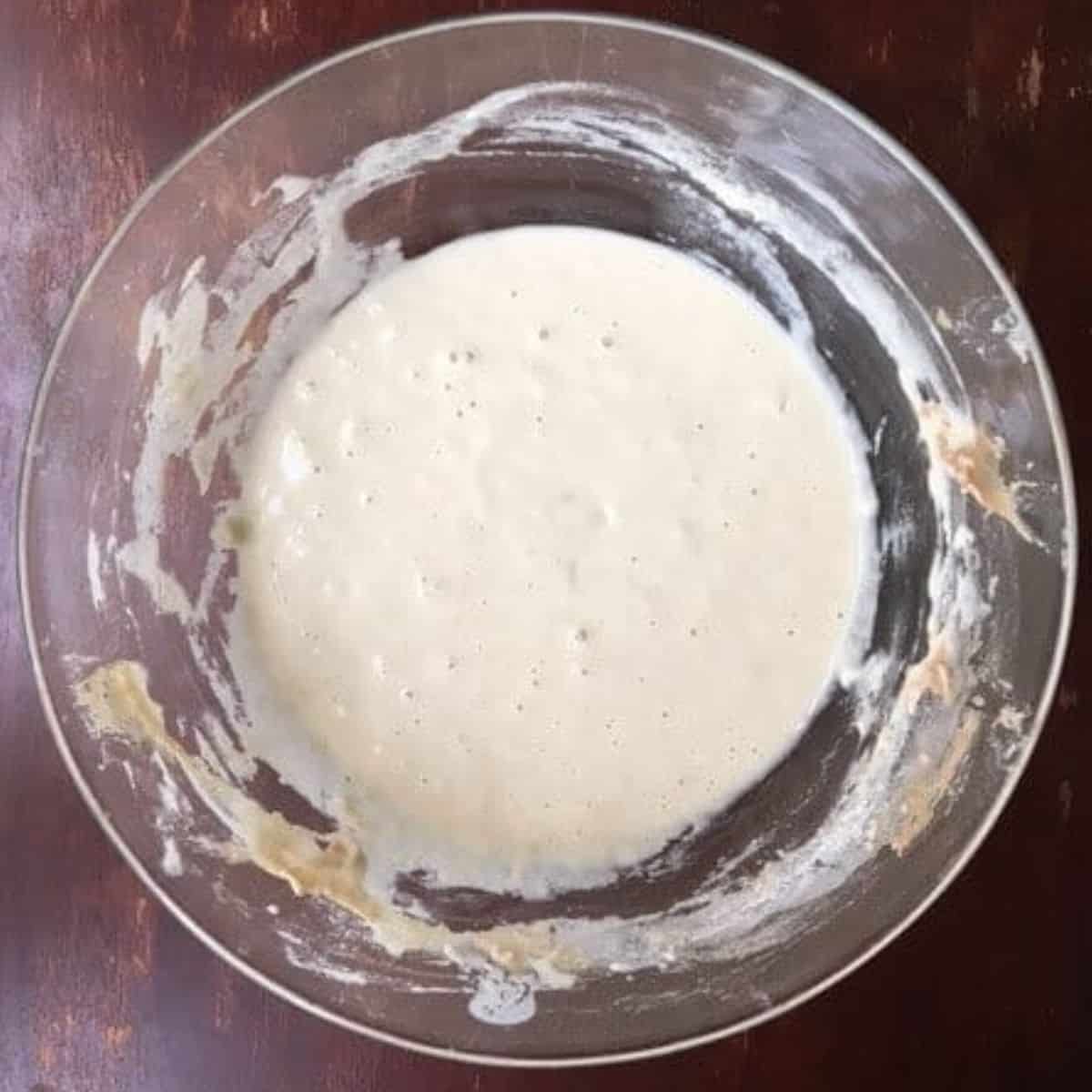
Mix the starter, discard half a cup and feed by adding half a cup of all-purpose flour and ⅜ of a cup of water (90 mils or 6 tbsp).
Day 4
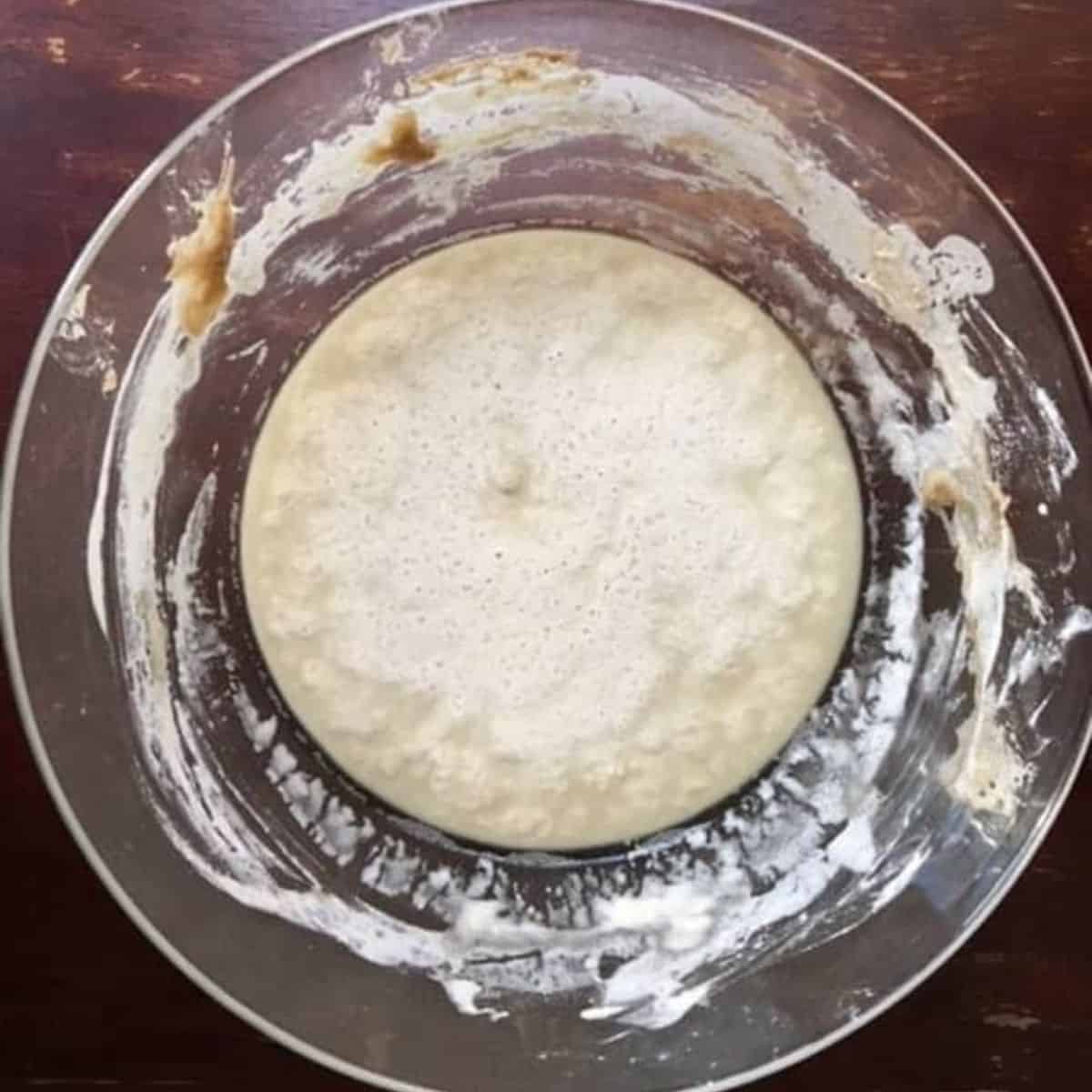
On day 4 the sourdough starter should look quite bubbly and active.
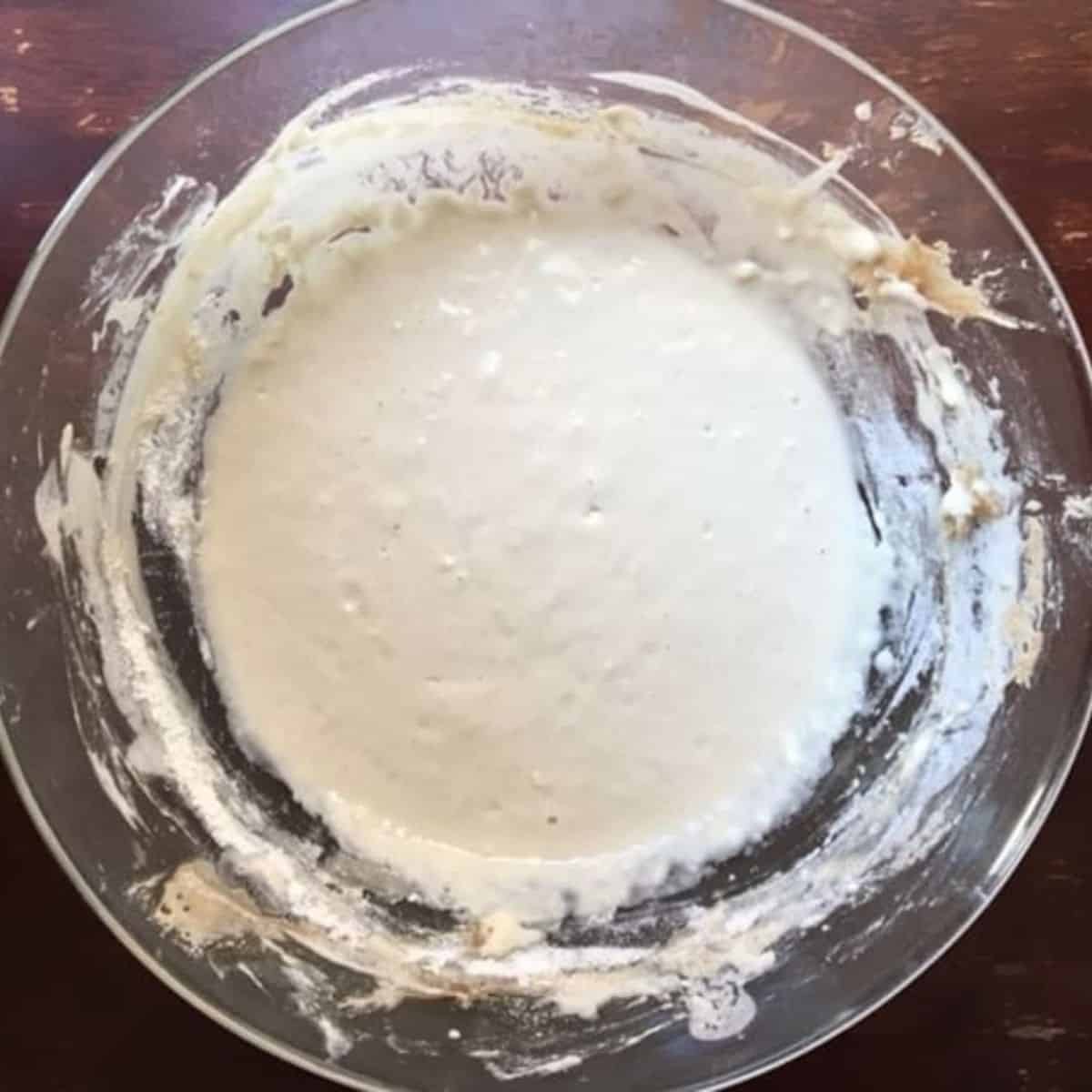
Once again, mix the starter, then discard half a cup and feed by adding half a cup of all-purpose flour and ⅜ of a cup of water (90 mils or 6 tbsp).
Day 5
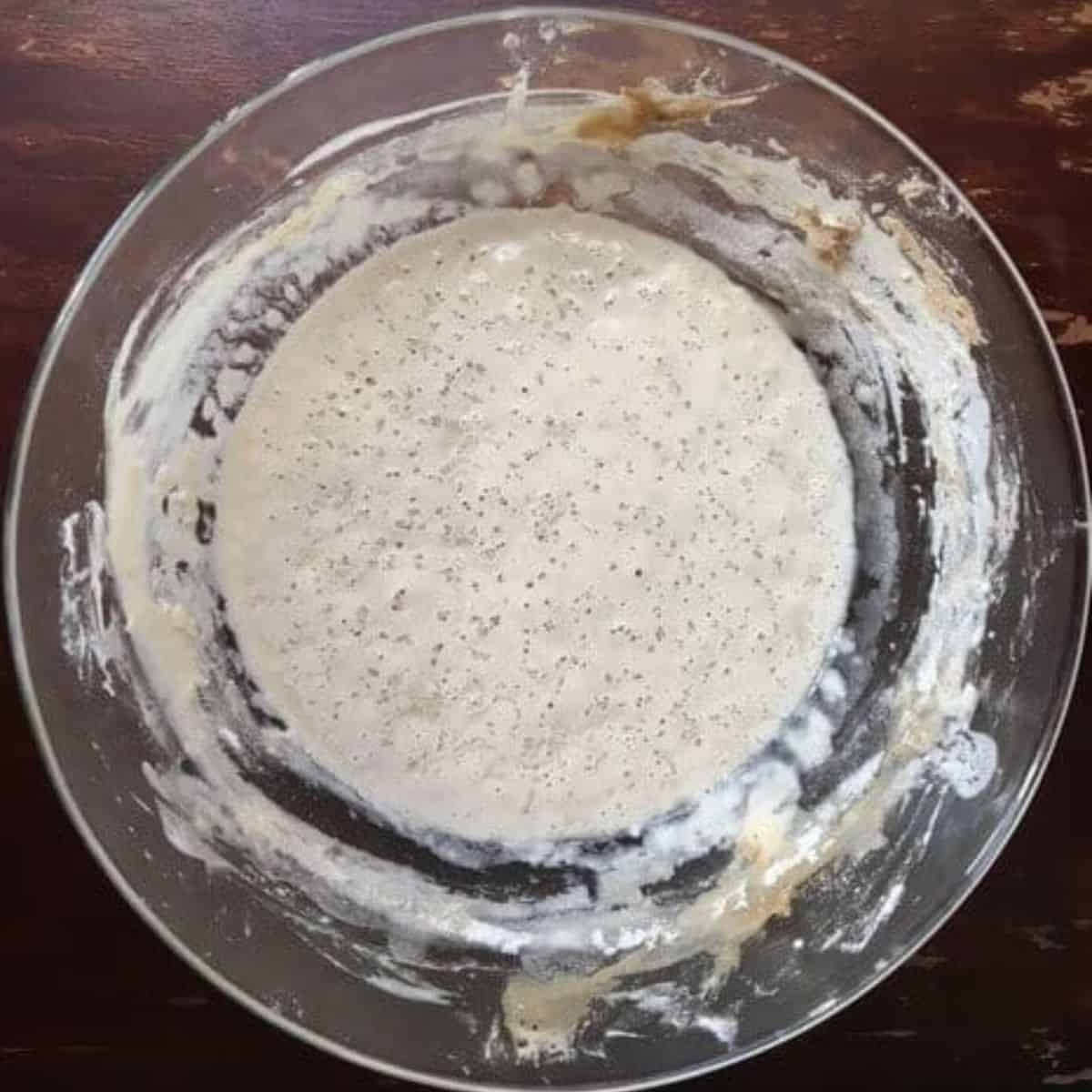
On the fifth day the sourdough should get quite bubbly, especially about 10 minutes after you feed it. If your sourdough starter isn't showing much activity you can bump up the feedings to twice a day to help it gather strength.
Day 6
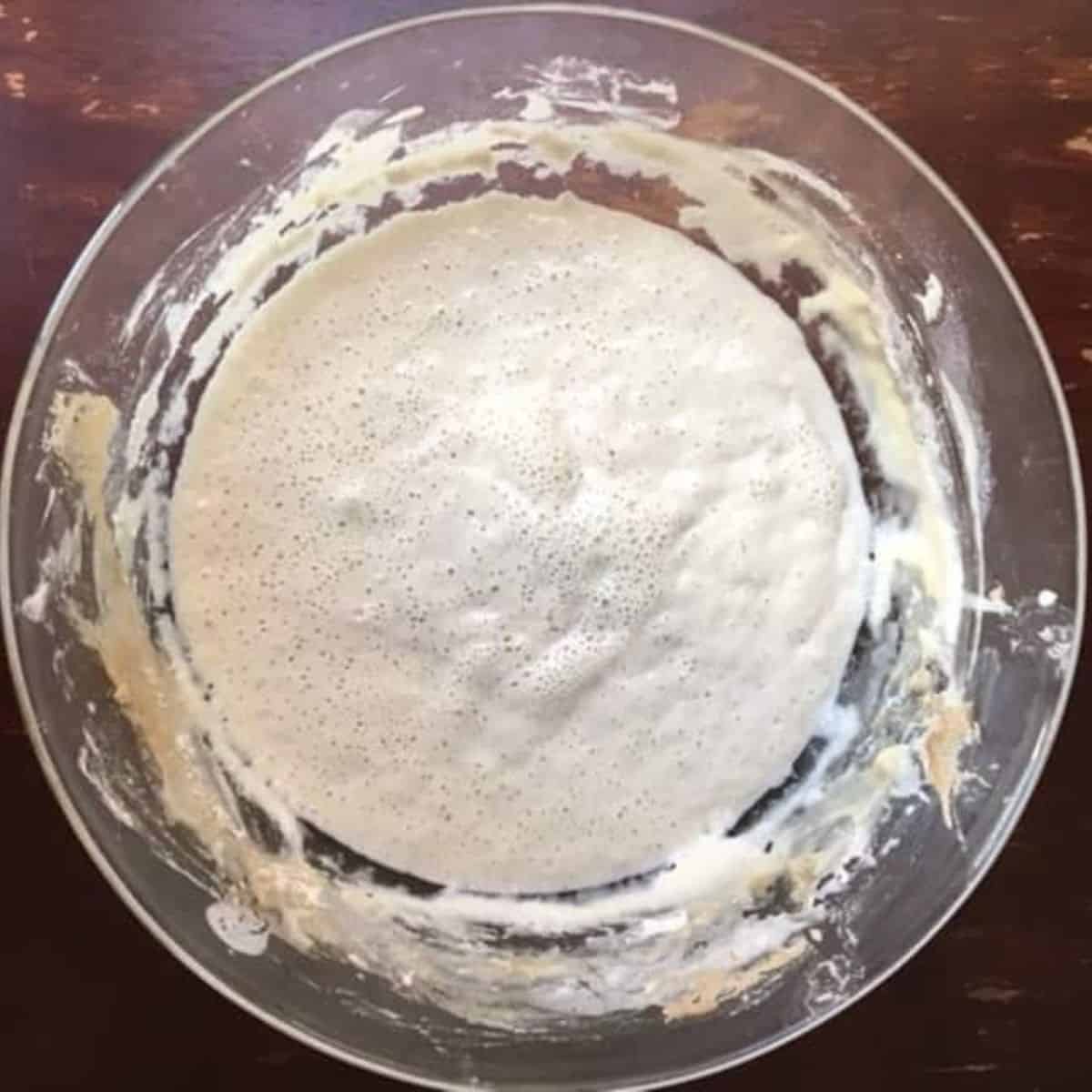
The sourdough should be quite strong now and should rise easily after feeding.
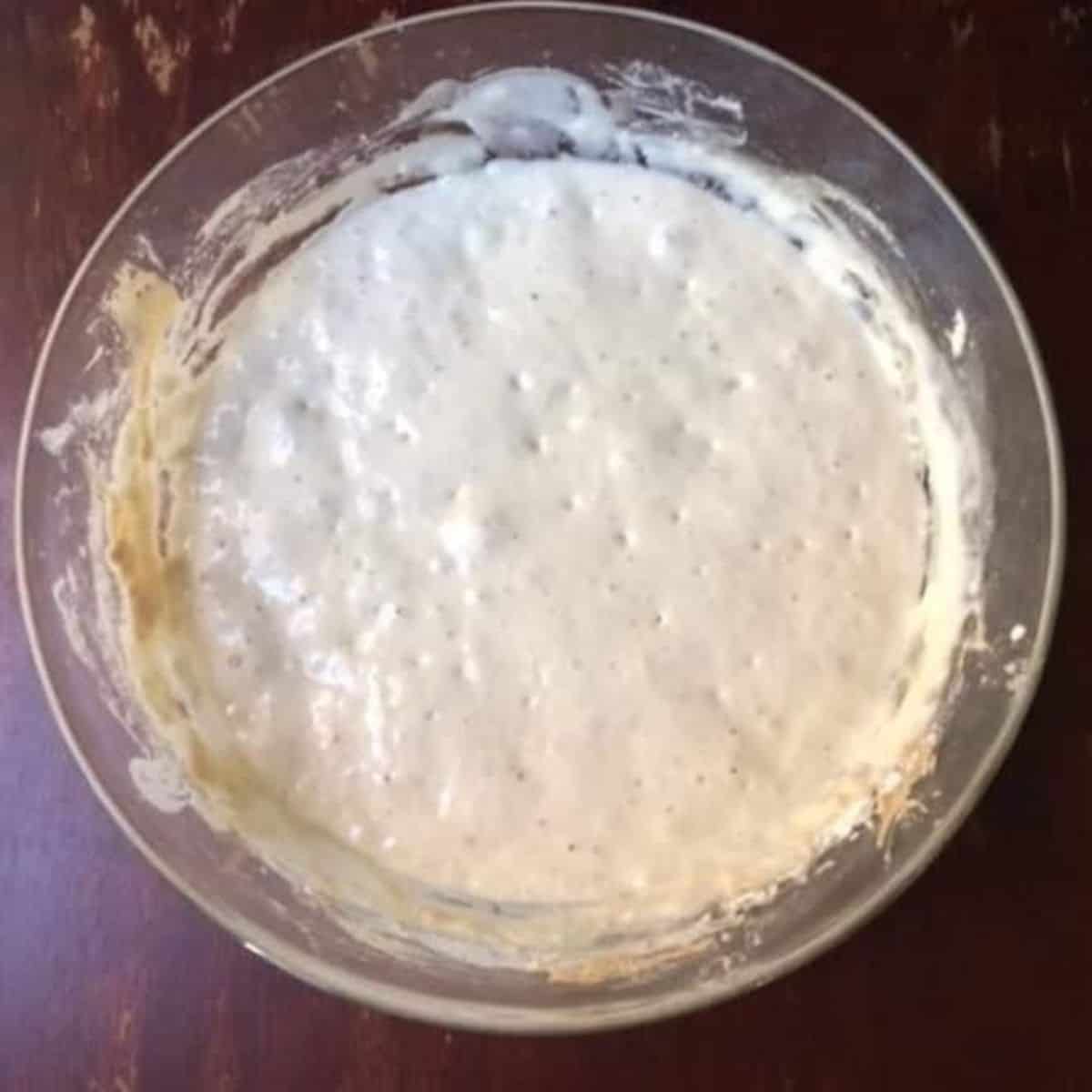
Feed the starter once or twice on the sixth day, depending on how strong it is.
Day 7
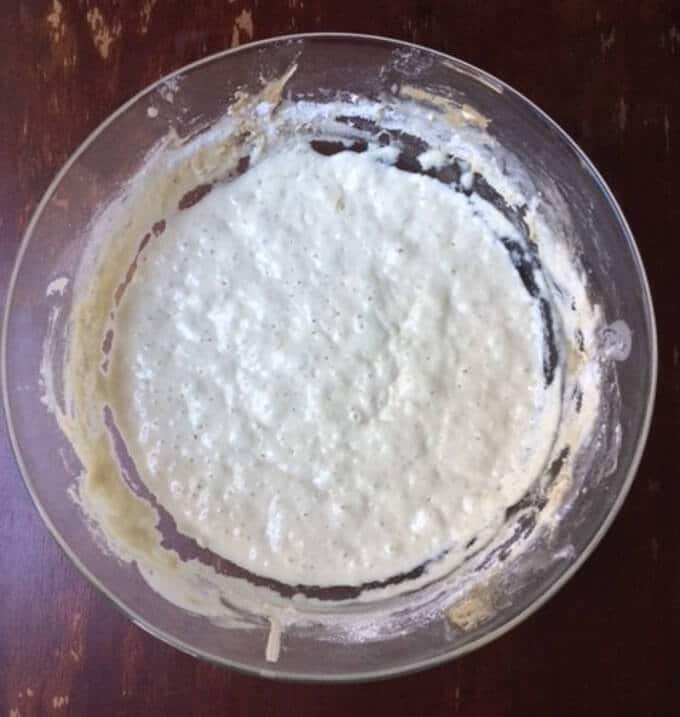
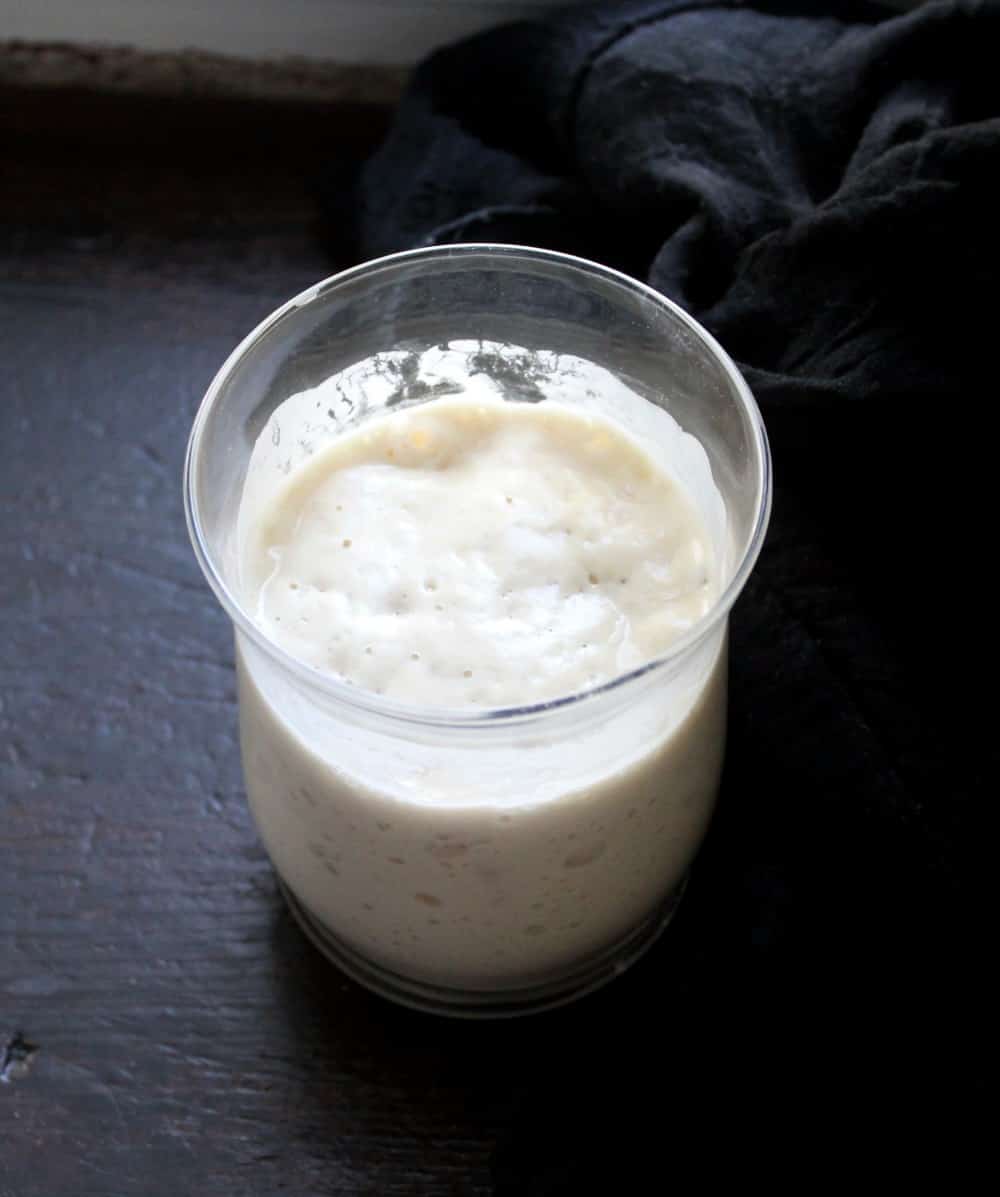
By the seventh day, your starter should be ready to use. It should look healthy and bubbly, like in the picture above. If your sourdough starter is still slow in developing, continue feeding twice a day and keep it warm. It will eventually strengthen.
How to use sourdough starter
To use the starter, mix it well, especially if some of the liquid has separated on the top. Then take out about the amount of sourdough starter you need to bake with, and replace it immediately. So if you take out 1 cup of sourdough, you should "feed" the remaining starter by adding to it cup of flour and ¾ cup of water.
Keep in mind that if you make my sourdough recipe and bake a recipe for sourdough bread from another cookbook or blog, you should first check what the hydration---or water-to-flour ratio---of their starter is. So, for example, if the starter they used has a lower hydration, you might need to cut back on the liquid in the bread recipe when you make it. If it has a greater hydration, you might need to add more liquid.
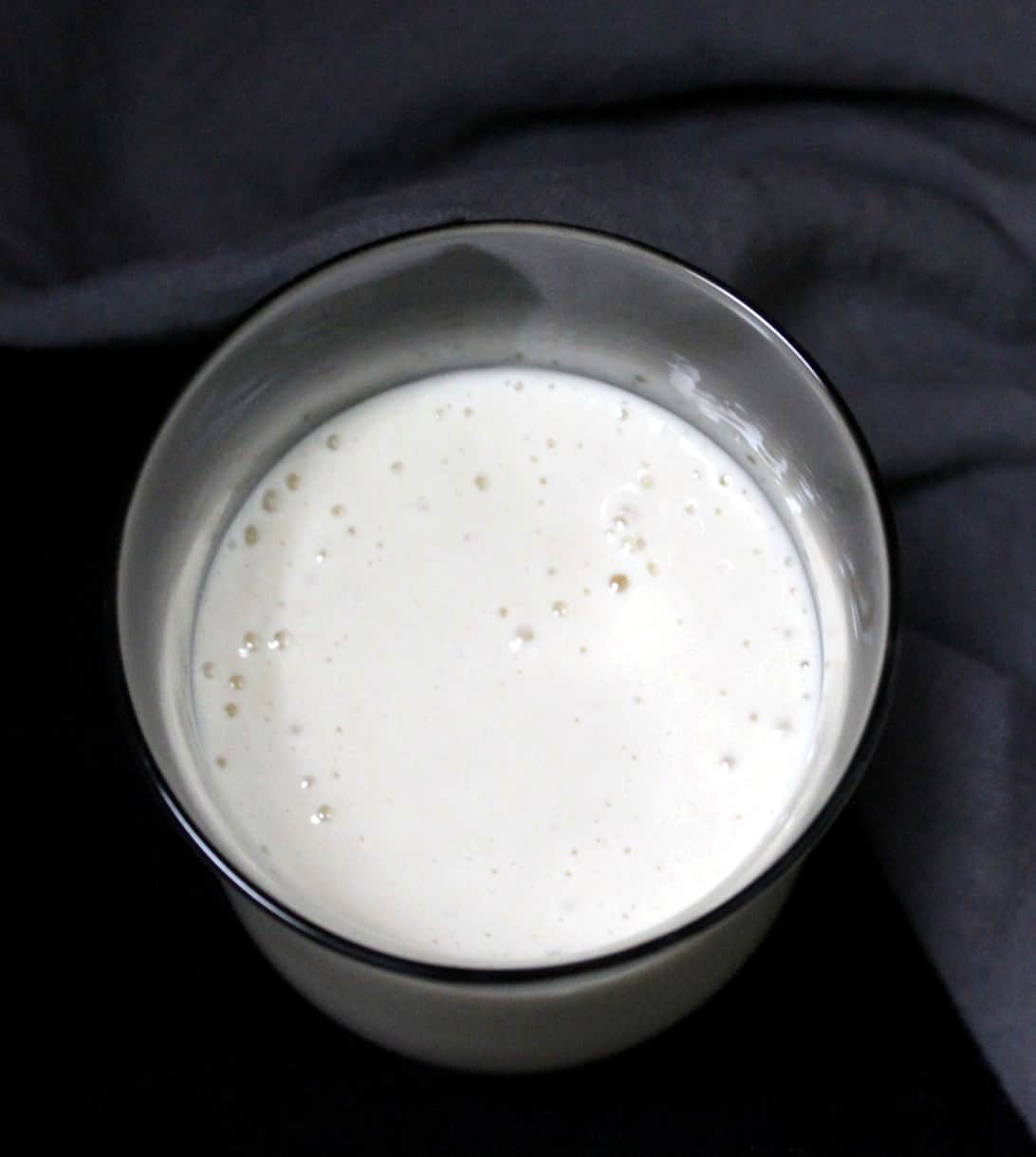
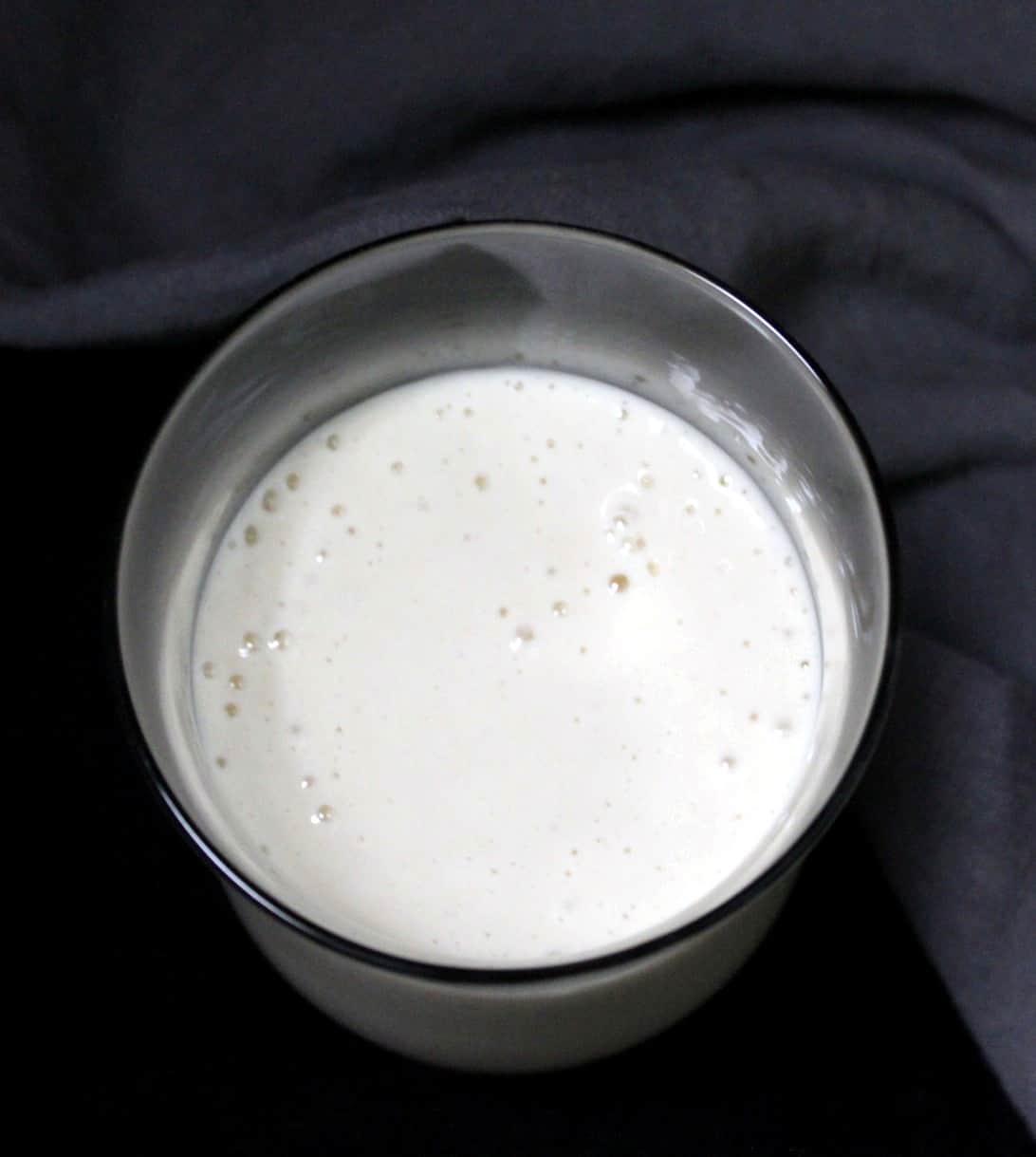
Here's a picture of my mature sourdough starter, a couple of hours after feeding, and then a day after he was last fed. He rose overnight and was beginning to fall back in the morning.
How to feed sourdough starter
It is good practice to feed your sourdough starter each week so it's ready--or close to ready--for baking at any time. But if you forget to feed it for a couple of weeks, or even for a month, don't panic. You might be able to revive your starter so long as it's not moldy and you refrigerated it in an airtight container. Don't go too long without feeding it, though, and do it as soon as you remember.
Sourdough starter FAQs
Sourdough starters in different temperatures perform very differently. For instance, if you're in 90+ temperatures, your sourdough might ferment too fast and taste extremely tangy within a day or two. On the other hand, in a cooler climate, you might not see any activity at all for a few days after beginning.
To get a strong and healthy starter that'll give you the best results when you bake and taste your baked good, you want to try and keep your sourdough starter in a room where the temperature is between 75 and 80 degrees Fahrenheit (24 to 26 degrees Celsius).
After seven days. You might find that the starter ferments more quickly in warmer temperatures, but to get the best flavor, try and keep your sourdough in a room at a temperature no more than 75 to 80 degrees Fahrenheit. Feed it every day for seven days.
Yes and no. You can make a sourdough starter with any proportion of water and flour but the hydration will matter for the baked goods recipes you'll make with it because it will change how much liquid you will need to add to that particular recipe.
If you do accidentally add more or less water to your starter, don't worry, it won't go belly up on you. Just continue feeding it in the right proportions in future and it should be fine.
You will know it's ready when it starts to rise within six to eight hours of feeding and gets really puffy.
The sourdough starter, once it begins to bubble, will have a smell similar to buttermilk. It should smell fresh and somewhat fruity, and not moldy or spoilt.
A sourdough starter will keep for years, even decades, and there are sourdough starters out there that are family heirlooms. A mature, well-established sourdough starter is a treasure - one day you might pass on this gift of good health to your sons and daughters.
For the first seven days, between feedings, leave your starter outside at a room temperature of no more than 80 degrees F. Make sure it's covered with a kitchen towel.
If you find that your starter is forming a hard crust on top, but otherwise appears to be developing nicely, stir it, feed it, and cover it with something more airtight or even cling wrap after the first couple of days.
Once your starter is ready, you can store it in the refrigerator. Each time you feed it, leave it out at room temperature for a few hours or until it gets puffy and expands, then put it back in the fridge.
No. One of the reasons you discard a portion of the sourdough each time you feed it because you don't want the sourdough starter to keep growing. The other is that your starter will grow stronger if there's more food for the hungry yeast in your starter. If you don't discard, there will be more hungry yeast cells competing for the same food and they won't grow as strong, see?
You don't have to waste a drop of your discard. See my post on easy recipes for sourdough discard. You can also add the sourdough to flatbreads like this sourdough roti from day 1.
You can also share your discard with a friend so they have their own sourdough starter without making it from scratch. Just give them a quarter to a half cup of discard and ask them to begin feeding it, preferably with a cup of flour and ¾ cup of water.
Troubleshooting tips
- Not enough starter for a recipe. If a recipe calls for, say, two cups of starter, just make sure you feed your sourdough starter the day before with more flour. Stick with the correct proportions of water and flour.
- Sourdough starter not bubbling after a few days of feeding: This could be caused by cool temperatures. Remember the ideal temp to maintain sourdough is between 70 and 75 degrees Fahrenheit. In cooler temperatures it might take a while and extra days of feeding for your starter to kick off.
- Sourdough starter getting too bubbly, too tangy, too fast: Just as cold temps will delay your starter process, extremely hot climates will make it act like it's on steroids. Again, make sure you move the starter to a cooler part of your house, where the room temperature is no more than 75 degrees.
- Sourdough bread made with starter doesn't taste tangy enough. There could be two reasons for this: your sourdough starter is either really new, or your starter was just fed. Starter that's just been established will not taste tangy enough because it just hasn't been around that long. But don't fret, it will still have loads of flavor and with regular feeding you will get there. And you'll still be able to make great bread and other baked goods with the starter. If your starter is mature with a lovely tang, but you recently used most of it up and fed it and then used it again the next day to make bread, you might find that the starter simply doesn't have the same tang (although it will develop faster once your sourdough has matured further).
- Brownish/grayish/blackish, hooch-like liquid forming on top: This does not mean your sourdough starter has gone bad, it just means it's hungry. When you are still creating the starter, just stir it back in and feed your starter. Once your starter is established, and you see the liquid on top, you can either stir it back in or, if it's too strong-smelling, pour it off, then feed the starter.
- Sourdough smells like acetone or nail polish remover: This just means the starter--or rather the bacteria in your starter--are hungry, and it's time for feeding.
- Forgot to feed starter: Not a biggie, just feed it immediately and continue feeding according to schedule.
- Added too much water to starter. Is it spoilt? No. You can't spoil a starter by adding too much water to it. See the hydration tips in my FAQs above for more detail.
- Neglected the sourdough and now it looks dry: Don't beat yourself up if this happens, it's happened to me, more than once. An established sourdough starter is extremely hard to kill. To revive a dry but not moldy sourdough starter, pour some filtered water into the container, let the sourdough starter sit for some time, and then try to stir it until you have a smooth paste. You can discard some of the starter at this point and feed it for 2-3 days, twice a day, to build up its strength. (I once spent two to three days soaking and crushing my dry sourdough starter between my fingers to crumble it up (it was my gluten-free starter which dries more readily), but I brought it back to life and it's bubbling away now. :)) Try not to get to this point, though!
- Sourdough starter has pink or orange streaks and it smells moldy: If you have an established starter that gets moldy, you may be able to save it in some cases. If the mold is only on top, carefully skim the layer of mold off and save a small amount of the clear starter underneath. Place the retrieved starter in a new container and feed it a few times to build up its strength. But if the mold has penetrated through into the entire starter, just discard it and start over.





Shan says
So I printed this recipe a week or so ago and it says to feed by adding 1/2c flour and 3/4 c water. Turns out that wasn’t right. I tried to correct by adding just flour yesterday (day 6) but today it looks like non bubbly paste. Is there any saving It? Feeling frustrated
Vaishali says
Your starter is not going to spoil because you added more water. Just proceed with less water for the next feeding and then return to 6 tbsp water in future.
HEIDY FATIMA JAMEEL says
Hi. My starter is on day 7 and looked great. I did half the recipe of the crusty bread rolls so about 1/3 cup of starter. Unfortunately, I then replaced the starter with 1 cup flour and 3/4 cup warm water. Have I ruined it? I guess I should have done 1/3 cup of flour and then 75% of that water. Help. Thanks, Heidy
Vaishali says
You can't ruin sourdough starter by adding less or more flour or water so don't worry. You'll just have more starter now. 🙂
TAMARA HELSER says
Ok now that I have my starter & ready where is the recipe to make the bread?
Vaishali says
Here you go.
Tem says
I've really enjoyed your recipe thank you so much! I am just a little confused about the baking/feeding when its been in the fridge. For my second loaf I fed my starter straight out the fridge and left it for 24 hours to activate. It did make my loaf rise but I seem to have lost the sour flavour and big air holes.
Could you help me!?
Thank you!
Vaishali says
Hi Tem, a wetter dough will help create the big bubbles. Also you probably need to give your starter more time to mature for a tangier flavor. A relatively new starter will not have as much tang as one that's been around for a while.
Julia Kalish says
Hey - just found your site and really excited to make my first starter! Unfortunately, I printed out your recipe when it said 3/4 cups of water in step 7 (the amount of water to add on day 2), and I just added 3/4c instead of 3/8c. What do you suggest I do at this point? Will it be ok or should I add more flour or start over? Thank you so much!
Vaishali says
Just go ahead and feed with flour the next time and no water, then proceed with 6 tbsp of 3/8ths of a cup of water from the next feeding after that!
BK says
Can you help me figure out how to measure out 3/8ths of a cup?
Vaishali says
Six tablespoons!
Mallory Daley says
I only have whole wheat flour, can I sub whole wheat for all purpose? Thanks!
Vaishali says
Yes, that's fine!
Mallory Daley says
Nevermind, just found my answer in the thread! Thank you
Vaishali says
Good catch, and fixed. It should be 3/8ths of a cup.
spork says
i'm on day three. working fantastically. Thanks!
Vaishali says
Awesome!
Kalindi Kunis says
Ooh! I THINK that that I just assumed the 90ml H2O to 1/2 cup flour ratio throughout. If I didn’t could this be why I didn’t get a full rise? I am on day 8 now after holding off to do second feeding on both 5 & 7. I took out a cup today and put it in the fridge. I made your no-knead recipe and it is delish, but didn’t get a good first rise. I am 100% rookie. ??✨ I love your site! Your detail is really great!
Vaishali says
Hi Kalindi, the 1/2 cup and 90 ml (6 tbsp) water ratio sounds fine. Did the dough rise during the second rise? Sourdough breads can sometimes take longer to rise than breads with added yeast, so if it looks like your dough hasn't risen, give it a little longer, sometimes it may take even hours longer,so be patient. And a recently fed starter will ensure a more robust rise.
Kalindi says
It only rose a little! Will try again this weekend and let it rise longer. 1st rise I left it 10 hrs, 2nd rise only 2. Should I leave it overnight in the oven with the light on? It gets quite warm in there. The bread is so delicious and I feel so proud to have made the starter and the bread. Thank you thank you!!! I’ll also make sourdough pancakes tomorrow! Yay!!
Emily says
Hi Vaishali! Do you happen to know what percent hydration this starter ends up being? I'm sorry if this is a stupid question - I am new to the world of sourdough. I am asking because I have a starter that was gifted to me that is 100% hydration and I want to use it to make the sourdough dinner rolls recipe you have shared.
Vaishali says
Hi Emily, a starter made with equal parts by weight of flour and water is a 100 percent hydration starter. A starter made with equal parts by volume of flour and water is more like 166 percent hydration. Since mine is made by volume, I'd say it's around 123 percent hydration. Does that make sense?
Serena says
Can I use all purpose flour instead of wheat flour? (I don’t have wheat flour and all stores are empty of flour)
Thanks!
Vaishali says
Yes, absolutely!
Meredith says
On day 4 and I already to feed at my regular time. 4 hours later there was liquid on top and it smelt kinda funky. I took out a half cup and fed. Is it ok? Or should I start over?
Vaishali says
So long as it's not moldy and smells like sourdough you should be fine.
Claretta Dupree says
Question: Must white flour be used to feed the starter? Why not use wheat flour?
Vaishali says
You can feed with whole wheat.
Jasvir says
Hi Vaishali,
So sorry meant to say
Can I use Bajra Atta for sourdough - Starter
Thank you
Vaishali says
Yes! Millet works for a sourdough starter, follow the same instructions.
Jasvir says
Hi Vaishali
Can I also use Basra Atta
Jas
Floyd says
After 24 hours my starter has a crust on it what happened and do I start over
Vaishali says
If not pink or moldy just stir the crust back in and continue. Cover the bowl more tightly in future.
aparna shukla says
Hey Vaishali, I chanced upon your website 2 days back when i was searching for a whole wheat bread recipe.....though i was aware about benefits of sourdough bread over normal bread i always thought...it will be quite cumbersome to initiate a starter.......
well cut the story short....i came to your website.....and was so mesmerised with description, detailing, picture that immediately started with my George 🙂
So in India (im from Gurgaon) current day temperature is around 38 degree Celsius...and today was my 2day to feed my starter.....which is already looking like your 4/5 day George....
So please guide....can i start now with my Sour-bread now (tmrw).... or continue feeding for another 5 day....
Many Thanks & love,
Aparna Shukla
Vaishali says
Hi Aparna, although your starter looks strong, I am not sure if it's really at a stage where you can bake bread. You want a really strong and mature starter for that, so a seven-day feeding is necessary. You can go ahead and try if you don't mind risking your flour, but I am not sure I am comfortable advising that you make bread with a two-day starter. But you can definitely add the starter at this stage to roti or chapati or naan or paratha dough--or make waffles or pancakes.
Anonymous says
Thanks Vaishali,
I waited.....and going to prepare the dough tomorrow..7th Day.....
Hoping to get a god result....
One more thing...my starter hasnt risen.....was it suppose to...? not sure....
Vaishali says
It may not always rise but if it has bubbles it would be fine.
heather says
thanks for this. I'm excited to try! Can I use spelt flour instead of regular?
Vaishali says
I think so! Spelt flour is often used in sourdough starters, so you should be okay.
KATHRYN HOSKIN says
Thank you for explaining this so well. I've always wanted to start, but never knew how. Cannot wait! Thanks again.
Kim says
How do you cover it when it goes in the fridge? Just plastic wrap? I have mine in a mason jar
Vaishali says
Mason jar is great. You need a container with a tight lid preferably or the starter will dry out in the fridge.
Steve says
This is an amazing recipe and Fred the Bread is going great guns after 9 days & 2 births (loaves). Thanks so much, this is the best bread I've ever baked!
Suz says
Thanks for the inspiration! Glad the discard doesn't need to be discarded.
Jane says
The seven days that you are curing the starter in a warm place do you keep it covered with a cloth towel or an airtight lid?
Vaishali says
Cloth towel is preferable, or a loose lid.
Alex says
Hi Vaishali, thank you for the great recipe. We managed to get a successful sourdough on our first attempt.
What we were wondering is if we take out a cup of starter, how much and what should we replace it with?
Vaishali says
I would replace with 3/4ths of a cup of flour and the proportionate amount of water. Congrats on your new starter! 🙂
Ellis says
When you store your starter in fridge should the container be airtight? Or do you still use the dish towel? Thanks!
Vaishali says
Airtight container.
Floyd says
How big will my starter be after 7 days if I follow these instructions do I then take and put it in a pan to bake it for how long and at what temperature
Vaishali says
Hi Floyd, you should have about 1 1/2 to 2 cups of starter. You don't bake the starter itself--you'll need to add it to a recipe for sourdough bread or pancake or waffles and such.
Floyd says
I used 1 cup whole wheat flour 3/4 cup of water after mixing it it look like probably peanut butter color and consistency the next day after 24 hours it had a crust on top do you remove that first thing we have to pay
Carinna says
Can I used boiled water after I cooled them.
Vaishali says
I don't think boiling water would remove the chlorine in it which can be harmful to sourdough, but you can try.
Hina says
Hi...I live in India and am a beginner in baking but have quite successfully made bread using yeast but now I was planning moving onto the next step in baking with sourdough..can u please tell me how much starter should I b using for 1cup of flour to make the bread and how much water can I use to knead the dough ..
Vaishali says
Hi Hina, search for sourdough bread recipes on the blog!
Joanna says
Hi Vaishali, thank you for your detailed instructions! I have been feeding my starter and it is growing well, a little slower because it’s still a bit cold here. When it is ready to use, I would like to split it and share it with my daughter. What is the best way to do that? How much do I share and what quantities of flour and water do I feed the smaller starters?
Vaishali says
Hi Joanna, you can share as little as a fourth of a cup when you discard your sourdough for feeding and she can feed that discard portion with flour to get her sourdough going. For a smaller amount of starter, just adjust the amount of flour and water proportionately.
Anonymous says
Hi Vaishali
Accidentally used filtered tap water on day 3. Do I need to start all over again?
Vaishali says
No, it should be fine, just continue.
Cheesy says
Is the sourdough long day 4 when discarding the first part and adding the water suppose yo be kind of liquidy or like doughy? Mines I liquidy i added too much water
Vaishali says
Neither, it should be like a thick pancake batter.
Alice says
Can you use bleached flour in the place of unbleached flour?
Vaishali says
Yes!
Cristy says
I’m on day 4 and don’t appear to be getting what you’re getting in the pictures. Today when I checked on it, it had a clear liquid on the top and had separated. Whenever I add 1/2 cup water in addition to the 1/2 cup flour, it just makes the whole thing soupy. I just fed it again and tried adding a little less water but it’s not really doing much. Unsure of what I’ve done wrong?
Vaishali says
You are adding too much water-- if you use 1/2 cup water, add water in a 3/4ths proportion to that (just over a third of a cup, approx), not a 1:1 proportion. Adding as much water as you are will make it soupy.
Dani says
Do you put a lid on it when you put it in fridge?
Vaishali says
Yes, a tight lid. You don't want it to dry out.