

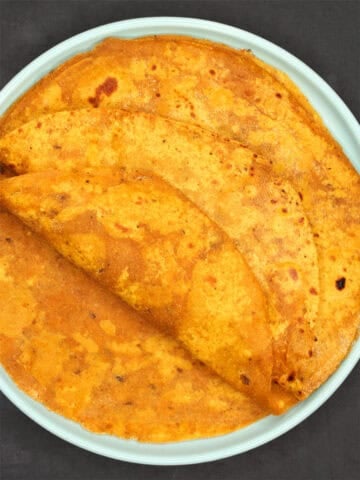
This methi paratha recipe is a healthy north Indian flatbread made with flavorful, leafy fenugreek greens and whole wheat flour.

Jump To
What is methi paratha
Methi paratha is a north Indian flatbread made by mixing fenugreek greens or methi leaves and spices into a whole-wheat dough. I make my methi paratha recipe even healthier by loading it with nourishing ingredients, including chickpea flour or besan, and spices like turmeric, ginger, garlic and ajwain or carom seeds.
Methi's pleasant, mildly bitter taste is as prized in Indian cuisine as its health benefits, which include improved digestive and cardiovascular health. It's wonderful in vegetable sides like methi matar malai, baingan methi sabzi, and methi dal. Those who cook or eat Indian food outside India are likely familiar with the dried version of fenugreek leaves, kasoori methi, used to flavor popular restaurant style dishes like vegan butter chicken and tofu tikka masala.
Traditionally methi paratha is made with ghee, which clogs this healthy food with cholesterol. But in this vegan version we use a pat of oil or a spritz of cooking spray and no cholesterol, thank you!
My methi paratha recipe is simple and even beginner friendly. If you are new to making Indian flatbreads you might not get perfectly round parathas the first few times but they will taste delicious anyway!
Ingredients
- Methi or fenugreek leaves. I buy methi at the Indian grocery store or at my local H Mart, an Asian supermarket chain. You can also find it in the frozen aisle of the Indian store (see FAQs for more on making methi paratha with frozen methi). If methi greens are new to you, be sure to read the section below on how to wash and trim methi leaves.
- Atta or whole wheat flour. Atta, or durum whole wheat flour, is also easily found at Indian grocery stores and online. This is the best whole wheat flour to use for parathas because it is more finely milled than regular whole wheat flour and makes softer breads. If you like making Indian flatbreads I strongly recommend that you buy a sack of atta.
- Besan or chickpea flour. Just like the atta, the besan sold in Indian stores is more finely ground and is made with kala chana, or brown chickpeas, rather than garbanzo beans. Besan adds so much delicious flavor to the methi parathas. You can skip it if you cannot source it, but it really takes these parathas to the next level of yum.
- Spices: turmeric, cayenne and ajwain or carom seeds. The spices work their magic with the chickpea flour and whole wheat to make these parathas incredibly tasty. You can sub the carom seeds with cumin seeds.
- Ginger garlic paste. You can use just finely grated ginger in this recipe, but I like adding a touch of garlic for the complexity and health benefits. If you use my recipe for ginger garlic paste, which also has green chili peppers added to it, you can skip the cayenne.

My best tip for methi paratha
If you add the methi to the flour and knead it right away, the methi greens express their juices into the dough as it stands, making the dough sticky and hard to handle. To keep this from happening, add the greens to the flour, salt and other dry ingredients, then let it all stand for 10 minutes before kneading the dough. This will give the methi time to express its juices into the flour before you add any more water, and you will have a perfect dough - and perfect methi parathas - each time.
How to make methi paratha
Make the dough

Place the whole wheat flour, chickpea flour, turmeric, ajwain and salt in a bowl. If using cayenne, add it as well. Mix well.

Add the chopped fenugreek leaves or methi to the bowl.

Using your fingers, massage the fenugreek leaves into the flour until everything's incorporated. Let stand 10 minutes.

Knead into a stiff dough. Trickle just a little water at a time and mix with your fingers. This helps give you a feel for the dough and also keeps you from over-moistening it. When the dough is ready, pour a teaspoon of oil into your hand and massage it into the dough, then cover and let the dough rest 15 minutes.
Roll the paratha

Divide the dough into 10 portions and roll each into a smooth ball. Flour the ball of dough.

Roll it into a three-inch round.

Brush a little oil or spritz some cooking spray over the round, then fold the dough over, brush a little more oil and fold once again so you have a triangle. Folding the paratha thus gives you many flaky layers.

Flour the surface as needed and roll the dough into a six- to seven- inch paratha. You can roll them out smaller or thicker if you like, but we love really thin parathas in our home.
Roast paratha

Heat a nonstick or cast iron griddle over medium heat. Place a paratha on the griddle. When the paratha begins to bubble up in spots, flip it and brush with a bit of oil or cooking spray.

You can flip the parathas a couple of times more until you have even brown spots all over. Wrap the methi parathas in a kitchen towel as they come off the griddle. This will help keep them soft. Serve the parathas hot.
Serve
Traditionally, methi parathas are served with an Indian pickle and/or yogurt. When I make these for breakfast, we eat them with lime pickle or carrot pickle and vegan cashew yogurt, or just a pat of vegan butter. Yum! You can also serve the paratha for lunch or dinner with a simple dal or dal tadka or with a spicy curry like tofu curry. Methi parathas are brown-bag friendly, so take them with you to work or pack them into school lunch boxes.
Cleaning and trimming methi greens
Methi leaves are usually sold in bunches with their roots attached, which means they are notoriously gritty. To prep methi for cooking, trim the roots off right away and discard them. Fill a large bowl with water and swoosh the methi greens in it, allowing any grit to fall to the bottom of the bowl. Discard the gritty water and wash again. I usually repeat this three times.
Trim the methi greens by picking the leaves and discarding the tough, fibrous stems. Any small, soft stems attached to the leaves are fine. Chop the methi leaves fine for this recipe.
Recipe FAQs
If using frozen methi, cut down the quantity to ½ a cup of frozen methi. Thaw the methi fully and squeeze out any water before adding it to the dough.
Parathas made with kasoori methi won't have quite the flavor of parathas made with fresh methi, but at a pinch you can use two tablespoons of kasoori methi instead of fresh methi. Just add the kasoori methi to the dry ingredients and knead.
You can make parathas with all sorts of greens, including palak paratha made with spinach. To get a flavor similar to methi parathas, however, substitute with watercress, which is peppery and mildly bitter, or dandelion greens.
Store the dough at room temperature for up to eight hours or in the refrigerator for up to three days.
Indian flatbreads like parathas, rotis and naans taste best when eaten fresh, but you can make them ahead and store them for later use. Stack the parathas in an airtight container or bag and refrigerate for up to three days. You can also freeze the parathas for up to two months. Reheat them on a griddle on both sides until warmed through.
More paratha recipes

Recipe card

Methi Paratha
Equipment you'll need
- Large bowl
- Griddle
Ingredients
- 2 cups whole wheat flour (atta, or Indian whole wheat flour, works best for the recipe but you can use regular whole wheat flour with decent results),
- ½ cup chickpea flour (besan, finely ground Indian chickpea flour, is preferred).
- ½ teaspoon turmeric
- ¼ to ½ teaspoon cayenne (optional)
- 1 teaspoon ajwain seeds (carom seeds. Crush them between your palms to release the aroma).
- ½ to 1 teaspoon salt (tweak this to your preference).
- 1 heaping tsp ginger garlic paste (add more if you like the flavor).
- 1 bunch methi greens (fenugreek leaves. Trim as directed above and chop finely. You should have about a cup of methi greens).
- 1 cup water (I needed slightly less than a cup, but this can change for you depending on the weather and the brand of flour you use).
- 2 tablespoon avocado oil or any neutral oil (for drizzling over the dough and brushing the parathas as they cook. You can use more or less as you prefer).
Instructions
Make the dough
- Place the whole wheat flour, chickpea flour, turmeric, ajwain and salt in a bowl. If using cayenne, add it as well. Mix well. Add the chopped fenugreek leaves or methi to the bowl.
- Using your fingers, massage the fenugreek leaves into the flour until everything's incorporated. Let stand 10 minutes.
- Knead into a stiff but pliable dough. Trickle just a little water at a time and mix with your fingers. This helps give you a feel for the dough and also keeps you from over-moistening it. Once the dough is ready, pour a teaspoon of oil into your hand and massage it into the dough, then cover and let the dough rest 15 minutes.
Roll the methi paratha
- Divide the dough into 10 portions and roll each into a smooth ball. Flour a ball of dough and roll it into a three-inch round.
- Brush a little oil or spritz some cooking spray over the dough, then fold over into a half-moon shape, brush a little more oil and fold once again so you have a triangle.
- Flour the surface as needed and roll the dough into a six- to seven- inch paratha. For thicker parathas, roll them out smaller.
Roast the paratha
- Heat a nonstick or cast iron griddle over medium heat. Place a paratha on the griddle. When the paratha begins to bubble up in spots, flip it and brush with a bit of oil or cooking spray.
- Flip the paratha and cook until brown spots appear. You can flip a couple of times until you have even brown spots all over.
- Wrap the methi parathas in a kitchen towel as they come off the griddle. This will help keep them soft. Serve them hot.


Radhika says
Hi Vaishali, my family loved this methi paratha. Your instructions were so clear and the taste was very delicious. It is the best methi paratha I have eaten and I hope to make it many more times. Thank you for this wonderful recipe.