

There's nothing more wondrous than tearing into a freshly made naan, hot from the tandoor, with that tantalizing aroma of fresh-baked dough. I love naan so when I went vegan I knew I had to create a vegan version of this amazing Indian flatbread with the exact flavor and texture of an authentic Punjabi naan. Here's that perfect vegan naan recipe.
I serve it with my favorite spicy curries and it always gets glowing reviews from my Indian friends, even those who aren't vegan!

Jump To
What is naan?
Naan is a pillowy flatbread associated with north Indian and Pakistani cuisine, and it is a mainstay of Indian restaurants around the world. Unlike most Indian flatbreads, which are unleavened and cooked on a griddle, a naan is made with yeast, proofed and then baked in a cylindrical clay oven, called a tandoor. The naan is slapped on the side of the screaming-hot oven and it bubbles up instantly as the moisture in the dough escapes, developing that signature smoky flavor and those delicious char spots.
Once you've eaten a naan you just have to have more. Indian flatbreads like roti and paratha are delicious, but a naan is just that much more special, with that fluffy, flaky texture that makes it perfect for dunking into thick, spicy north Indian curries.
Naan has become so popular in recent years that you can find it in most U.S. supermarkets now. But these naans often contain buttermilk or ghee and a long list of preservatives. If you have found yourself wishing for an easy vegan naan recipe that's free of dairy products but has authentic texture and flavor, I have a recipe for you. It's made with pantry ingredients and I am spilling all of my secrets, learned over years of making vegan naan, so you can serve and eat perfect naan each time.
What makes this vegan naan authentic
I grew up in India, eating naan at Indian restaurants. One of my friends owned a north Indian restaurant and I'll never forget the thrill of going into the kitchen to watch the Punjabi cook shape naan dough into a teardrop and place it on the inside of the cylindrical tandoor. The only thing that surpassed the experience was tearing into that freshly made naan minutes later to scoop up a spicy chana masala.
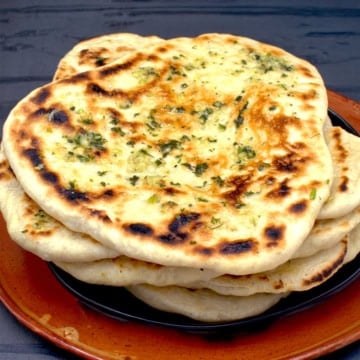
For me a good naan needs to have some definite qualities: it should be soft and pillowy with irregular blisters and char spots, and that wonderful, smoky flavor you get from the intense heat of the tandoor.
Of course, most of us don't have a tandoor at home, so I developed this recipe to recreate those flavors and textures as closely as possible on a stovetop. A soft, slightly tacky dough made with vegan yogurt gives the naan tenderness and stretch. I let the dough rise and rest and then shape it by hand so it has that slightly uneven thickness and rustic shape of a restaurant naan.
I also dock the naan with my fingertips so the naan develops lots of smaller bubbles and char spots. Then I cook it on a dry, blazing hot griddle, flipping it just once, exactly as if I were cooking it in a tandoor. The intense heat creates those lovely brown spots and that smoky flavor.
Finally, I brush the naan with my special garlic herb butter but only after it comes off the griddle. You can skip the garlic and herbs and use just vegan butter for a plain naan.
This isn't a naan cooked in a traditional tandoor but I've carefully replaced the dairy ingredients used in a traditional naan with vegan substitutes and designed the technique to reward you with the exact flavors and textures of the restaurant naan you know and love.
Choose your naan
This vegan naan is my go-to recipe, but you can also choose from these variations depending on how you like to cook or any special dietary needs:
- Classic vegan naan: this recipe
- Cooking outdoors: Grilled naan
- Wholegrain version: Whole wheat naan
- Gluten-free diet: Gluten-free naan
- Have sourdough starter/discard? Sourdough naan
Five-Star Reader Review
I absolutely loved this recipe!!! It was so simple and the results were simply delicious.
- Vickie
Recipe card
Vegan Naan Recipe
Ingredients
For optional garlic butter topping:
- 4 tablespoons vegan butter (olive oil works too)
- 6 cloves garlic (crushed or put through a garlic press)
- 2 tablespoons cilantro (finely chopped. You can sub with another herb like mint)
For vegan naan
- 2¼ teaspoon active dry yeast (1 packet. Instant yeast will also work)
- 1 teaspoon sugar
- 1 to 1½ cups water (lukewarm)
- ½ cup vegan yogurt (preferably at room temperature)
- 1 tablespoon avocado oil or any neutral oil
- 3.5 cups unbleached all-purpose flour
- 1 teaspoon salt
Instructions
Make garlic herb butter
- Place the vegan butter, garlic and cilantro in a small skillet. Turn heat to low. Once the butter has melted, let the herbs infuse into the oil for 15 more minutes. Stir occasionally while cooking, then turn off heat and set aside. You can add some salt to taste to the vegan garlic herb butter if you want to.

Make vegan naan
- Place yeast in a large bowl with 1 cup water and sugar. Let stand five minutes until the yeast dissolves and bubbles.

- Add the yogurt and oil to the bowl followed by the flour and salt.

- Mix with a wooden spoon or your hand until a rough dough comes together. You may need to drizzle between ¼ to ½ cup more water. Use warm water. The dough should be a bit wet and should stick slightly to your hands.

- Turn out the dough on a lightly floured surface and knead just slightly until it's fairly smooth but still tacky. Coat the bowl with oil and place the ball of dough in it, covering the top with a bit of oil as well. Cover tightly and set aside to rise, about an hour.

- After an hour the dough should have doubled. Remove it to an unfloured surface and cut into eight pieces, like you would a pizza.

- Form each piece into a ball by tucking the sides under and then rolling the dough between your palms. Cover the balls of dough with a kitchen towel and let them stand 20 minutes.

- To form the naan, take one ball of dough. Shape it by pressing it into a four- or five-inch disc first with your fingers, then lifting it by the edges and letting the weight of the dough and gravity pull it down. Move your fingers along the edges until the naan is roughly six inches by eight inches, The naan should be about ¼-inch thick, with some spots that are thinner. After you shape the naan, use your fingertips to make some dents in the surface. This is called "docking" and it will keep the naan from bubbling up into one large pocket.

- Heat a cast-iron griddle over high heat. Place the naan on the hot griddle. It should begin to puff up and form large bubbles immediately.

- Flip the naan just once. Let it cook for another 45 seconds to a minute or until char spots appear on the bottom. Brush some of the garlic herb butter or plain melted butter on the naan and remove to a plate lined with a kitchen towel. Keep the naan wrapped until ready to serve.

Nutrition Information
My top tips for vegan naan
- Check the yeast. The recipe asks that you let the dry yeast "bloom" for five minutes in warm water. This helps activate the yeast and a little bit of sugar added to the water helps feed them. If the yeast doesn't become frothy after five or 10 minutes, it is likely dead and you need to buy fresh yeast.
- Use warm water to knead the dough. This helps the yeast work swiftly to proof the dough.
- Don't over-knead naan dough. Once the dough comes together turn it out on a floured surface and quickly knead it for a minute or two until you can form it into a ball. The perfect naan dough should feel slightly tacky and it should leave light traces of dough on your fingers.
- Let the dough rest before shaping. Once the dough has risen and you have shaped it into individual balls, let them stand for 20 minutes at least so they have a chance to rest and relax. This will make it much, much easier to shape the naans.
- Dock the naan: After shaping the naan, push into the surface with your fingertips to create little dents. This both helps to "dock" the naan, so it doesn't puff up in one large pocket like a pita, and it creates those wonderful texture variations and charred spots as the naan roasts.
- Don't oil the skillet. Roast the naan on a dry griddle or skillet and brush the garlic herb butter or oil on the naan after it's finished roasting for best texture.
- Control the skillet temperature. If you find that the naans are browning too fast, sprinkle a bit of water on the skillet to bring down the temperature.
- Wrap naans in kitchen towel to keep them soft and fresh. Serve the naan as soon as possible for the best flavor and texture.
Troubleshooting
- Dough not rising. Check the yeast and make sure it is still viable. See my "top tips for vegan naan" section above on how to do this.
- Naan not bubbling: The naan won't bubble if you rolled it or shaped it too thin. It should be at least ¼-inch thick in the thickest parts.
- Naan turns hard after cooking: This can happen if the dough was too stiff to begin with, or you cooked the naan over low heat. Make sure the dough is tacky to the touch, and do not skip the vegan yogurt, which adds moisture and elasticity to the dough. The griddle should be screaming hot when you place the naan on it.

Recipe FAQs
You can find versions of vegan naan made without vegan yogurt but I recommend using it for softer, fluffier naan. Indian cooks add yogurt to naan because the acidity softens the gluten in the naan dough and make it easier to stretch. The yogurt also adds more buttery flavor to the naan. Vegan yogurt is a nice substitute because it gives you both the acidity for texture and that buttery flavor. Use a store-bought yogurt with live cultures, or a homemade, probiotic version, like my cashew yogurt.
If you don't have yogurt, you can make a quick "buttermilk" by mixing ½ cup non-dairy milk like oat milk or soy milk with the juice of half a lemon or a teaspoon of apple cider vinegar. Set aside for five minutes to curdle, then use it instead of the yogurt.
There's no right or wrong way to shape a naan. The typical restaurant naan is a rough teardrop shape but you can also just make it round or free-form. Once your naan is baked up and covered with the herby butter garlic mixture it will look beautiful and appetizing regardless of the shape. Here are three methods you can use to shape naan:
With your fingers: This is similar to the technique you'd use with a pizza dough and the most fun. Pat the dough into a four-inch disc with your fingers, then lift it by the edges and let the weight of the dough and gravity elongate the dough. Move your fingers around the edges, which will shape the naan as you go. If there is a tear, patch it up by pressing the dough together. Stop once the naan is approximately five inches wide and seven inches long.
With a rolling pin: Use the rolling pin to shape the naan into an oval. Then pull one end slightly to form a teardrop shape.
With water. Place the dough on a flat surface and push into it with finger tips that have been dipped in a glass of water. Apply pressure with the wet fingertips to shape the dough, moving your fingers outward quickly until you get the shape you desire.
Absolutely! A cast iron tava is perfect for making naan.
Place a pizza stone or unglazed tiles in the oven and preheat the oven to 500 degrees Fahrenheit/260 degrees Celsius. Place the naan directly on the pizza stone or tiles and cook 3-4 minutes until puffy, then flip and cook the other side for a minute more.
Store the vegan garlic naan at room temperature in cool or temperate climates, for up to a day. Keep the naan loosely wrapped in a kitchen towel. Refrigerate in an airtight container for up to four days. You can also place the naan in freezer-safe bags and freeze for up to four months. Thaw the naan if frozen, then place on a hot griddle and warm through on either side, about a minute per side, before serving.
I love pairing vegan naan with spicy curries, including baingan bharta, bhindi masala and rajma masala. You can also serve it with vegetable curry or with a thick dal like palak dal tadka or vegan dal makhani.


daniela says
Hands down, best naan!