

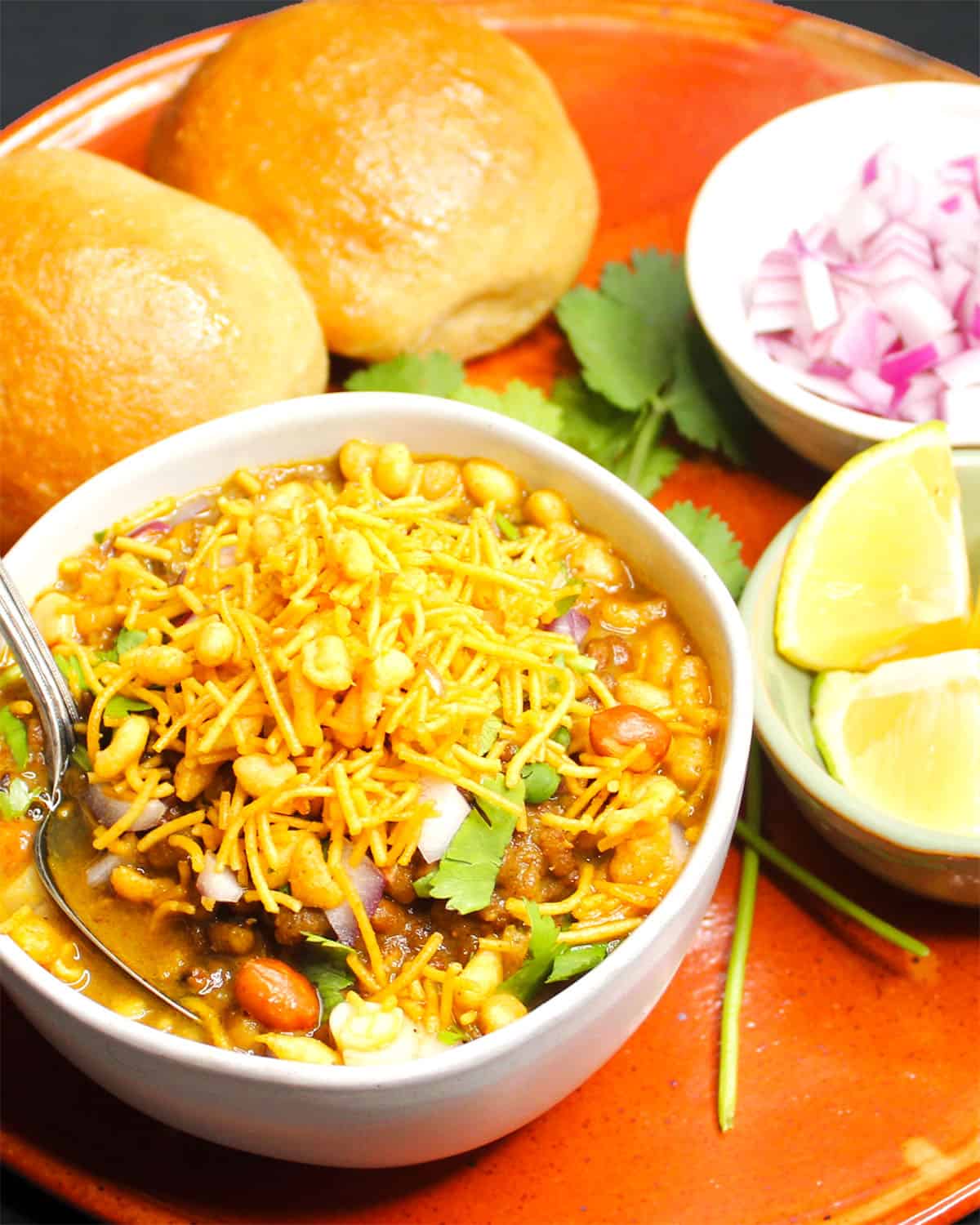
Misal pav is a classic Mumbai breakfast food: a spicy bean sprouts curry served with a pillowy local bread roll called pav. My recipe for this naturally vegan street food from my beloved former home city is authentic, surprisingly easy to make and quite healthy!
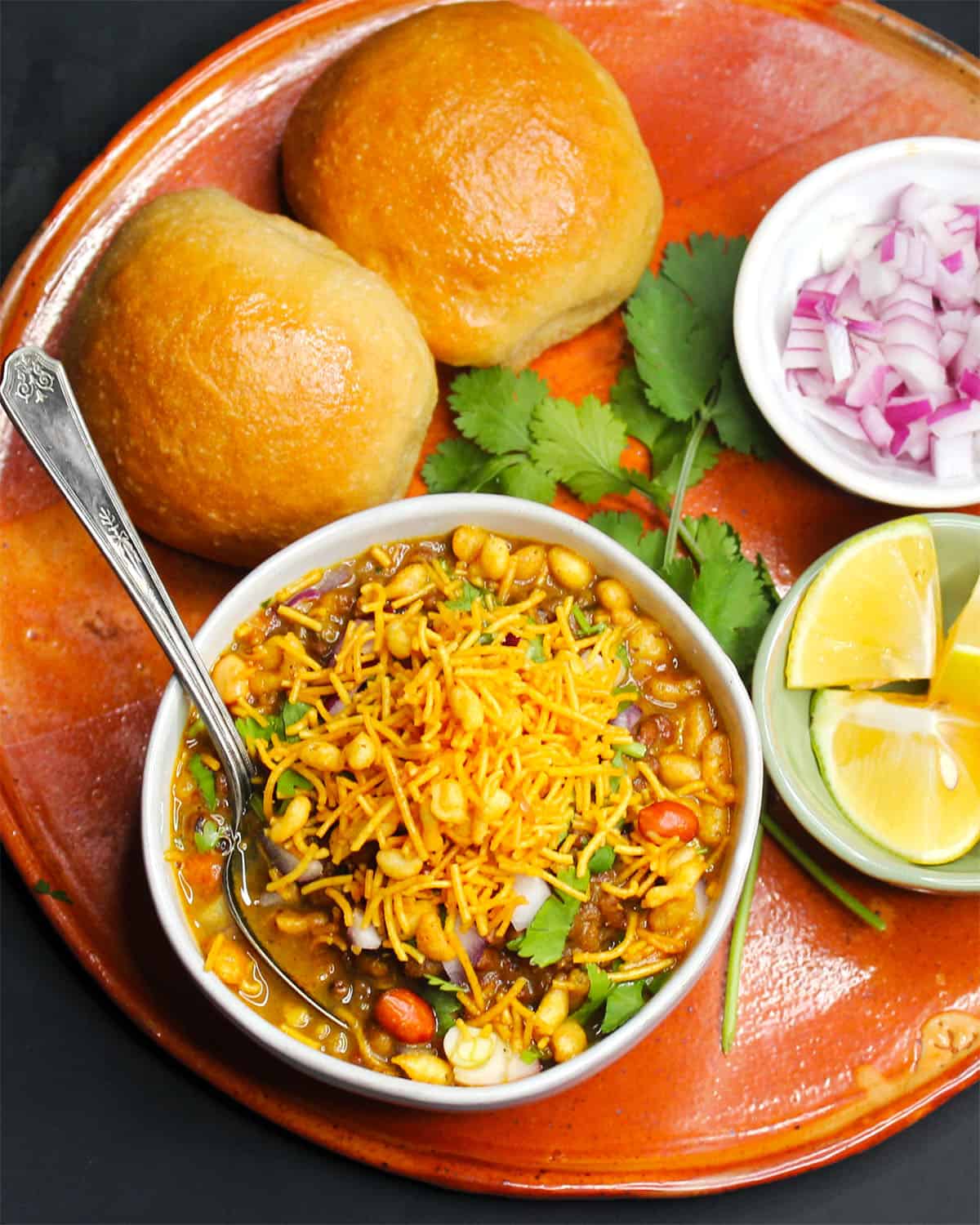
Table of Contents
What is misal pav?
Misal is a spicy curry of sprouted beans, spices and coconut that's topped with raw onions, cilantro and crispy Indian chickpea snacks called farsan, then served with a soft Indian bread roll, pav. Squeeze a dash of lemon over the curry, tear off a piece of the pav, and you are about to eat what many in Mumbai would agree is the best breakfast street food ever.
Like many Indian street foods, misal originated from a simple, homecooked dish: a bean sprouts curry called usal that's a mainstay of Maharashtrian cuisine. The word "misal" is a portmanteau of "mishran" (meaning "mixture" in Marathi) and usal. Street food vendors amped up the appeal of usal by adding more chili, oil and water to create a "rassa" or "tari" - a watery, spicy sauce that floats on top of the beans and is perfect for dunking the pav into. They then loaded the misal with toppings to create a mad mix that was at once savory, nourishing, crispy and comforting.
My mom, like other Maharashtrians, would serve usal with roti or chapati. But to serve misal street vendors needed a bread that was easy to transport, convenient and filling. So they honed in on pav, a soft roll that also features in other popular Mumbai street foods like pav bhaji and vada pav. Before serving, the pav is cut down the middle, opened like a book, and toasted with butter on a hot griddle.
My favorite memory of eating misal pav is from the time I worked in Mumbai as a very young reporter. Desi and I would take the train back home after the night shift and grab an early breakfast of misal pav at a small roadside shack with plastic stools and tables just outside the railway station. We'd have lots of company: other night owls and workers just beginning their day. When the food arrived, we'd attack it like we'd been starving for months. It was everything you wanted breakfast to be: full of flavor, hearty and nourishing.
Making misal pav at home is actually quite easy, like most street food is. And when you cook it you also get to tweak the spice level to your liking (street versions can be extremely fiery). You do have to plan ahead because you will need to sprout two kinds of beans - mung beans and matki or moth beans (you can use just one kind, more in the FAQs below). I have a handy tutorial on sprouting mung beans to guide you through this simple process, which takes about a day and a half in warmer temperatures. Use the same process to sprout the moth beans.
You will also need to stock up on farsan for misal pav, and you can buy any kind you find in the snack aisle at the Indian store, including the one labeled "farsan" or "mixture" or even plain "sev". This and other misal toppings like onions, cilantro and lemon, are mandatory for the best flavor and texture experience. If you absolutely can't or won't include the farsan I have some healthier options for you in the FAQs below.
You can find pav at the Indian store or use any soft dinner roll from the bakery or supermarket. I like making my own pav rolls and this time I made them with whole wheat.
Misal is gluten-free, soy-free and nut-free (make sure you buy farsan that doesn't have any nuts - mine had peanuts - and if you are gluten-free be sure to use gluten-free dinner rolls). Although considered a breakfast food, my healthier version of misal pav is also perfect for lunch or dinner.
Here's the recipe.
Five-star review
It was AMAZING!!! Can't wait to make again and share with fellow 'high vibe' food lovers 😉
-Diana
Recipe card
Misal Pav Recipe
Ingredients
For misal masala paste
- 1 teaspoon oil (use any neutral oil, including avocado oil, peanut oil or sunflower oil)
- 2 tablespoons coriander seeds
- 1 teaspoon cumin seeds
- 5 green cardamom pods
- 5 cloves
- 1 star anise
- 2 bay leaves
- 1-inch piece cinnamon stick
- 5 black peppercorns
- 1 large onion (thinly sliced)
- 5 cloves garlic
- 1-inch piece ginger (cut into smaller pieces)
- ½ cup grated coconut
For misal curry
- 1 tablespoon oil
- 1-2 teaspoons cayenne (or Kashmiri chili powder. Use less or more depending on your preference. Misal is supposed to be very spicy but you can tweak it to your taste)
- 1 teaspoon sweet paprika (I add this for color. You can skip it)
- ½ teaspoon turmeric
- 2 cups sprouted mung beans (from ½ cup dried mung beans)
- 2 cups sprouted moth beans (from ½ cup dried moth beans or matki beans)
- 3-4 cups water (start with two cups and add more as needed)
- Salt to taste
Toppings for misal
- 1 red onion (finely chopped)
- ½ cup cilantro (chopped)
- 1 cup farsan
- 2 lemons (cut into wedges)
For pav to serve with misal
- 12 pav
- 2 tablespoons vegan butter
Instructions
Make the misal masala paste
- Heat a teaspoon of oil in a pan. Add coriander seeds, cumin seeds, green cardamom pods, cloves, star anise, bay leaves, cinnamon and black peppercorns. Saute for a coupe of minutes over medium heat until the spices are very aromatic and slightly darker.
- Add the sliced onion to the spices along with ginger and garlic. Saute until the onions begin to brown.
- Add shredded coconut to the pan and saute until the coconut has browned lightly. Turn off heat and remove the spices and coconut mix to a bowl or plate. Set aside to cool. Once the spices have cooled, place them in a blender with ½ cup water. Blend into a smooth paste. Set aside.
Make the misal curry
- To the same pan add a tablespoon of oil. Add the chopped onions along with a pinch of salt. Saute over medium heat until the onions begin to brown, then add in the cilantro.
- Add the blended masala to the pan along with cayenne, paprika and turmeric. Mix well.
- Add the mung sprouts and matki sprouts to the pan. Add three cups water and mix well.
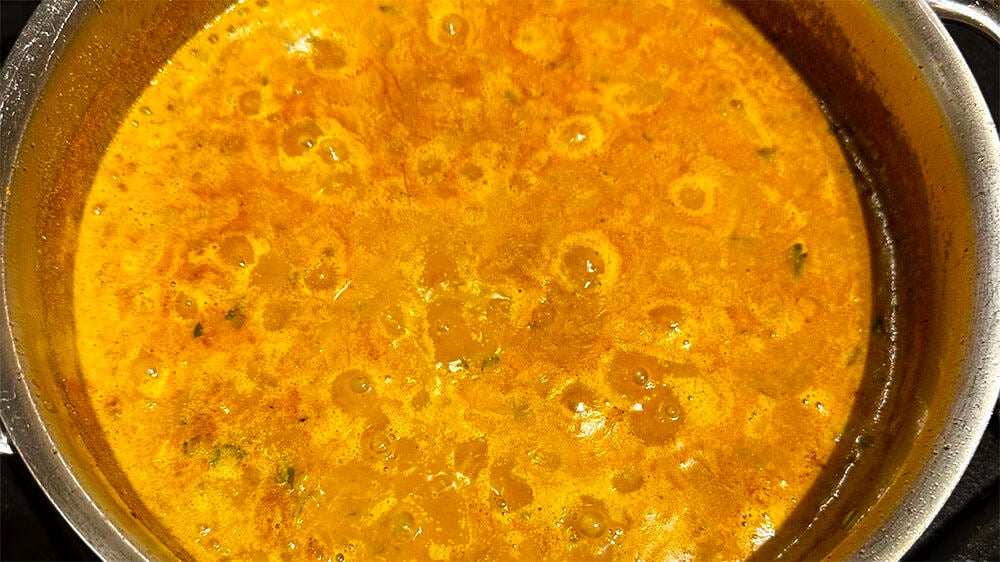
- Let the misal come to a boil, then lower heat, cover and simmer about 20-25 minutes or until the beans are tender and you see specks of oil float on top, as in the picture below. You can add more water to the misal as needed to make it saucier. Add salt before turning off heat.
Prepare pav
- Prepare the pav by slicing it down the middle, leaving one side attached, like a book.
- Heat a griddle or skillet over medium high heat. Add a dab of vegan butter to the skillet, then place the pav, cut side down, over the butter. Toast the bread for a minute or so until reddish-gold spots appear.
Serve misal pav
- To serve misal pav, pour some misal curry into a bowl. Top it with chopped red onions, cilantro, and a handful of farsan. You can squeeze lemon juice over the onions and cilantro, or serve the misal with wedges of lemon on the side.
- Serve the misal with the pav and additional bowls of the toppings- cilantro, onions, lemons and farsan.
Notes
- Nutrition information is for a one-sixth serving of misal with two pav, onions, cilantro and lemon.
Nutrition Information
To print recipe card without images, uncheck "instruction images" after clicking the "print recipe" button.
How to make misal pav (step-by-step instructions)
Make the spice masala mix for misal
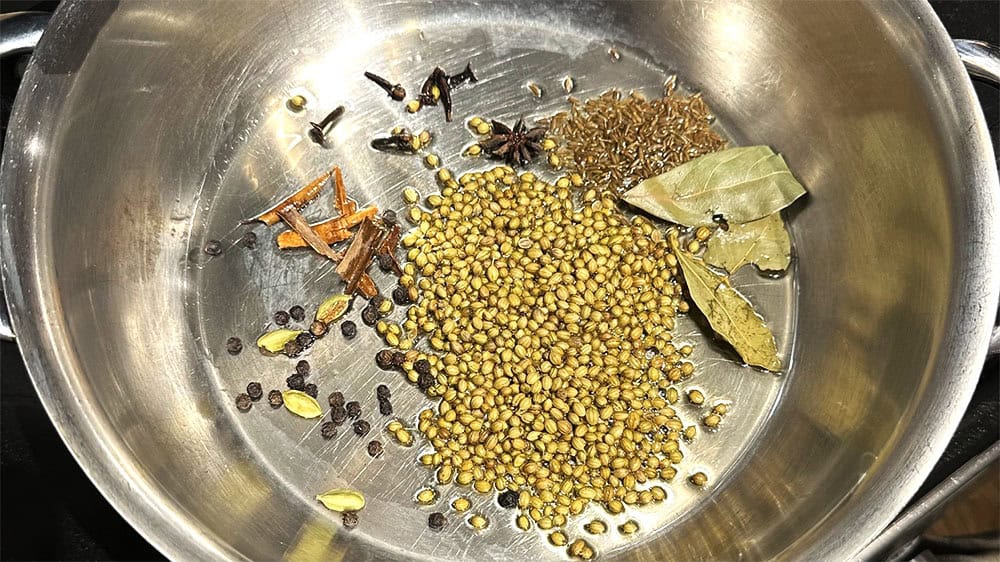
- Heat a teaspoon of oil in a pan. Add coriander seeds, cumin seeds, green cardamom pods, cloves, star anise, bay leaves, cinnamon and black peppercorns. Saute for a coupe of minutes over medium heat until the spices are very aromatic and slightly darker.
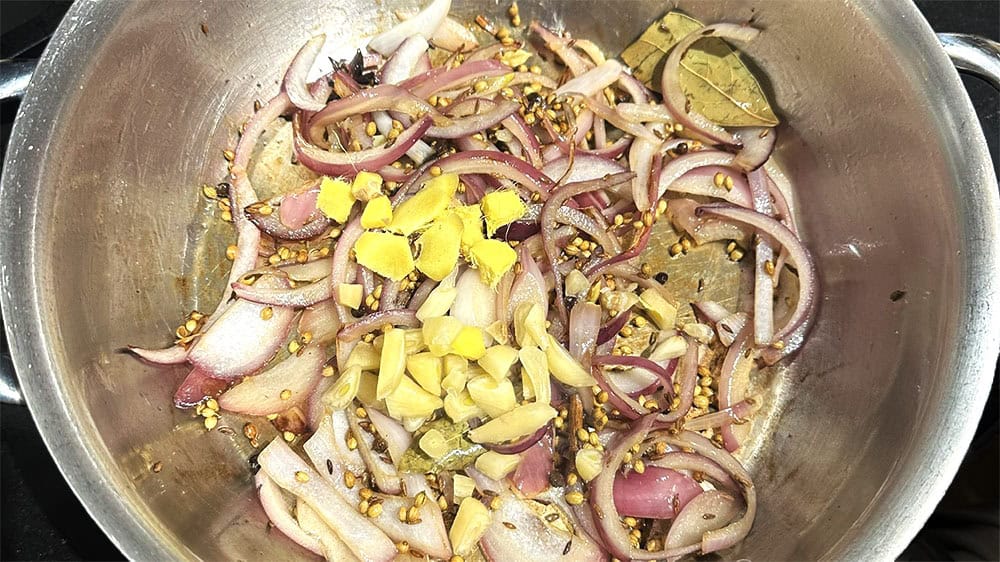
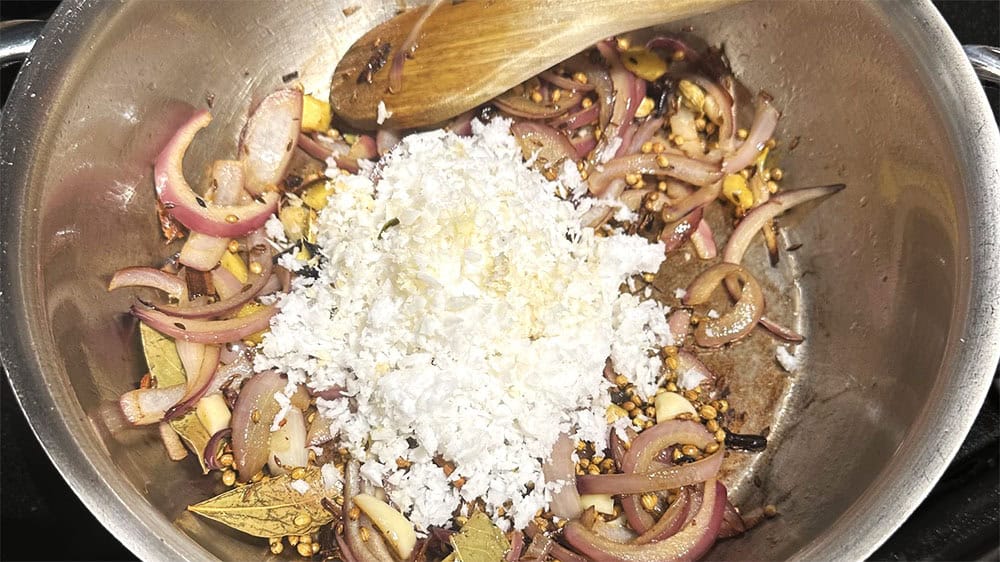
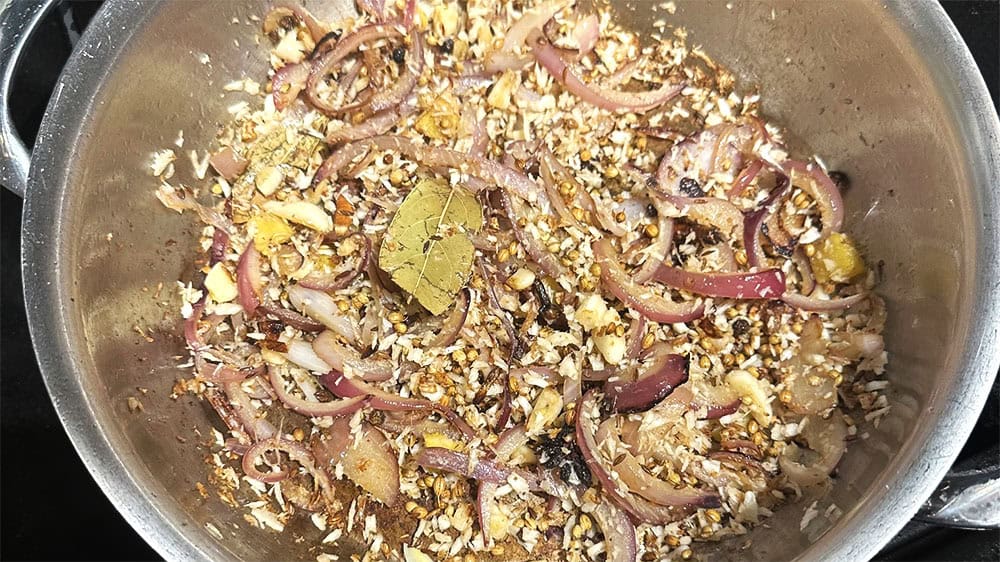
- Add the sliced onion to the spices along with ginger and garlic. Saute until the onions begin to brown.
- Add shredded coconut to the pan and saute until the coconut has browned lightly. Turn off heat and remove the spices and coconut mix to a bowl or plate. Set aside to cool.
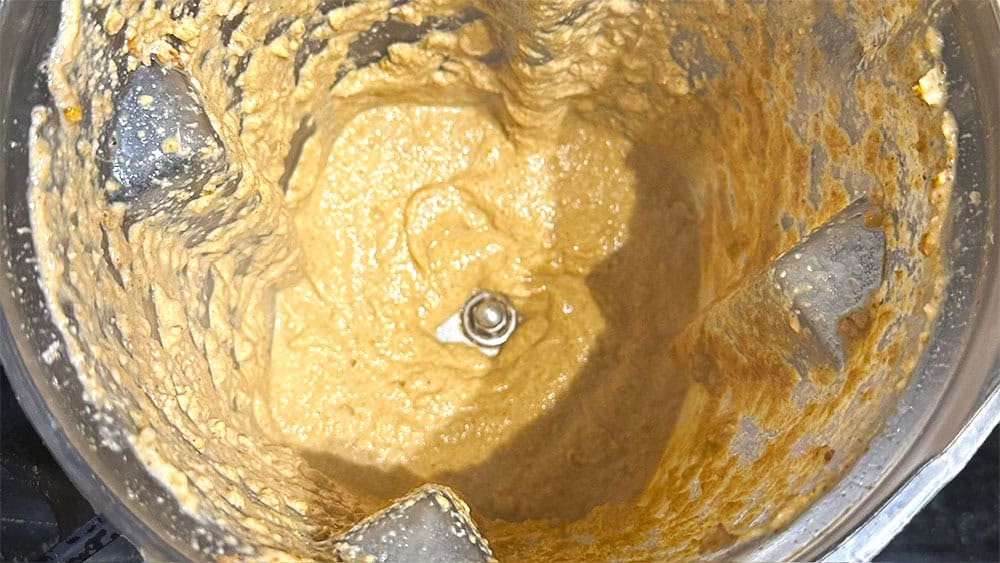
- Once the spices have cooled, place them in a blender with ½ cup water. Blend into a smooth paste. Set aside.
Make the misal curry
- To the same pan add a tablespoon of oil. Add the chopped onions along with a pinch of salt. Saute over medium heat until the onions begin to brown, then add in the cilantro.
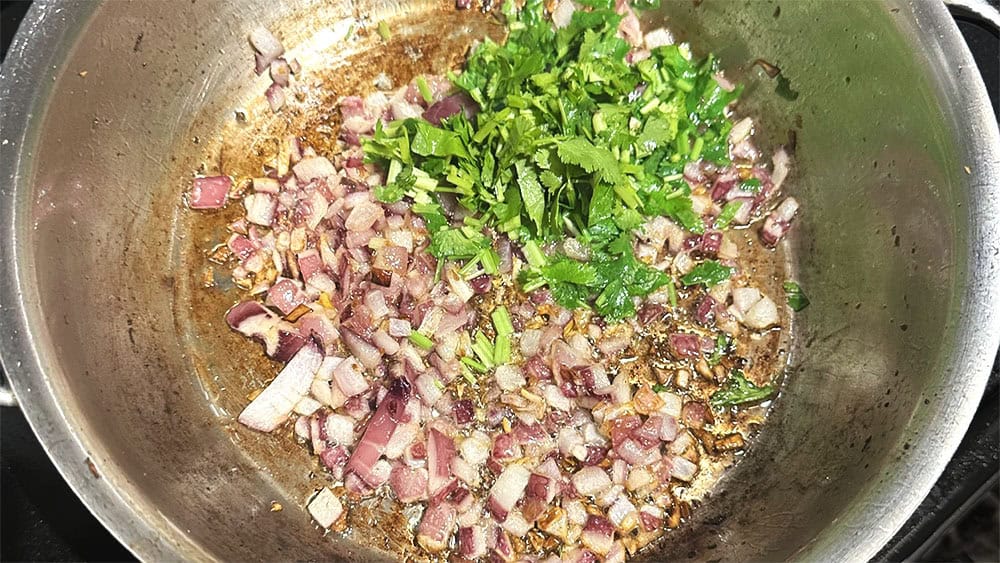
- Add the blended masala to the pan along with cayenne, paprika and turmeric. Mix well.
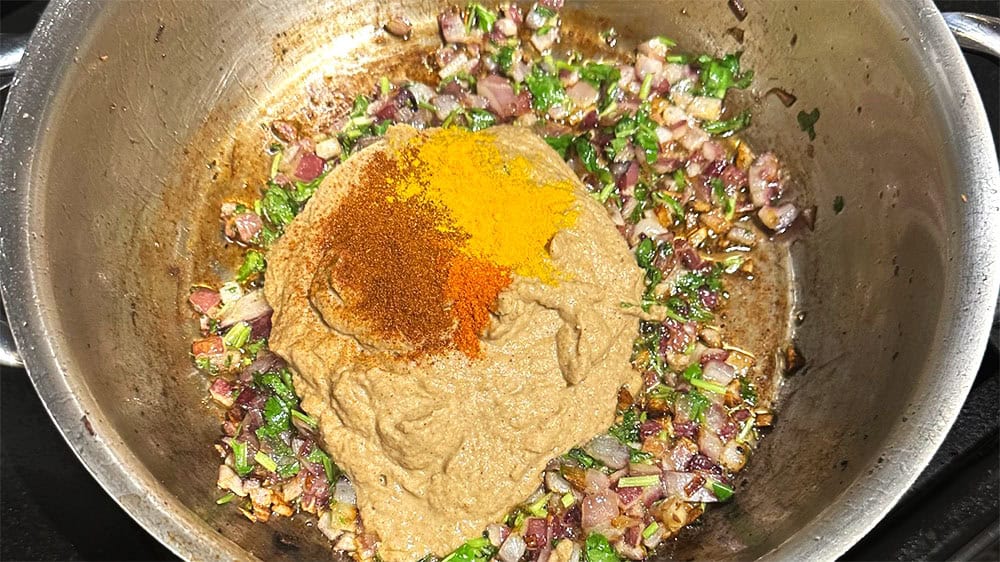
- Add the mung sprouts and matki sprouts to the pan. Add three cups water and mix well.
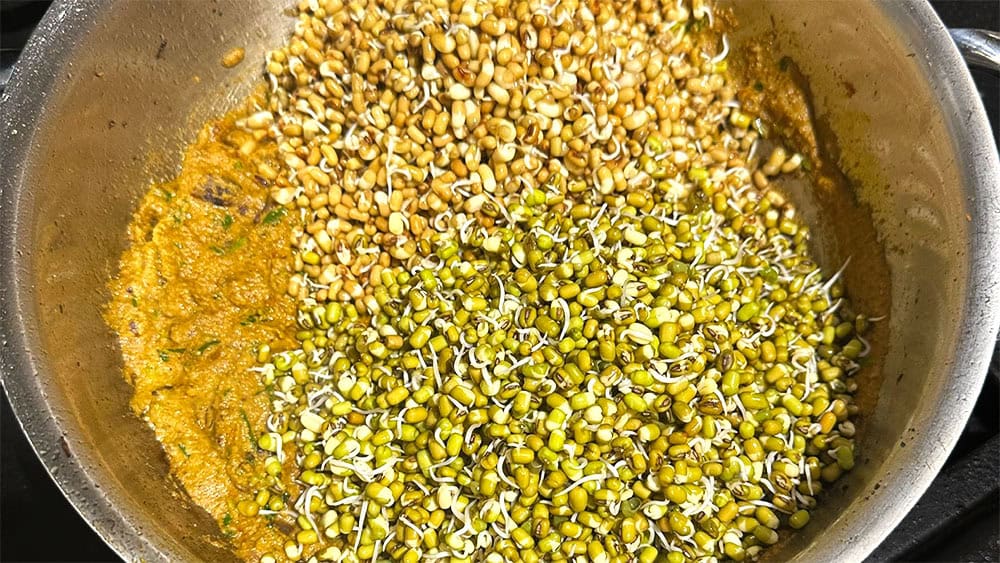
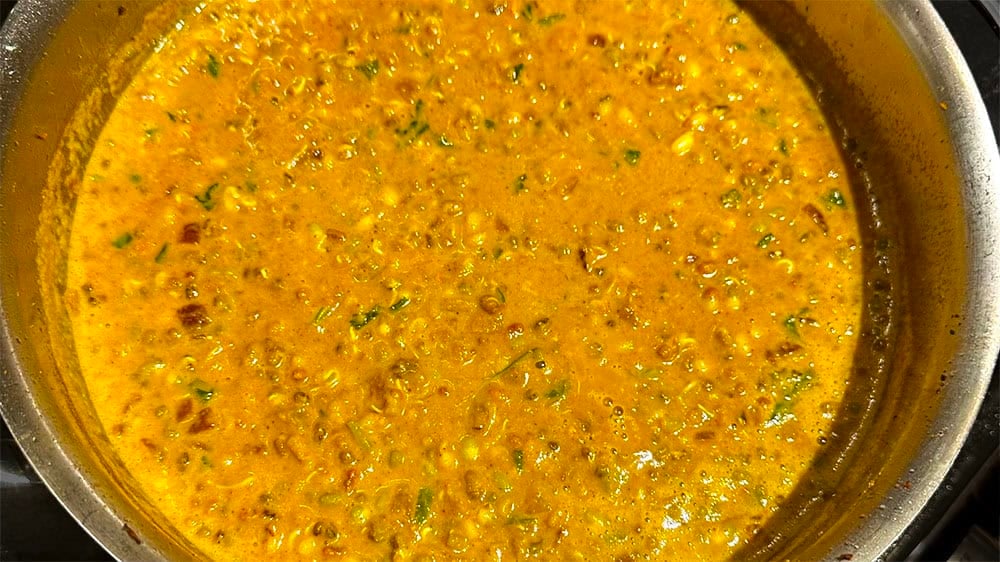
- Let the misal to come to a boil, then lower heat, cover and simmer 20-25 minutes until the beans are tender but still holding their shape, and you see specks of oil float on top, as in the picture below. Add salt as needed, and turn off heat. (*At any point, add more water if the misal looks dry. Misal needs to be quite saucy - enough to soak the pav before you pop it into your mouth but thick enough to scoop up.)
Serve misal pav
- To serve misal pav, pour some misal with plenty of the "rassa" or sauce into a bowl. Top it with chopped red onions, cilantro, and a handful of farsan. You can squeeze lemon juice over the onions and cilantro, or serve the misal with wedges of lemon on the side.
- Prepare the pav bread roll by slicing it down the middle but leaving one side attached, like a book.
- Heat a griddle or skillet over medium high heat. Add a dab of vegan butter to the skillet, then place the pav, cut side down, over the butter. Toast the bread for a minute or so until reddish-gold spots appear.
- Serve the misal with the pav and more onions, cilantro, lemon and farsan on the side.
Recipe FAQs
Mixing two varieties of beans gives the misal extra texture and flavor but you can definitely make misal with either mung beans or matki beans. Take your pick! You can also use other beans that are safe to sprout, including white peas (safed vatana).
You can, but you will need to soak the beans overnight and you also might need to cook the misal a little longer for the beans to tenderize. You could expedite this by pressure-cooking the beans separately, then adding them to the misal.
You can buy farsan at any Indian grocery store. I've also added an affiliate link in the recipe card.
Farsan is deep-fried but you need just a little bit for crunch. If you absolutely do not want to use it, substitute it with roasted, salted pumpkin seeds or sunflower seeds for a healthier version.
My recipe is only moderately spicy. You can dial up the amount of chili powder or cayenne for more heat.
Serve misal pav with a cup of piping hot masala chai or a cooling glass of vegan mango lassi. In summer, I often serve it with cucumber juice or vegan thandai.
Store the misal in the fridge up to four days and freeze for up to three months. Heat the misal until it's piping hot before adding toppings.
First published Aug. 1, 2014. Updated and re-published on May 10, 2026.




Lauren says
I made this last night and it was absolutely delicious! I am wondering for next time, though, when/if you add extra water to the mix?
After adding the sprouts to the masala, I realized there had to be some simmering liquid and simply sort of eyeballed it and added what looked like the right amount. Do you add extra water to the sprouts for the simmering and if so, how much?
Again, thank you!! A delicious result. 🙂
Vaishali says
So happy you enjoyed it!
Ruth Eisenbud says
I finally got around to making sisal... Ordinarilly, when a recipe calls for cinnamon, I leave it out because I do not like the sweet cloving taste. I just found out that Indian cinnamon is not the same as the cinnamon we use here.... An Indian friend gave me a container of what she uses... and it was really much more appropriate for the spacey flavors of Misal....
Diana says
I am soaking the mung beans currently and am looking forward to making this amazing dish. Thank you!
Vaishali Honawar says
Great, Diana, hope you like it! 🙂
Diana says
It was AMAZING!!! Can't wait to make again and share with fellow 'high vibe' food lovers 😉
Lakshmi says
Thank you Vaishali for a very easy, healthy and tasty recipe. I tried it today and loved the taste and the entire house is filled with the aroma of the masala.
Vaishali Honawar says
Hi Lakshmi, so glad you tried it! Misal's one of my favorite foods, as you could probably tell from the post. 🙂 Thanks for letting me know!
Sanaya says
Awesome recipe !! I have tried a couple of your recipes and they all turn out to be my new favorites. Thanks for sharing them all. My house is filled with the aroma of roasted spices and coconut 🙂
Vaishali Honawar says
Hi Sanaya, so happy you liked it. And thanks for your kind words! 🙂
Noodle says
I heart Misal. I first ate it as a teen when I went to Pune 15+ years back and I've been hooked ever since. My cousin took me a very nondescript little place and assured me I was in for a real treat. It was all that and more. I make misal at least twice a month. In fact, I beg/borrow Goda masala only for this (oh well, for masala bhat too!). So glad you featured it on your blog 🙂 Also, can you put up a recipe for Amti? I've tried making it at home but it just doesn't seem to taste like the one I had all those years back. TIA.
Vaishali Honawar says
Hi Tia, Pune's great for misal, isn't it? One of my favorite cities in the world-- I spent a magical year there once. I will definitely work on a post for Amti. Stay tuned. 🙂
brian m says
One thing missing from the recipe is what do you do with the tomatoes?! We're just going to throw them in with the sprouts and let them simmer for the last 20-30 minutes. How bad could it be?
Vaishali Honawar says
Hi Brian, add them to the blender with the onions etc. I will add this to the recipe.
Krithika says
Quick note, I still don't see the tomatoes in the instructions. I did a search on this page to check if anyone had asked about it and found this.
Vaishali says
Added. 🙂
Fareeda says
I made the misal for dinner tonight. It is very delicious. We ate it with toasted buns.
Thanks
Vaishali Honawar says
Fareeda, that's lovely! So glad you tried it, and thanks for letting me know. 🙂
Priya says
Wat a delicious,droolworthy and mouthwatering dish, seriously hard to resist.
Vaishali Honawar says
Thanks, Priya!
Ellen Lederman says
This is a must for me! We have a restaurant in Atlanta that purports to sell Indian street food, but it's more stuff like fried okra (without any complex spices). Talk about healthy (sprouted beans, turmeric, tomatoes, onions).
And yes for the sunflower seeds! A nice crunch and probably healthier than the chickpea squiggles that are fried,
True confession: whenever I have seen the buns at Indian restaurants I've always been indignant: "Why is an authentic restaurant using American hamburger buns?!?" But now thanks to your post I have learned it is pav....so I will save my indignation for something else (like crazy drivers!).
Vaishali Honawar says
Hi Ellen, that restaurant sounds like a sad excuse for Indian street food! Fried okra indeed. And yes, pav are rather like hamburger buns, but it tastes best and most authentic when it's homemade. 🙂 While breads like pav are definitely a western introduction into the Indian foodscape, it's amazing how effortlessly locals have assimilated them into traditional dishes, making them -- now-- very much an Indian food.
marystestkitchen says
Another wonderful-looking recipe! This is my kind of "street" food!
Vaishali Honawar says
Thanks, Mary. 🙂
Deb @ Saving the Crumbs says
Wow, that looks so yummy! I LOVE Indian food! Must also be very healthy and have a lot of fiber. What a great combination.
Vaishali Honawar says
Hi Deb, it definitely has a lot of fiber-- and protein.
Janel @ Creating Tasty Stories says
I love trying street food from around the world. The recipes are always tasty and usually pretty easy to cook. I've never heard of misal, but I want to try it! Thanks for introducing me to it.
Vaishali Honawar says
Hi Janel, I love street food too! It's always the most delicious and perhaps the fact that, when one travels, everyone warns you against it makes it taste a little more delicious as well! (like forbidden fruit). 🙂